


Joseph Raffaele: Most Patients with “Normal” hsCRP Still Age Faster Than They Realize
Joseph Raffaele, Physician-Scientist in Longevity Medicine, CEO of PhysioAge LLC, posted on LinkedIn:
“There’s an inflammatory paradox most people miss:
Most patients with “normal” hsCRP still age faster than they realize.
Standard reference ranges for high sensitivity C-reactive protein label anything under 3.0 mg/L as “normal.”
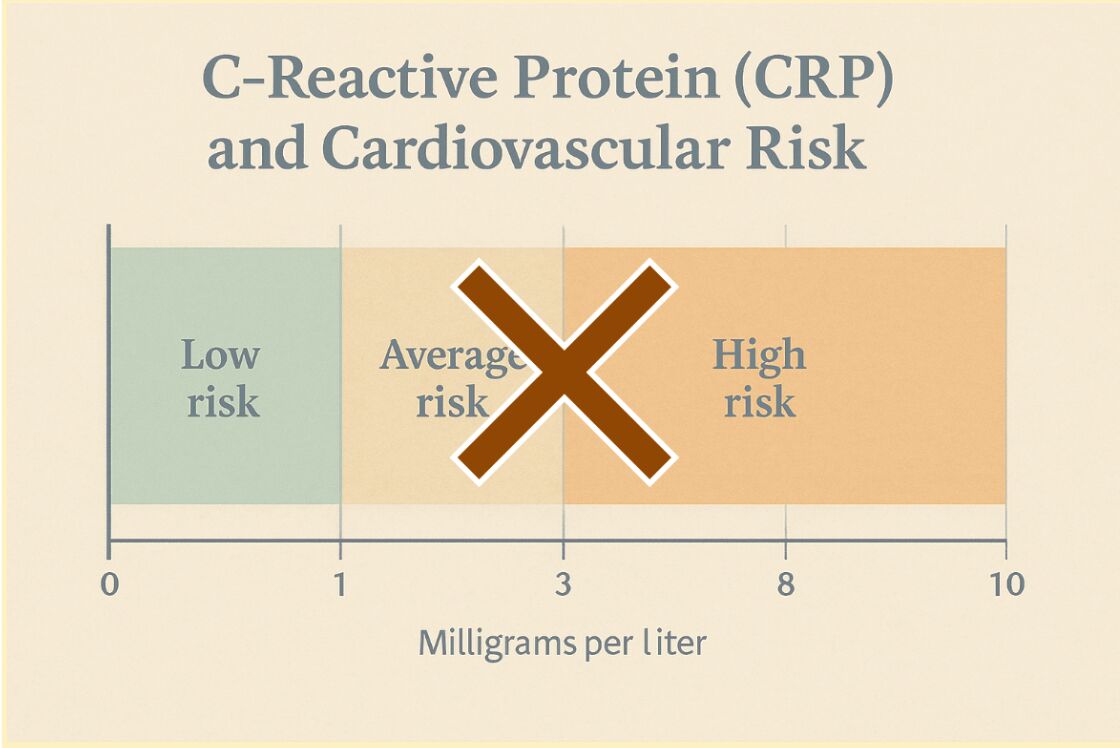
Yet research shows cardiovascular risk begins climbing at hsCRP levels above 1.0 mg/L.
That’s a threefold gap between what’s called normal and what actually protects your longevity.
C-reactive protein is produced by the liver in response to acute and chronic inflammation, and elevated levels are linked not just to cardiovascular disease, but to rheumatoid arthritis, inflammatory bowel disease, cancer, and all-cause mortality.
This relationship is especially significant in middle age and beyond, when resilience to inflammation naturally declines.
In my practice, I’ve seen countless patients dismissed as healthy because their hsCRP fell within standard ranges.
Yet they were experiencing:
– Persistent fatigue despite adequate sleep
– Subtle declines in metabolic flexibility
– Stubborn visceral fat accumulation
To me, these are early signals of chronic low-grade inflammation driving accelerated aging.
HsCRP under 1.0 mg/L correlates with significantly lower cardiovascular risk, better metabolic health, and reduced neurodegenerative disease risk.
Here’s my approach:
Start with a high-sensitivity CRP (hsCRP) test to establish your baseline.
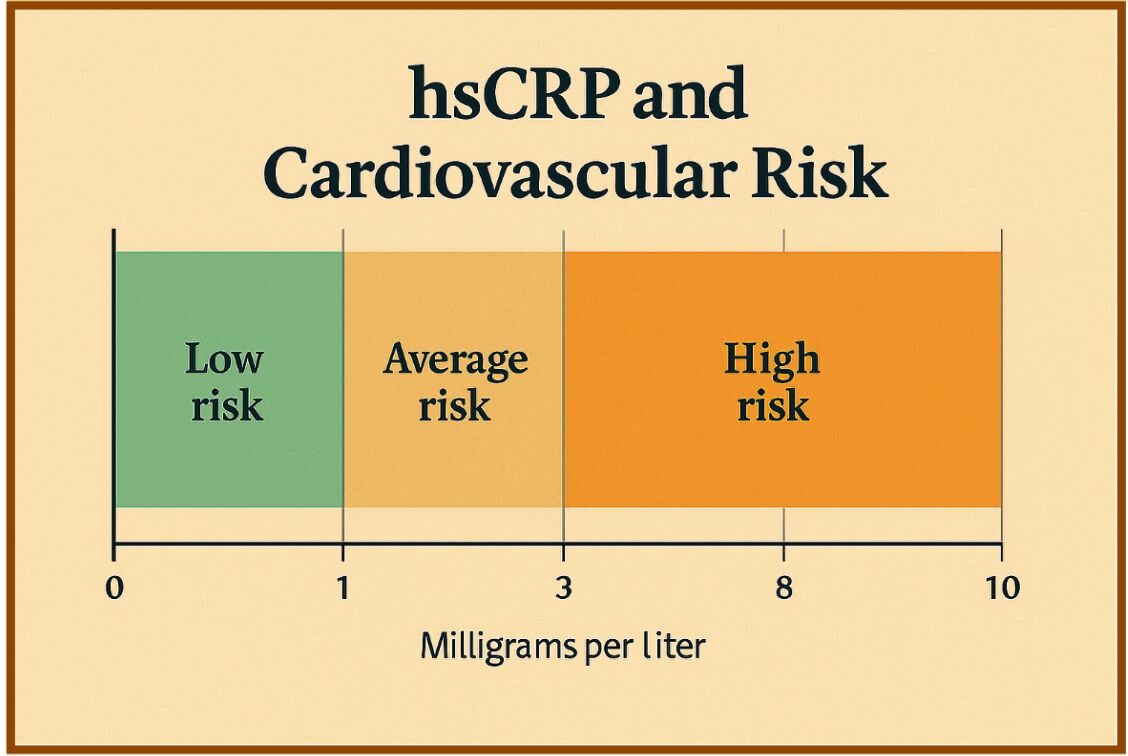
If you’re in an acute inflammatory state like an infection, your CRP may spike temporarily above 10 mg/L and should be retested in 4–6 weeks.
Target hsCRP below 1.0 mg/L through precision interventions tailored to the source of inflammation:
𝐋𝐢𝐟𝐞𝐬𝐭𝐲𝐥𝐞 𝐟𝐨𝐮𝐧𝐝𝐚𝐭𝐢𝐨𝐧𝐬: This includes a Mediterranean-style diet emphasizing plant-based meals, regular exercise (both resistance and aerobic training), sleep optimization (poor sleep directly drives IL-6 and TNF-alpha), and smoking cessation if applicable.
𝐓𝐚𝐫𝐠𝐞𝐭𝐞𝐝 𝐭𝐡𝐞𝐫𝐚𝐩𝐢𝐞𝐬 𝐰𝐡𝐞𝐧 𝐜𝐥𝐢𝐧𝐢𝐜𝐚𝐥𝐥𝐲 𝐢𝐧𝐝𝐢𝐜𝐚𝐭𝐞𝐝: This can be certain statins and antihypertensives with anti-inflammatory properties, omega-3 optimization (EPA/DHA) targeting an omega-3 index of 8–12%, vitamin E combined with other antioxidants, or emerging modalities like cryotherapy and low-level light therapy (photobiomodulation).
𝐀𝐝𝐯𝐚𝐧𝐜𝐞𝐝 𝐝𝐢𝐚𝐠𝐧𝐨𝐬𝐭𝐢𝐜𝐬: Inflammatory marker panels to identify LpPLA2 and oxidative stress markers, gut microbiome assessment when dysbiosis is suspected, and continuous glucose monitoring to assess glycemic variability.
Inflammation is not binary.
It exists on a spectrum, and where you sit on that spectrum determines how fast your cells age.
But it’s also modifiable, measurable, and deeply predictive of long-term health outcomes.
Follow me at Dr Joseph Raffaele, for evidence-based longevity insights that help you move from “normal” to optimal.”
Never miss an update from Hemostasis Today.
-
Oct 19, 2026, 19:44Where You Live Should not Determine Whether You Receive Care – World Federation of Hemophilia
-
Oct 19, 2026, 19:42Belen Bianco: Prevention, Early Suspicion and an Interdisciplinary Approach Save Lives
-
Oct 19, 2026, 19:40Christina Chrysohoou: Catheter-Based LAAC vs OAC for Stroke Prevention in Atrial Fibrillation
-
Oct 19, 2026, 19:38Matthew Flick: A Two-Day Research Meeting on Fibrinogen, Hemostasis and Thrombosis
-
Oct 19, 2026, 19:37Hayat Saeed: Excited to Share Our Publication on the FGL1–Hepcidin Axis in Iron Homeostasis and Disease
-
Oct 19, 2026, 19:08IPAW 2026 Comes to a Close, but the Work Continues – PPTA
-
Oct 19, 2026, 17:44Paul Riley: Moderating a Webinar on Anticoagulation Monitoring
-
Oct 19, 2026, 16:36Christopher Pittman: Blood Clot Prevention Cannot End at Hospital Discharge
-
Oct 19, 2026, 16:13Javier M. Floren: When Immune Cells Move With Their Environment