


Dr. Kalpana Gupta Shekhawat on Nattokinase: Human Study Shows 36% Plaque Regression
Dr. Kalpana Gupta Shekhawat, Chairperson, Functional & Metabolic Medicine Academy, shared a post on LinkedIn:
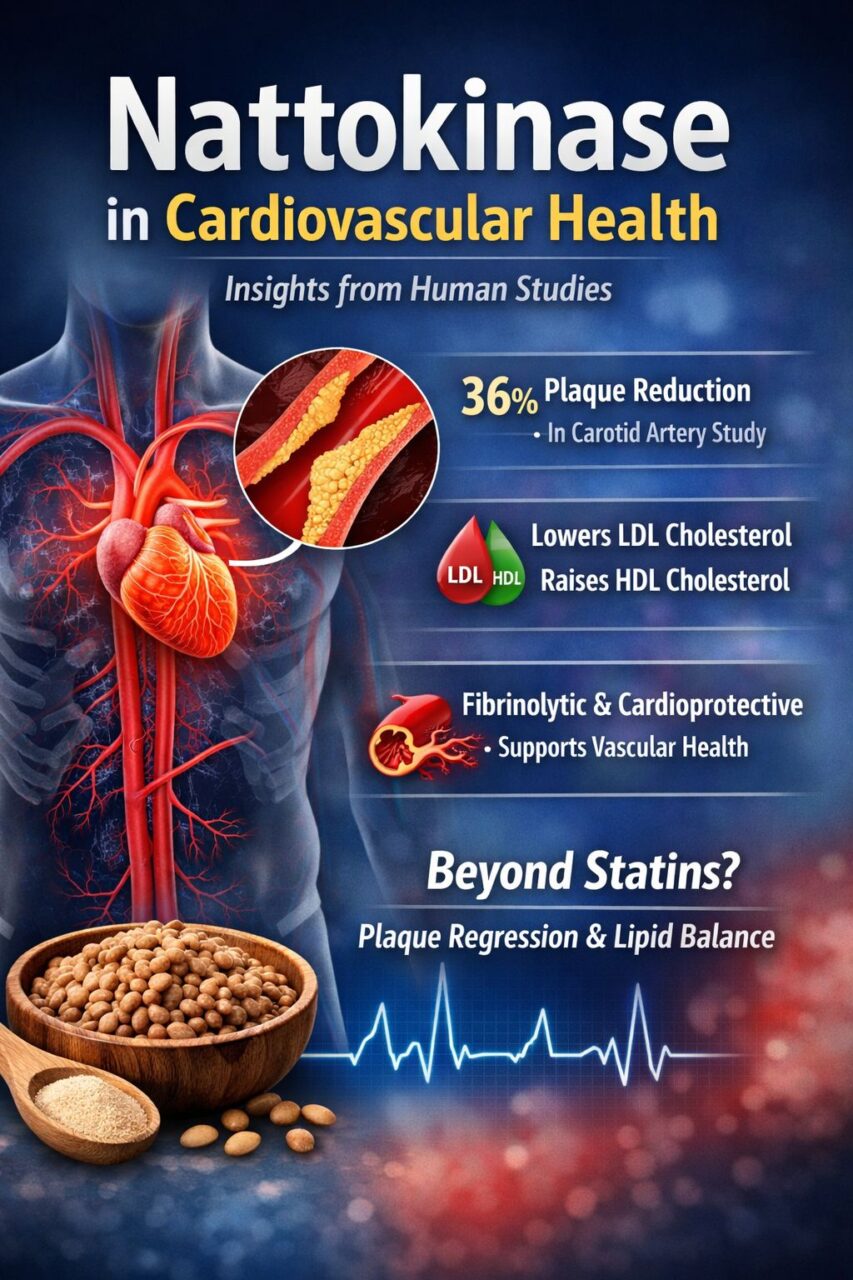
“Nattokinase in Cardiovascular Care: Insights from Human Studies
Reversing established atherosclerosis remains one of the most difficult challenges in cardiovascular medicine. Despite significant advances in lipid-lowering therapies, most conventional approaches primarily aim to slow disease progression rather than induce meaningful regression of existing plaque. In this evolving landscape, nattokinase has emerged as a growing area of interest within preventive and integrative cardiology.
Nattokinase is a potent fibrinolytic enzyme derived from natto, a traditional Japanese fermented soybean food consumed for centuries. While epidemiological observations from Japan have long suggested cardiovascular benefits, recent human clinical studies have begun to elucidate its therapeutic relevance in vascular disease.
Evidence for Plaque Regression
Among the most striking findings is a large human study reporting a 36% reduction in carotid artery plaque area in individuals supplemented with nattokinase—an outcome rarely achieved in routine clinical practice.
In this study, nattokinase was administered at a dose of 10,800 fibrinolytic units (FU) per day. Beyond merely slowing atherosclerotic progression, supplementation led to measurable regression of existing plaque and improvement in arterial structure, suggesting a disease-modifying effect rather than simple risk reduction.
Effects on Lipid Profile
In addition to its effects on plaque burden, nattokinase has demonstrated favorable modulation of lipid metabolism. Multiple clinical studies indicate that supplementation can:
Reduce LDL cholesterol
Increase HDL cholesterol
The simultaneous improvement in lipid balance alongside plaque regression is particularly noteworthy, as these outcomes are seldom achieved with a single intervention.
Comparison with Statin Therapy
Available evidence suggests that nattokinase may provide lipid-lowering effects comparable to statins, while potentially exerting a greater influence on plaque dynamics in select populations. While statins remain foundational in cardiovascular risk reduction, their capacity to reverse established plaque is limited.
Nattokinase appears to act through multiple complementary mechanisms, including enhanced fibrinolysis, improved blood rheology, reduced blood viscosity, improved microcirculatory flow, and support of endothelial function. Collectively, these effects may explain its influence on atherosclerotic plaque beyond cholesterol lowering alone.
Clinical Perspective
As cardiovascular care moves beyond cholesterol-centric models toward addressing vascular biology itself, therapies that influence plaque composition, fibrinolysis, and endothelial health are becoming increasingly relevant. Human clinical data suggest that nattokinase may offer benefits extending beyond conventional lipid lowering, positioning it as a promising adjunct within comprehensive cardiovascular prevention strategies.”
Explore more posts for deeper insights into hemostasis with Hemostasis Today.
-
Oct 10, 2026, 17:58Archo Farzana Batool: Exploring Medical Writing Through an Article on Iron Deficiency Anemia
-
Oct 10, 2026, 17:53Assessing Frailty in Adults With Hemophilia – JTH
-
Oct 10, 2026, 17:52Fatma Sadeghi: Reducing Maternal Health Inequalities Through Nursing Advocacy
-
Oct 10, 2026, 17:50Grzegorz Hensler: How Apheresis Transformed Blood Cell Separation and Collection
-
Oct 10, 2026, 17:47Hemant K Sharma: Japan’s Universal Artificial Blood Research – A Potential Breakthrough in Transfusion Medicine
-
Oct 10, 2026, 17:40John Strouse: Learning About Bleeding Disorders and Sickle Cell Disease at FWGBD
-
Oct 10, 2026, 17:34Mae Caime: Speaking at the Annual Women’s Retreat for the Hemophilia Community in Florida
-
Oct 10, 2026, 17:30Chokri Ben Lamine: PNH beyond the Textbook Triad
-
Oct 10, 2026, 17:29Ruah Alyamany: Thrombosis and Anticoagulation in Hematological Malignancies at SOHO KSA 2026