


William Wallace: Why Most of the World isn’t Getting Enough Omega-3
William Wallace, Director of Product Development and Scientific Affairs at ProHealth Longevity, shared on LinkedIn:
“Most of the world isn’t getting enough omega-3, and the problem isn’t optimization. It’s the floor.
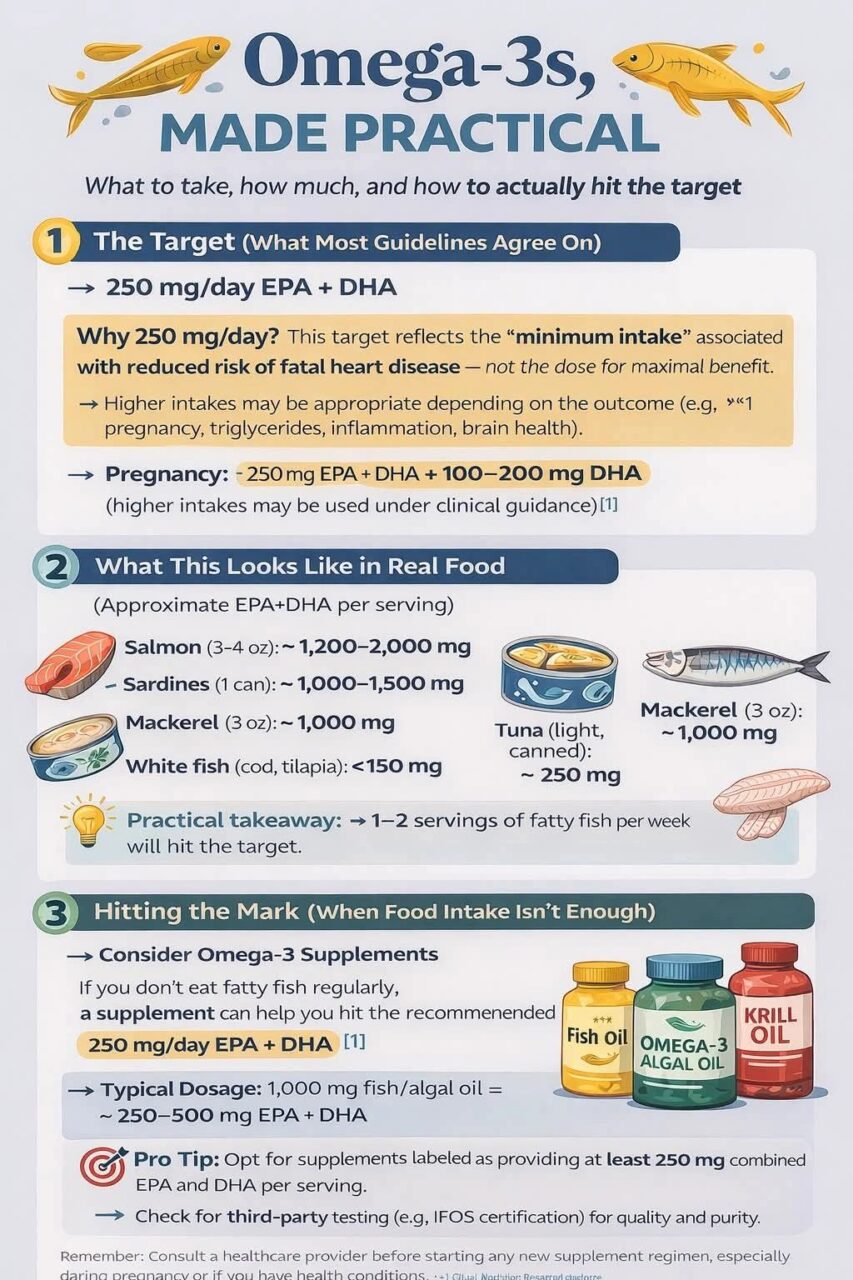
A global review of national and international nutrition guidelines shows that ~76% of people worldwide fail to meet the recommended intake of omega-3 fatty acids EPA and DHA. This gap isn’t subtle, it represents one of the most widespread nutrient shortfalls affecting otherwise healthy populations.
What’s often misunderstood is what the recommendation actually represents.
The most frequently cited target (~250 mg per day of combined EPA + DHA) is not a “maximum benefit” dose.
It is the minimum intake consistently associated with measurable health protection, particularly a reduced risk of fatal coronary heart disease and sudden cardiac death.
Large population datasets show that cardiovascular risk declines as EPA+DHA intake increases, but this decline plateaus around 250 mg/day. Below that level, risk rises. Above it, additional benefits may occur, but the core mortality signal is already established.
That is why organizations such as FAO/WHO, EFSA, and numerous national health authorities converge on this number.
In other words:
This guideline defines the bare minimum needed to experience benefit, not an optimal or therapeutic dose.
Yet most people aren’t even reaching that baseline.
Food-based strategies alone often fall short due to:
Low oily fish consumption
Cultural and geographic barriers
Sustainability concerns
Confusing and inconsistent guidelines between countries
As a result, the review highlights that supplementation or enriched foods are often required, particularly during pregnancy and in individuals with low fish intake.
Pregnancy recommendations build on the same baseline, typically advising 250 mg EPA+DHA plus an additional 100–200 mg DHA, reflecting increased biological demand, not a different philosophy.
Omega-3s support health across the entire life course, from fetal neurodevelopment and visual function to cardiovascular health, immune regulation, and healthy aging. But none of those benefits matter if people never reach the threshold where benefit begins.
This isn’t about doing everything possible.
It’s about doing enough to matter.”
Explore more posts for deeper insights into hemostasis with Hemostasis Today.
-
Oct 9, 2026, 13:32W David Freeman։ The Mechanical Penumbra in Intracerebral Hemorrhage and Its Potential for Tissue Recovery
-
Oct 9, 2026, 13:11Ayshathul Noora։ Carbetocin vs Oxytocin in Preventing Postpartum Hemorrhage
-
Oct 9, 2026, 13:07The Rebalanced Patient: New Therapies and New Thrombotic Risks in Hemophilia
-
Oct 9, 2026, 12:48Santiago Cepeda Chafla: CereBleed Simplifies Brain Hemorrhage Assessment
-
Oct 9, 2026, 12:34Abdul Muqtadir Abbasi: Pancytopenia Is a Finding, Not a Diagnosis
-
Oct 9, 2026, 12:24Mercy Lung’aho: When Diet Quality and Nutritional Biomarkers Tell Different Stories
-
Oct 9, 2026, 12:22Eugene Fan: Bridging Therapeutic Breakthroughs and Equitable Thalassaemia Care
-
Oct 9, 2026, 12:14Brittany Busse: A New Focus on Iron Deficiency Before Anemia
-
Oct 9, 2026, 12:13Akshat Jain: A New Textbook Bringing Global Perspectives on Sickle Cell Disease