


Bartosz Hudzik on Cancer With ACS: Big Step Forward for Cardio-Oncology
Bartosz Hudzik, Editorial Consultant at JACC Case Reports, shared on LinkedIn about a recent article by Florian A Wenzl et al, published in The Lancet:
”Big step forward for cardio-oncology.
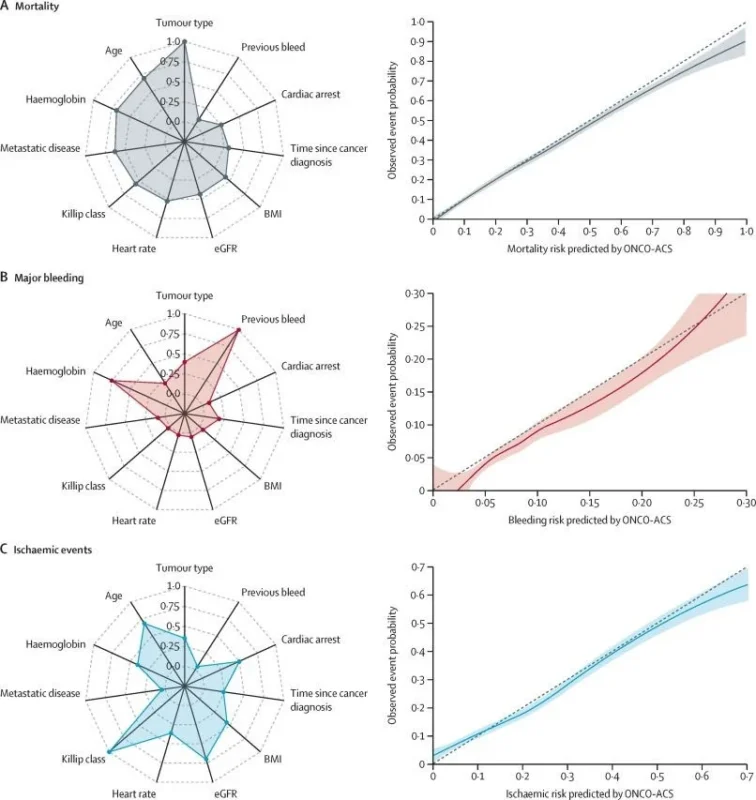
Patients with cancer plus acute coronary syndrome (ACS) sit at the crossroads of very high mortality, bleeding, and ischaemic risk — yet until now, clinicians have had no standardised way to balance these competing risks when making treatment decisions.
New research introduces the ONCO-ACS score, a clinically practical, externally validated risk tool that predicts:
• All-cause mortality
• Major bleeding
• Ischaemic events (CV death, MI, or ischaemic stroke)
—all at a 6-month horizon.
What makes ONCO-ACS different?
• Built from >1 million ACS patients across England, Sweden, and Switzerland
• Focused specifically on patients with cancer
• Integrates cancer-specific factors (tumour type, metastatic disease, time since diagnosis) alongside traditional cardiovascular variables
• Strong discrimination and calibration across multiple countries
• Demonstrates real clinical utility in decision curve analyses
Why this matters
ONCO-ACS supports a combined assessment of mortality, bleeding, and ischaemic risk — helping clinicians better individualise decisions around:
• Invasive management
• Duration and intensity of dual antiplatelet therapy
Applied to current guidelines, most patients with cancer and ACS would still qualify for invasive strategies and prolonged DAPT with clopidogrel, but now with data-driven confidence.
Read the full study here.
A powerful example of how large-scale data and machine learning can translate into practical bedside tools.”
Title: Prediction of mortality, bleeding, and ischaemic events in patients with cancer and acute coronary syndrome: a model development and validation study
Authors: Florian A Wenzl, Kok Weng Ow, Matthijs A Velders, Freya Tyrer, Lizz Paley, Jennifer Lai, Maria A Smolle, Victor Schweiger, Emil Hagström, Mark A de Belder, Peizhi Wang, Antanas Gasys, Moa Simonsson, Clive Weston, Davide Di Vece, Christian Templin, Hans Rickli, Dragana Radovanovic, Thomas M Suter, Lorenz Räber, Michael D Peake, John Deanfield, Stefan James, David Adlam, Thomas F Lüscher
Read the Full Article on The Lancet
Stay updated on all scientific advances with Hemostasis Today.
-
Sep 25, 2026, 10:49Shefina S: From Presenting to Hosting at TRANSCON 2026
-
Sep 25, 2026, 10:37Michelle Leona Cecil: Hemophilia Advocacy and the Power of Community
-
Sep 25, 2026, 10:13Michael Baria: Platelet Concentration and PRP Outcomes in Partial Rotator Cuff Tears
-
Sep 25, 2026, 09:49Haley Coleman: Volunteering to Support Hemophilia Awareness
-
Sep 25, 2026, 08:55Hitarth Mehta: BHMS Students Gain Practical Exposure to Haemophilia Diagnosis
-
Sep 25, 2026, 07:25Varun Capoor: How Therapeutic Apheresis and Transfusion Medicine Can Complement Clinical Management in SCD
-
Sep 25, 2026, 07:14Manshi Kesharwani: SAK-GQDs Modulate Thrombus Burden and Endothelial Function in Deep Vein Thrombosis
-
Sep 25, 2026, 06:20Farjah Hassan Algahtani: How Can We Better Identify Patients at Risk of Blood Clots after Metabolic and Bariatric Surgery?
-
Sep 25, 2026, 05:59Carla Lewis: Kids Conquering Sickle Disease Joins Nemours Children’s Hospital for 2nd Annual Awareness Event