

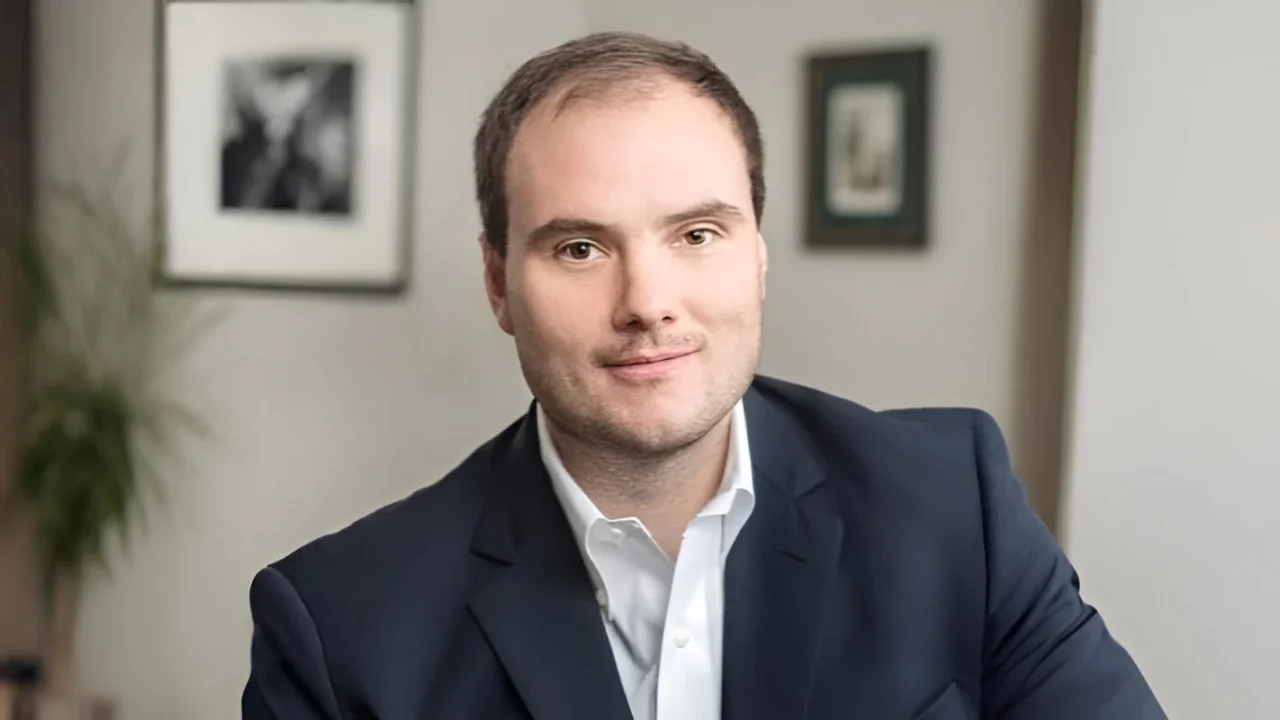
Joshua Bernstock: Prehospital Stroke Triage Has Hit a Ceiling
Joshua Bernstock, Visiting Scientist at Massachusetts Institute of Technology, shared on LinkedIn about a recent article he and his colleagues co-authored, adding:
”Prehospital stroke triage has hit a ceiling — and biomarkers are the way through it.
Our new Neurology paper just went live: a systematic review and network meta-analysis of 58 studies, 58,000+ patients, and 33 prehospital stroke scales evaluating detection of large vessel occlusion (LVO).
The takeaway is uncomfortable but important:
Clinical exam–based scales alone are no longer enough.
Yes, some scales perform better than others depending on setting and thresholds.
But across the board, sensitivity and specificity plateau in the ~80–90% range, with wide variability, limited generalizability, and heavy dependence on who is doing the exam and where it’s performed.
Meanwhile, LVOs account for a minority of ischemic strokes — yet drive the vast majority of disability and mortality.
This is where biomarkers change the game.
Just as troponin transformed MI diagnosis, integrating blood-based markers (e.g., GFAP, D-dimer) with clinical assessment offers something physical exams alone cannot:
-Pathophysiologic specificity
-Objective, reproducible signal
-The ability to distinguish ischemic vs hemorrhagic stroke before hospital arrival
Multiple prospective datasets now show that combining biomarkers with simple clinical scales can dramatically improve LVO detection, enabling:
-Smarter bypass decisions
-Faster thrombectomy
-Fewer futile transfers
-Better outcomes — especially in resource-limited settings
The next frontier in stroke care is not a better scale — it’s better biology, deployed earlier.
If we are serious about equity, speed, and outcomes in stroke systems of care, prehospital biomarker-enabled triage needs to move from “promising” to “standard.””
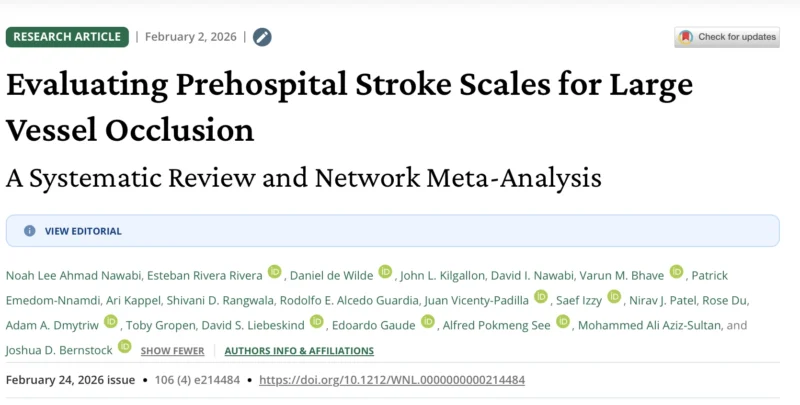
Title: Evaluating Prehospital Stroke Scales for Large Vessel Occlusion: A Systematic Review and Network Meta-Analysis
Authors: Noah Lee Ahmad Nawabi, Esteban Rivera Rivera, Daniel de Wilde, John L. Kilgallon, David I. Nawabi, Varun M. Bhave, Patrick Emedom-Nnamdi, Ari Kappel, Shivani D. Rangwala, Rodolfo E. Alcedo Guardia, Juan Vicenty-Padilla, Saef Izzy, Nirav J. Patel, Rose Du, Adam A. Dmytriw, Toby Gropen, David S. Liebeskind, Edoardo Gaude, Alfred Pokmeng See, Mohammed Ali Aziz-Sultan, Joshua D. Bernstock
Read the Full Article on Neurology Journals
Stay updated on all scientific advances with Hemostasis Today.
-
Sep 25, 2026, 07:25Varun Capoor: How Therapeutic Apheresis and Transfusion Medicine Can Complement Clinical Management in SCD
-
Sep 25, 2026, 07:14Manshi Kesharwani: SAK-GQDs Modulate Thrombus Burden and Endothelial Function in Deep Vein Thrombosis
-
Sep 25, 2026, 06:20Farjah Hassan Algahtani: How Can We Better Identify Patients at Risk of Blood Clots after Metabolic and Bariatric Surgery?
-
Sep 25, 2026, 05:59Carla Lewis: Kids Conquering Sickle Disease Joins Nemours Children’s Hospital for 2nd Annual Awareness Event
-
Sep 25, 2026, 05:47Omid Seidizadeh: Evolutionary Constraint and Population Variation Across Coagulation Genes
-
Sep 25, 2026, 05:40Gerald Bertrand: Presenting UMi-NGS Non-Invasive Foetal HPA Genotyping at DGTI 2026
-
Sep 25, 2026, 05:33Urge Congress to support the Sickle Cell Disease Comprehensive Care Act – ASH
-
Sep 25, 2026, 05:24Isabelle Mahé: Reduced-Dose Apixaban in Extended CAT Treatment
-
Sep 25, 2026, 05:15Maria Cherska: High Cholesterol Isn’t Always Diet or Lifestyle – Sometimes It’s Genetic