


Jan Sloves: Turning Routine Duplex into a Multiparametric Evaluation of Limb Edema
Jan Sloves, President and Consultant at Vascular Imaging Professionals LLC, shared a post on LinkedIn about a recent article by Luca Palombi et al, published in Phlebology:
“We Often Use Venous Duplex to ‘exclude DVT and Reflux’ in Patients with Limb Swelling-But How Often Do We Deliberately Look for Lymphedema?
A just published pictorial essay by Luca Palombi et al. in Phlebology 2026 highlights how duplex ultrasound can directly visualize lymphatic‑related tissue changes and help stage lymphedema, not just rule out venous disease.
The authors remind us that lymphedema is still frequently misdiagnosed as chronic venous insufficiency or lipedema despite distinct tissue changes on ultrasound.
Key sonographic insights that stood out to me:
- Early/mild lymphedema tends to show a ‘vertical‘ pattern: fluid tracking from the dermis toward the superficial fascia along perivascular and peri-lymphatic planes
- Moderate–severe chronic lymphedema shows a ‘horizontal‘ pattern: transversely expanded, fibroadipose subcutaneous tissue with hypoechoic lymphatic lacunae
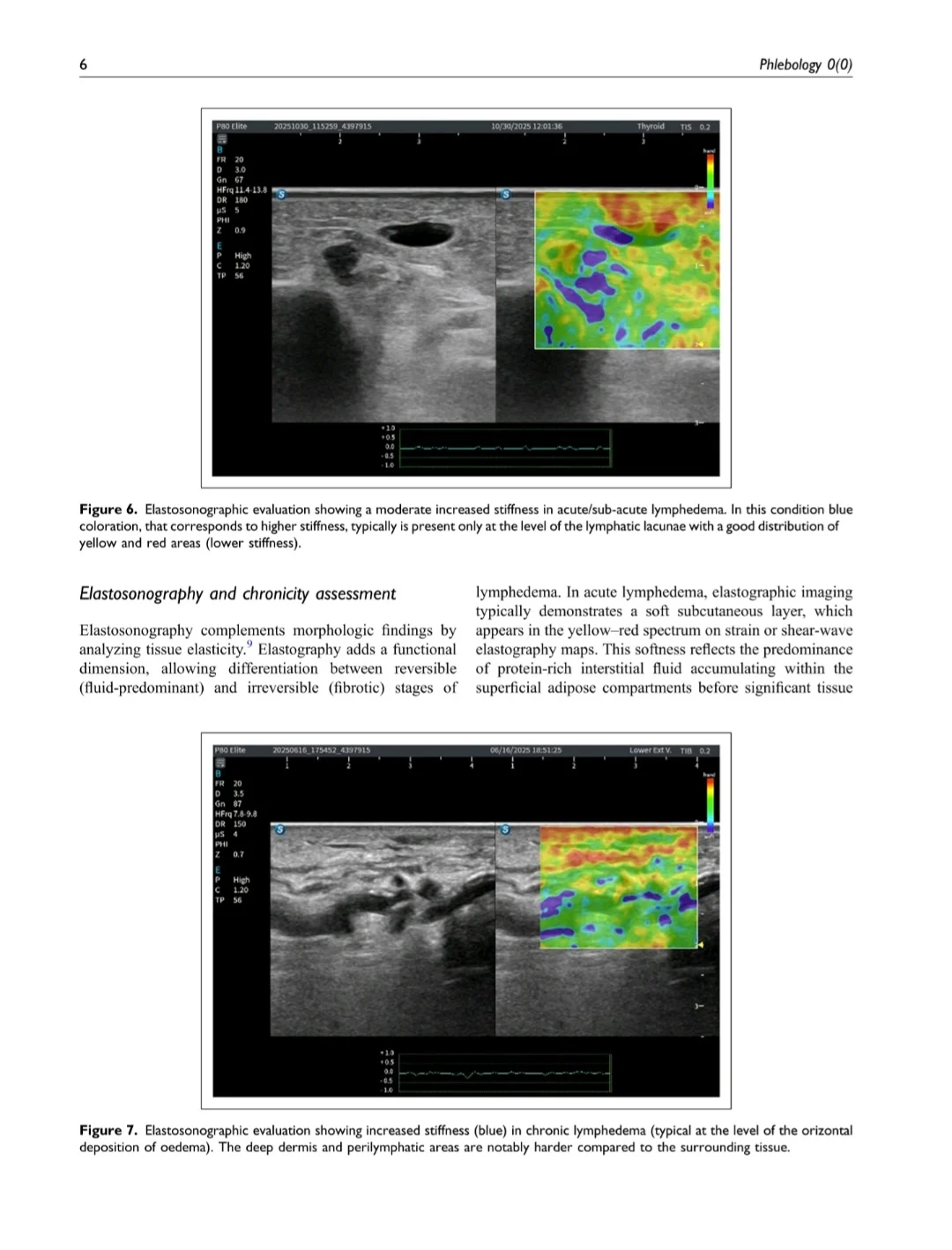
- Superficial lymphatics appear as thin‑walled, tortuous, non‑compressible, Doppler‑silent channels, even with distal manual compression, helping distinguish them from small veins
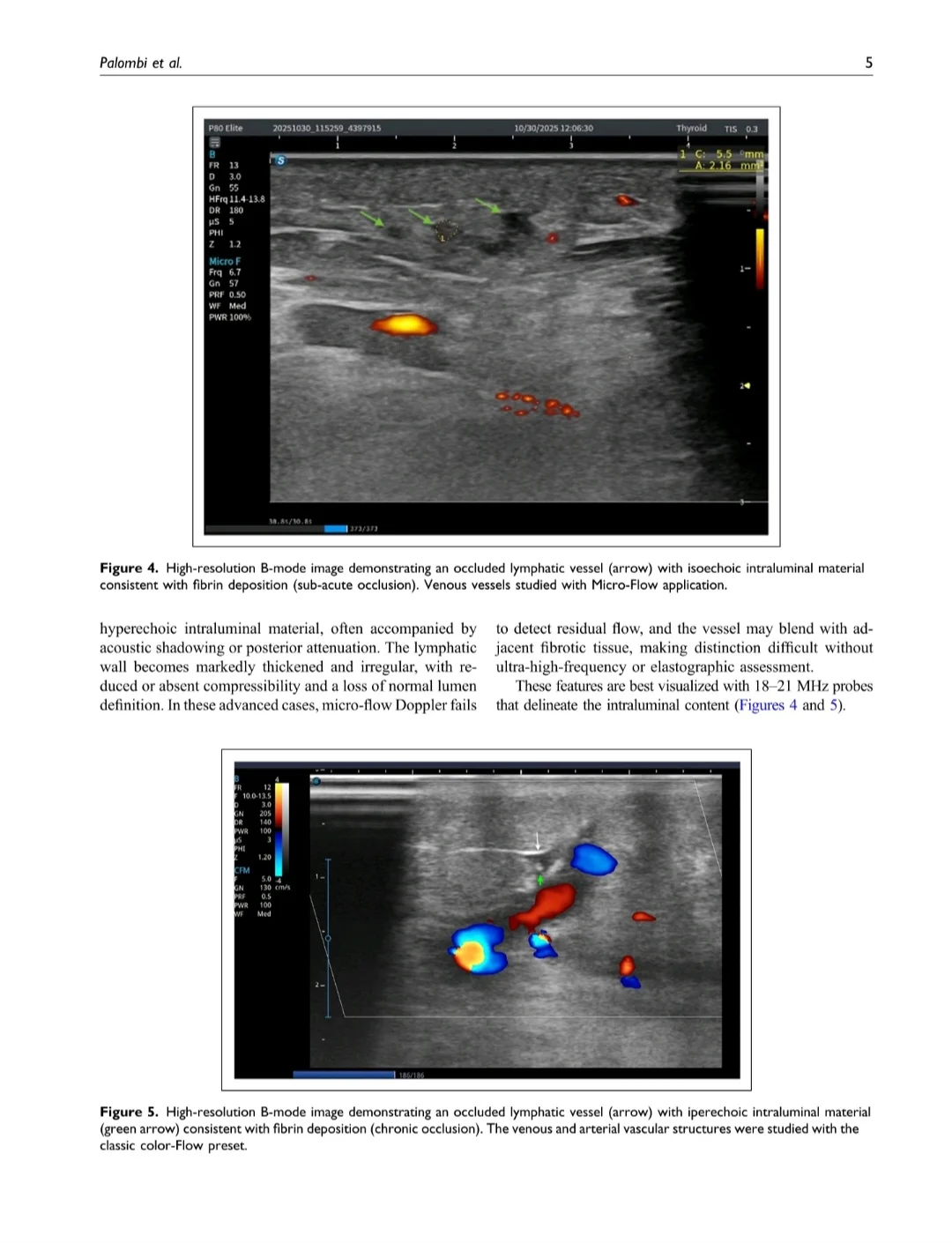
- High‑frequency imaging and micro‑flow presets can show intraluminal fibrinous plugs in chronically obstructed lymphatics, offering a window into irreversible damage
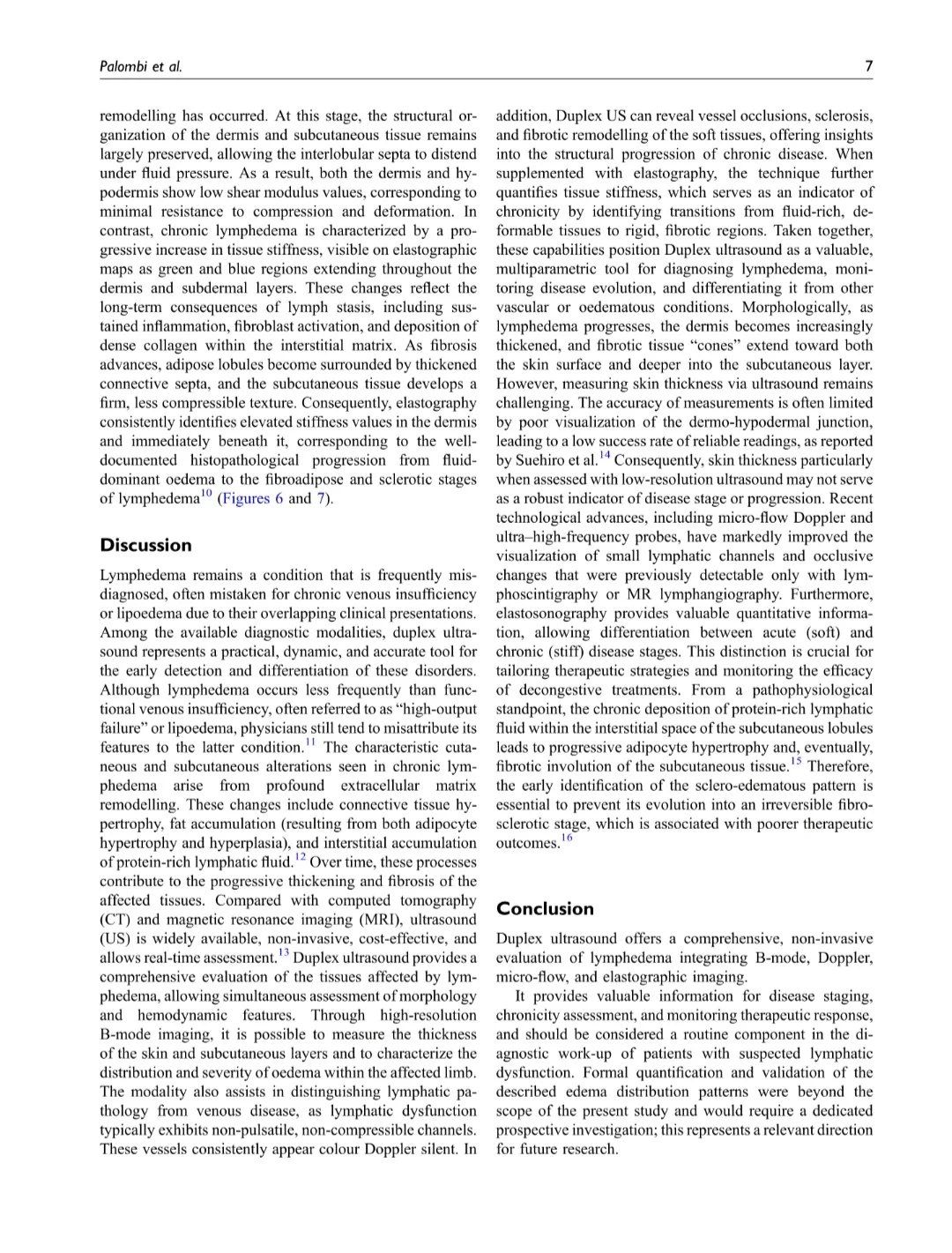
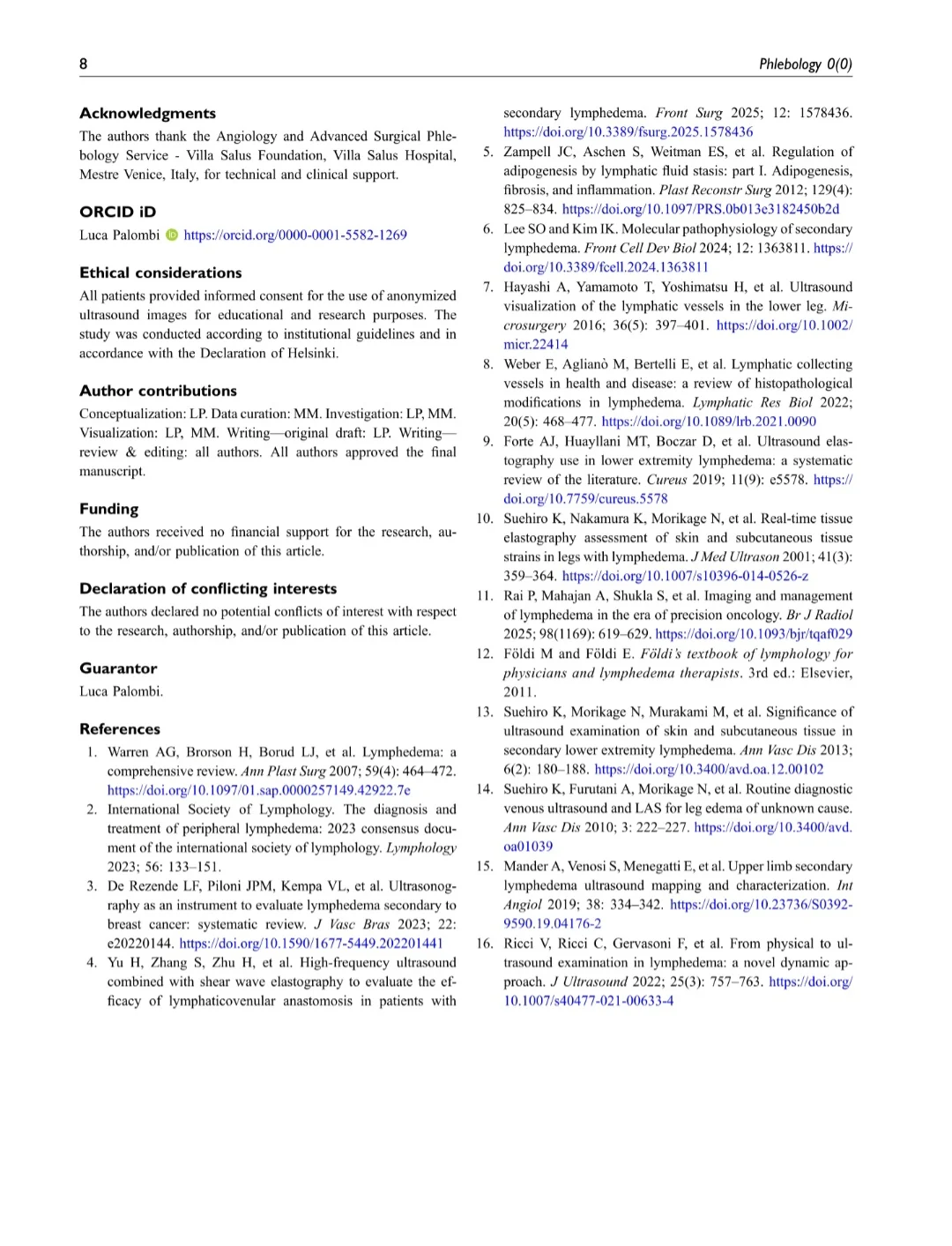
- Elastography adds a functional layer: ‘soft‘ fluid‑predominant acute disease versus ‘stiff’ fibrotic chronic disease, supporting assessment of chronicity and treatment planning
- The examinations used high‑frequency probes plus micro‑flow and elastography with AI‑assisted image optimization to enhance lymphatic and soft‑tissue visualization and reduce operator dependency. The authors utilized transducer frequencies from 18-21 MHz for superficial lymphatic channels and skin layers and ultra-high frequencies 48-70 MHz for depicting even smaller lymphatic vessels
For those scanning ‘just to rule out venous disease’, this paper is a useful reminder that a focused lymphatic/soft‑tissue assessment can turn a routine duplex into a genuinely multiparametric evaluation of limb edema and should be part of the standard work‑up when lymphedema is on the table.
Subscribe to the only newsletter built for vascular pros.”
Title: Duplex ultrasound evaluation in lymphedema: Pictorial essay
Authors: Luca Palombi, Fabio Martinelli, Ali Ahmad Chraim, Roberto Parisi, Luca Ferretto, Monica Morelli
Read the Full Article on Phlebology

Other articles featuring Jan Sloves on Hemostasis Today.
-
Oct 10, 2026, 17:58Archo Farzana Batool: Exploring Medical Writing Through an Article on Iron Deficiency Anemia
-
Oct 10, 2026, 17:53Assessing Frailty in Adults With Hemophilia – JTH
-
Oct 10, 2026, 17:52Fatma Sadeghi: Reducing Maternal Health Inequalities Through Nursing Advocacy
-
Oct 10, 2026, 17:50Grzegorz Hensler: How Apheresis Transformed Blood Cell Separation and Collection
-
Oct 10, 2026, 17:47Hemant K Sharma: Japan’s Universal Artificial Blood Research – A Potential Breakthrough in Transfusion Medicine
-
Oct 10, 2026, 17:40John Strouse: Learning About Bleeding Disorders and Sickle Cell Disease at FWGBD
-
Oct 10, 2026, 17:34Mae Caime: Speaking at the Annual Women’s Retreat for the Hemophilia Community in Florida
-
Oct 10, 2026, 17:30Chokri Ben Lamine: PNH beyond the Textbook Triad
-
Oct 10, 2026, 17:29Ruah Alyamany: Thrombosis and Anticoagulation in Hematological Malignancies at SOHO KSA 2026