

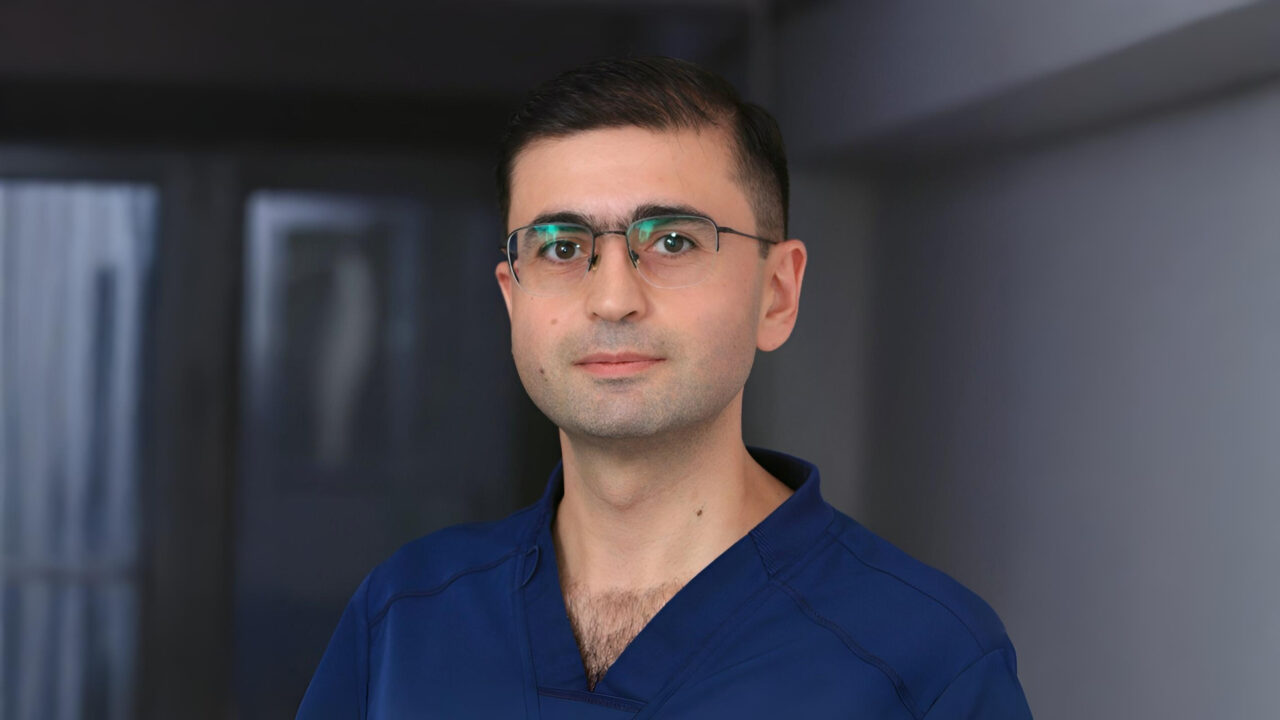
Haykaz Muradyan: The Use of REBOA in Obstetric Haemorrhage
Haykaz Muradyan, Head of the Department of Anaesthesiology and Intensive Care at Arzni Aesthetica Surgicenter, shared on LinkedIn about a recent article by Karam Azem et al, published in European Journal of Anaesthesiology:
”Placenta accreta spectrum is not just an obstetric challenge.
It is a haemorrhage challenge.
An airway challenge.
A haemodynamic challenge.
And most importantly — a team challenge.
A recent international multicentre study explored anaesthetic strategies for managing PAS using REBOA — and several insights stand out for everyday clinical practice.
Here are the key takeaways:
- Neuraxial anaesthesia was the preferred initial strategy — but more than half of cases required conversion to general anaesthesia.
Translation: always be ready to switch plans. - Combined spinal-epidural (CSE) may offer flexibility, but intraoperative pain — especially during REBOA (Resuscitative Endovascular Balloon Occlusion of the Aorta) inflation — remains a real issue.
- Ultrasound-guided REBOA significantly reduced time to delivery compared with fluoroscopy.
Sometimes workflow logistics matter as much as technical skills. - Balloon inflation was not necessary in all cases, highlighting the importance of dynamic intraoperative decision-making rather than protocol-driven overuse.
- Maternal and neonatal outcomes were generally favourable, with low complication rates — reinforcing the value of multidisciplinary planning.
What struck me most:
Managing PAS is less about choosing the ‘perfect anaesthetic technique’ — and more about preparation, adaptability, and coordinated teamwork under rapidly changing conditions.
I’m curious how colleagues approach PAS cases:
- Do you start with neuraxial or general anaesthesia?
- Have you used REBOA in obstetric haemorrhage?
- What has changed your practice the most?
Please share your experience and thoughts in the comments”
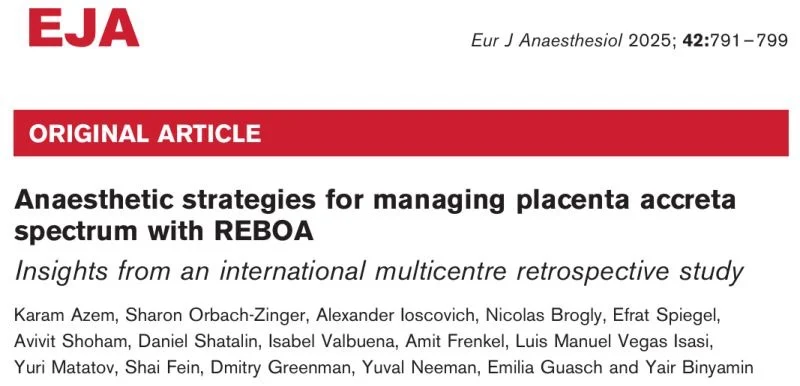
Title: Anaesthetic strategies for managing placenta accreta spectrum with REBOA: Insights from an international multicentre retrospective study
Authors: Karam Azem, Sharon Orbach-Zinger, Alexander loscovich, Nicolas Brogly, Efrat Spiegel, Avivit Shoham, Daniel Shatalin, Isabel Valbuena, Amit Frenkel, Luis Manuel Vegas Isasi, Yuri Matatov, Shai Fein, Dmitry Greenman, Yuval Neeman, Emilia Guasch and Yair Binyamin
Read the Full Article on European Journal of Anaesthesiology
Stay updated on all scientific advances with Hemostasis Today.
-
Oct 16, 2026, 10:07Habib Bennaceur: Building a Stronger Care Pathway for Sickle Cell Disease in India
-
Oct 16, 2026, 09:59Tareq Abadl: A Simple Guide to Blood Collection Tubes
-
Oct 16, 2026, 09:50Mona Alfaraj: Distinguishing HCL from SMZL in Bone Marrow
-
Oct 16, 2026, 09:44New International Consensus on Covert Brain Infarction – International Journal of Stroke
-
Oct 16, 2026, 06:17Neha Rastogi Panda: Precision Diagnosis and Organ Preservation in Splenic Abscess
-
Oct 16, 2026, 05:53Alejandro González Veliz: Looking Beyond Coronary Anatomy to Understand Ischemia
-
Oct 16, 2026, 04:16Asmaa M. Gouda: Advancing Blood Bank Leadership at Alexandria University Hospitals
-
Oct 16, 2026, 03:52Saja Al-Zamili: Minimally Invasive Hematoma Evacuation in Intracerebral Hemorrhage
-
Oct 16, 2026, 03:13Bhumika Satija: Beyond the Diploma A Growing Passion for Blood Banking and Transfusion Medicine