


Bastu Odoka: Closing the Gap on Anti-D Prophylaxis in Maternal Care
Bastu Odoka, Transfusion Scientist at Effia-Nkwanta Regional Hospital, shared a post on LinkedIn:
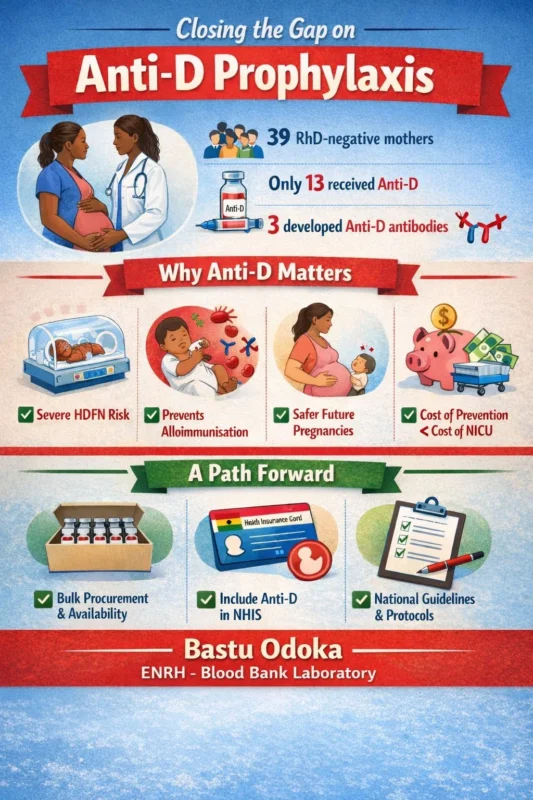
“Anti-D Prophylaxis: A Preventable Gap in Maternal Care
In a recent pre-print review:
- 39 RhD-negative mothers with previous pregnancies
- Only 13 received Anti-D prophylaxis
- 3 of the 13 later developed anti-D antibodies
This is not about blame. It is about systems.
Why Anti-D matters
Anti-D immunoglobulin prevents RhD alloimmunisation when:
- The mother is not already sensitised
- It is administered at routine antenatal timing (around 28 weeks per protocol)
- It is given within 72 hours postpartum when indicated
- All sensitising events are recognised and treated
- Appropriate dosing is used (including for significant fetomaternal haemorrhage)
- Antibody screening (Indirect Antiglobulin Test) is properly documented
If Anti-D is given late, after sensitisation has already occurred, or in inadequate dose, it will not prevent alloimmunisation.
Why this matters clinically
Missed or delayed prophylaxis can lead to:
- Preventable maternal sensitisation
- Haemolytic disease of the fetus and newborn (HDFN)
- High-risk future pregnancies
- Increased neonatal morbidity and healthcare costs
Prevention is safer and far more cost-effective than managing severe neonatal complications.
A systems opportunity in Ghana and similar settings
Strengthening Anti-D access and standardisation could significantly reduce preventable alloimmunisation.
Potential areas for improvement:
- National bulk procurement to ensure consistent availability and reduce unit cost
- Inclusion of Anti-D under NHIS to remove financial barriers
- Development or update of a clear national guideline to standardise timing, dosing, documentation and follow-up
- Strengthening routine antibody screening and documentation practices
This is not only a laboratory issue. It is a maternal and neonatal safety priority.
Preventable alloimmunisation should not become a lifelong risk for mothers when effective prophylaxis exists.
Strong systems protect mothers.
Strong policies protect future generations.”
Stay updated with Hemostasis Today.
-
Oct 10, 2026, 17:58Archo Farzana Batool: Exploring Medical Writing Through an Article on Iron Deficiency Anemia
-
Oct 10, 2026, 17:53Assessing Frailty in Adults With Hemophilia – JTH
-
Oct 10, 2026, 17:52Fatma Sadeghi: Reducing Maternal Health Inequalities Through Nursing Advocacy
-
Oct 10, 2026, 17:50Grzegorz Hensler: How Apheresis Transformed Blood Cell Separation and Collection
-
Oct 10, 2026, 17:47Hemant K Sharma: Japan’s Universal Artificial Blood Research – A Potential Breakthrough in Transfusion Medicine
-
Oct 10, 2026, 17:40John Strouse: Learning About Bleeding Disorders and Sickle Cell Disease at FWGBD
-
Oct 10, 2026, 17:34Mae Caime: Speaking at the Annual Women’s Retreat for the Hemophilia Community in Florida
-
Oct 10, 2026, 17:30Chokri Ben Lamine: PNH beyond the Textbook Triad
-
Oct 10, 2026, 17:29Ruah Alyamany: Thrombosis and Anticoagulation in Hematological Malignancies at SOHO KSA 2026