


Manik Madaan/med.psu.edu
Mar 4, 2026, 15:52
Manik Madaan: Understanding 4 Hereditary Clotting Disorders
Manik Madaan, Resident Doctor at Penn State University, shared a post on LinkedIn:
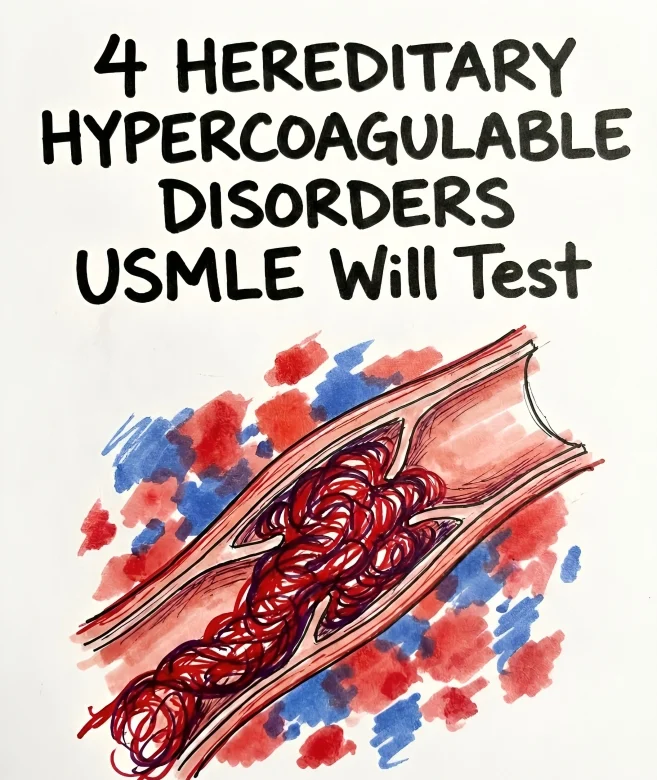
”4 Hereditary Hypercoagulable Disorders Usmle Will Test on Step 1, Step 2, and Step 3
If Usmle give you a Young patient with unprovoked DVT, PE, or recurrent pregnancy loss—think about these 4. All are autosomal dominant and increase venous clot risk.
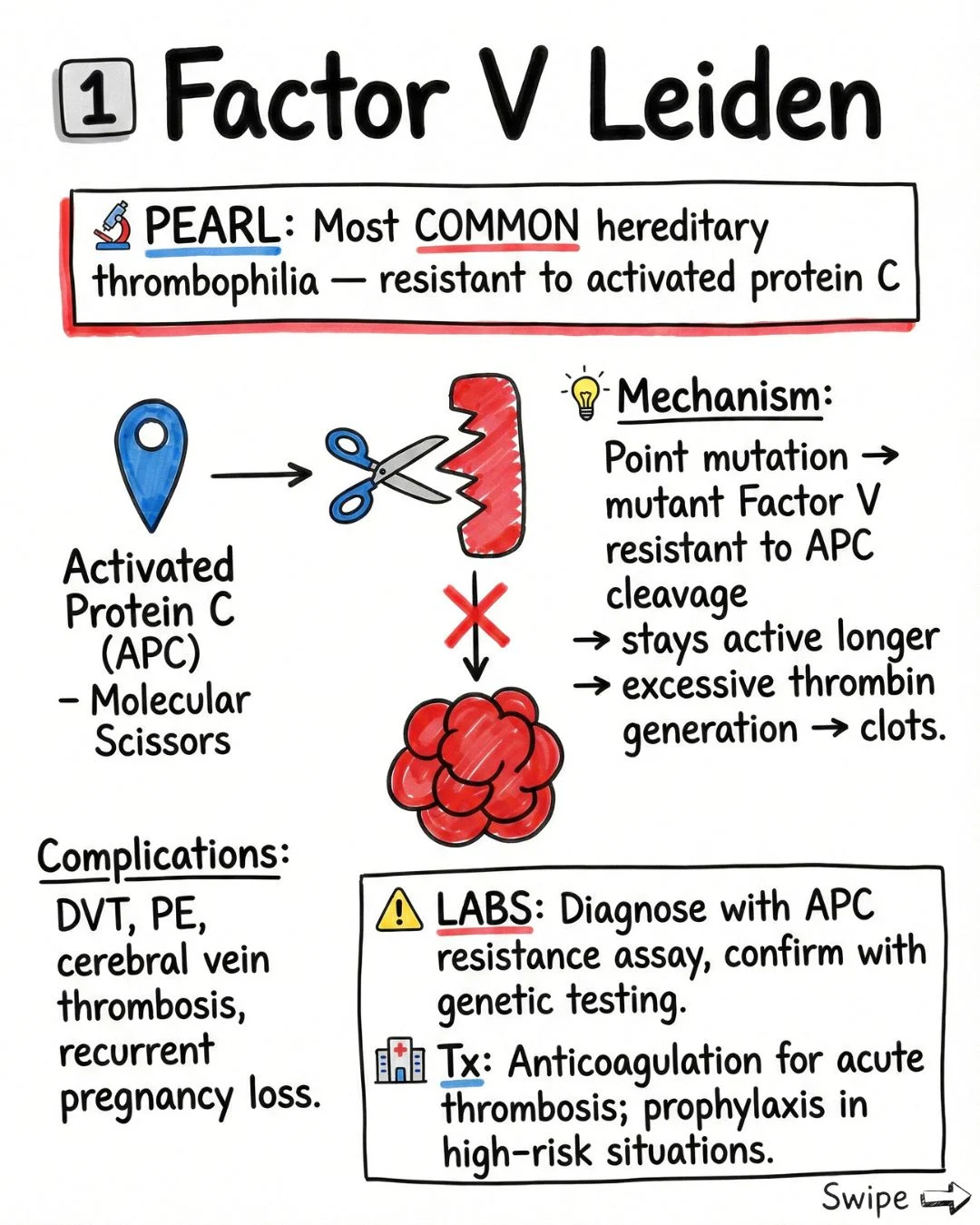
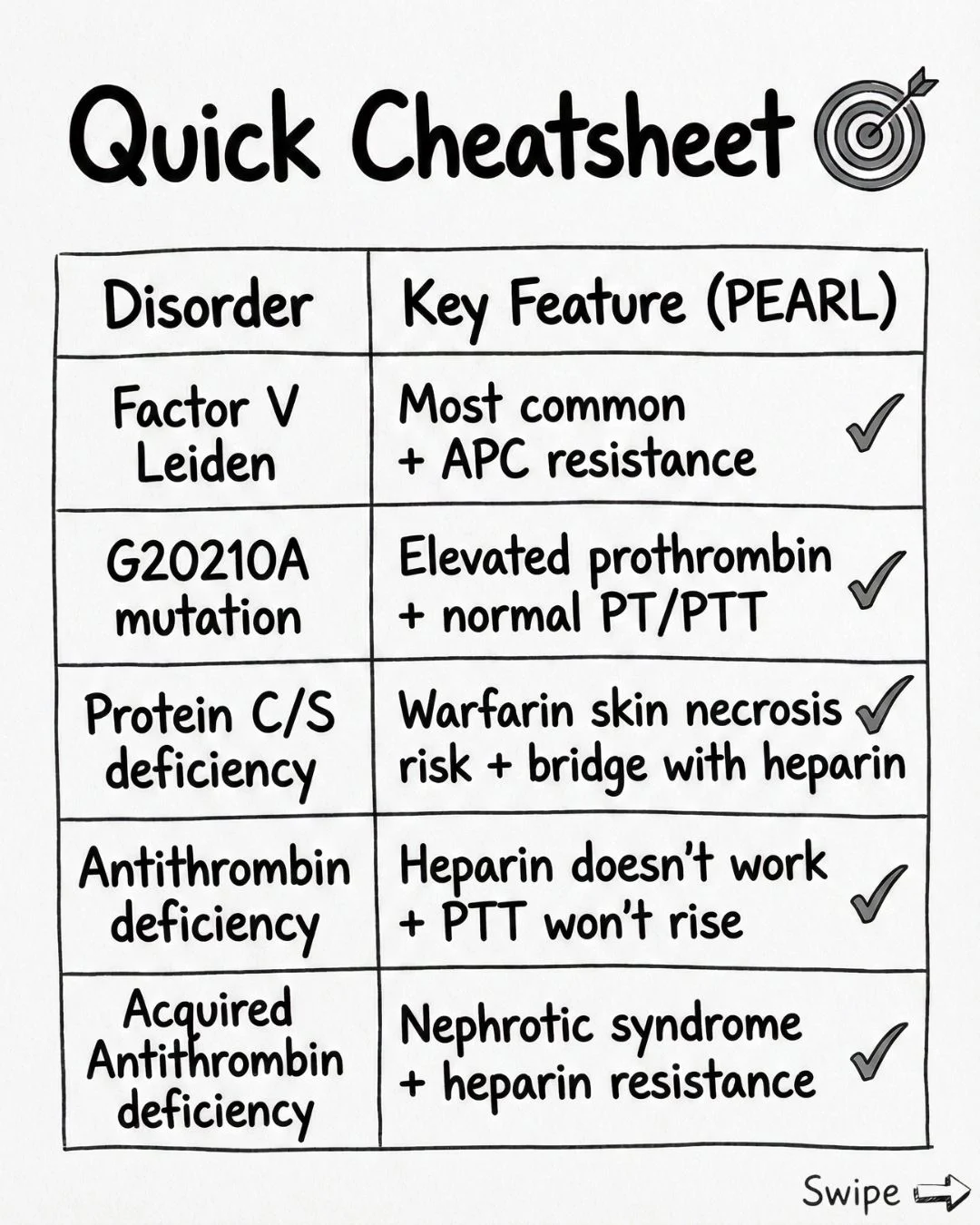
Factor V Leiden
- Most common hereditary thrombophilia. resistant to activated protein C
- Point mutation Arg506Gln produces a mutant Factor V that cannot be cleaved and inactivated by activated protein C APC which causes Factor V to remain active longer and results in excessive thrombin generation that leads to clots.
- Complications: DVT, PE, cerebral vein thrombosis, recurrent pregnancy loss.
- Diagnose with APC resistance assay, confirm with genetic testing.
- Tx: Anticoagulation for acute thrombosis. prophylaxis in high-risk situations
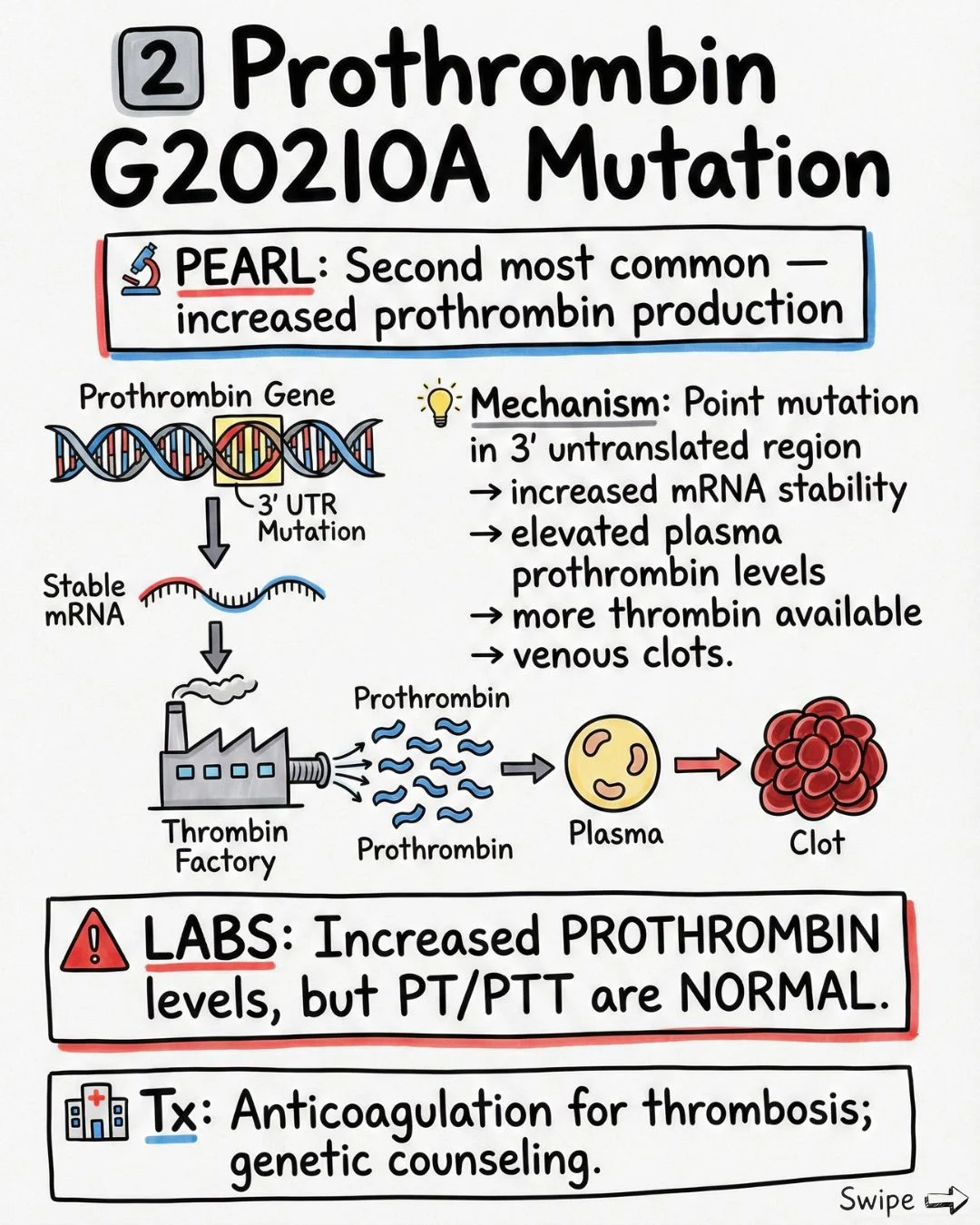
Prothrombin G20210A Mutation
- Second most common. increased prothrombin production
Point mutation in 3’ untranslated region of prothrombin gene leads to increased mRNA stability which results in elevated plasma prothrombin levels which causes more thrombin to be available and ultimately leads to venous clots.
- Increased prothrobin levels, but PT/PTT are normal.
- Tx: Anticoagulation for thrombosis. genetic counseling
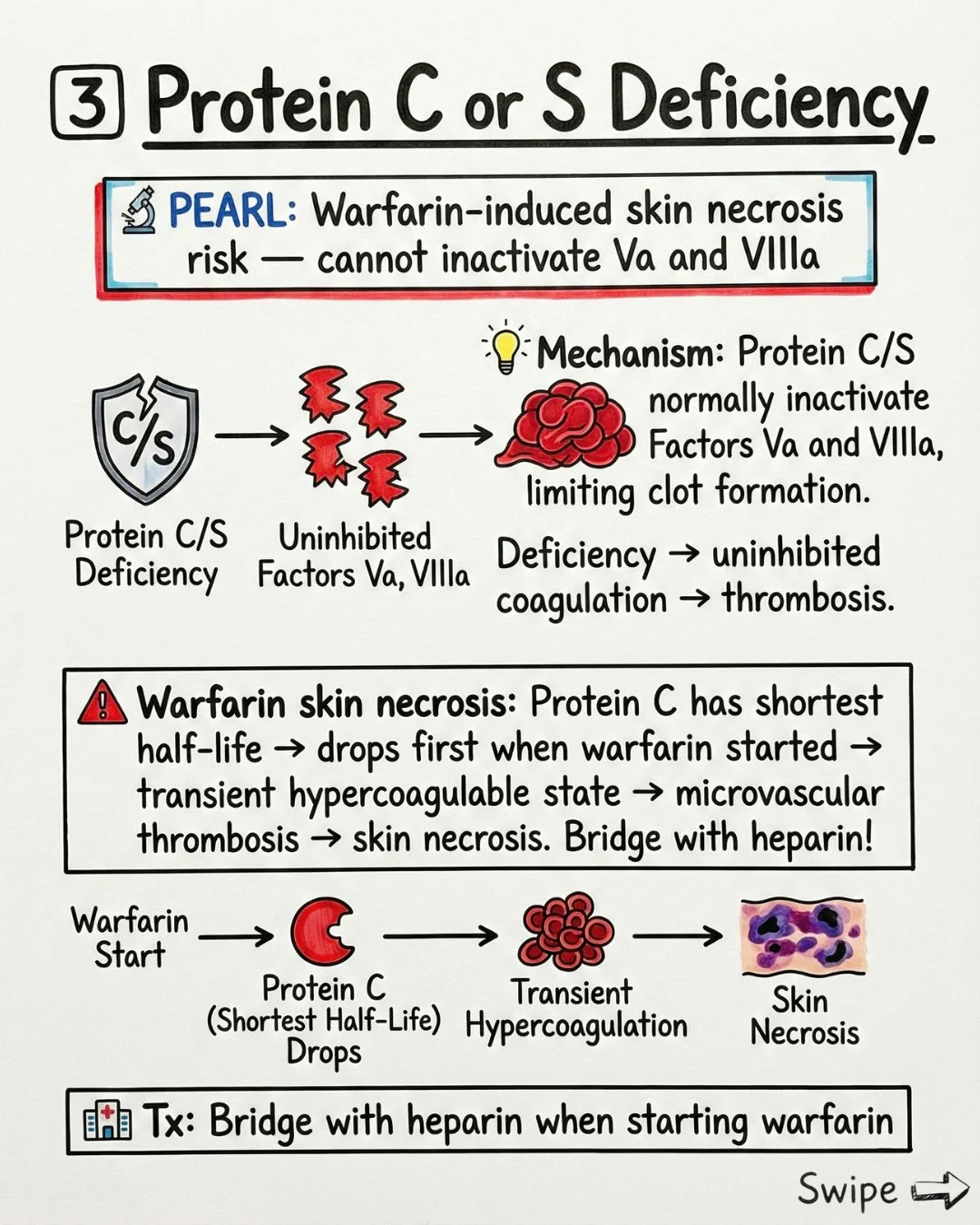
Protein C or S Deficiency
- Warfarin-induced skin necrosis. cannot inactivate Va and VIIIa
- Protein C and Protein S normally inactivate Factors Va and VIIIa and limit clot formation. When there is a deficiency this leads to uninhibited coagulation which results in thrombosis.
- Mnemonic: Protein C ‘Cancels’ and Protein S ‘Stops’ coagulation.
- Warfarin skin necrosis occurs because Protein C has the shortest half life and drops first when warfarin is started which creates a transient hypercoagulable state that leads to microvascular thrombosis and eventually skin necrosis. It is important to bridge with heparin.
- Tx: Bridge with heparin when starting warfarin
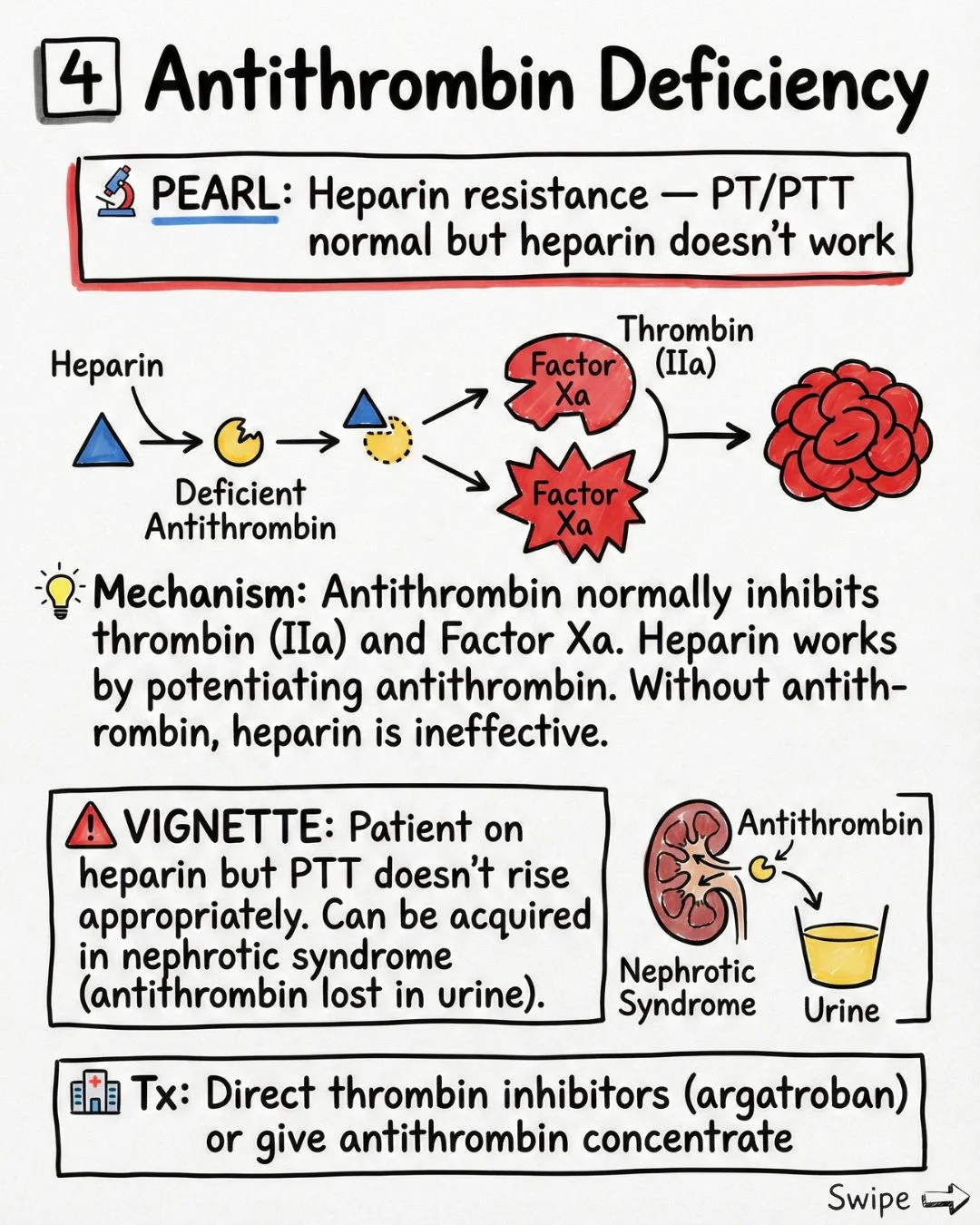
Antithrombin Deficiency
- Heparin resistance. PT/PTT normal but heparin doesn’t work
- Antithrombin normally inhibits thrombin (IIa) and Factor Xa. Heparin works by potentiating antithrombin. Without antithrombin, heparin is ineffective.
- Classic vignette: Patient on heparin but PTT doesn’t rise appropriately. Can be acquired in nephrotic syndrome (antithrombin lost in urine).
- Tx: Direct thrombin inhibitors (argatroban) or give antithrombin concentrate․”
Stay updated with Hemostasis Today.
-
Sep 14, 2026, 23:49Heghine Khachatryan: New evidance – Antiphospholipid Antibodies and Ischemic Stroke
-
Sep 14, 2026, 23:42Eman M. Elsabbagh: Successful HCT Does Not End at Engraftment
-
Sep 14, 2026, 23:31Antonis Kattamis: Proud to Be Part of this Endeavour and Senior Author of the Pivotal Trial
-
Sep 14, 2026, 23:23Farjah Algahtani: Stroke Incidence and Risk Factors in Saudi Patients with Sickle Cell Disease
-
Sep 14, 2026, 20:53YoonHwa An: Rusfertide in Polycythemia Vera – From Clinical Benefit to Strategic Value
-
Sep 14, 2026, 20:52Andres Alberto Mercado Pompa: External Validation of Prognostic Risk Scores in Cerebral Venous Thrombosis
-
Sep 14, 2026, 20:50Balaji Kirushnan: Advancing Regional Citrate Anticoagulation in CRRT – From Experience to Implementation
-
Sep 14, 2026, 20:48Valerie Dehondt: Nutritional Anemia Is Associated With Increased Risk of Severe COPD Exacerbations
-
Sep 14, 2026, 20:46Nupur Choudhury: Exploring AI-Based Detection of Anemia Using Eye and Fingernail Images