


Ahmed Ibrahim: Optimal Antithrombotic Therapy for Secondary Stroke Prevention in Patients with AF and ASCVD
Ahmed Ibrahim, Medical Student at Alexandria University, shared a post on LinkedIn about a recent article that he and his colleagues co-authored:
“For patients with ischemic stroke and comorbid Atrial Fibrillation (AF) and Atherosclerotic Cardiovascular Disease (ASCVD), does adding an antiplatelet to an anticoagulant do more harm than good in secondary stroke prevention?
Key Findings from our Network Meta-Analysis (should be interpreted with caution and contextualized within the study’s limitations):
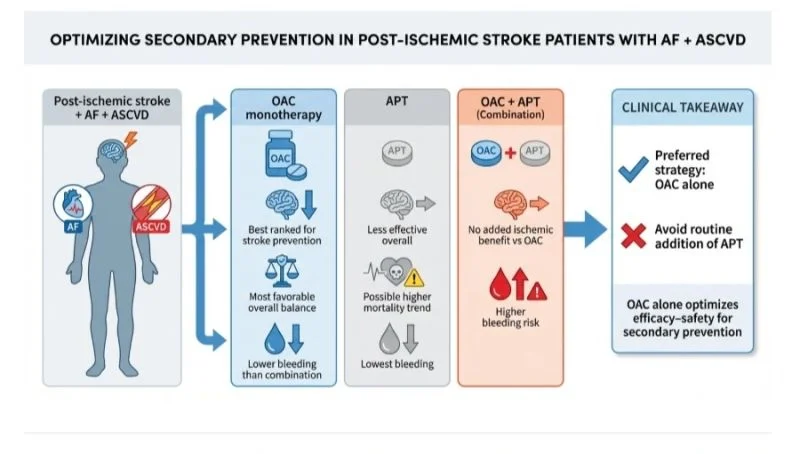
The Power of One: OAC monotherapy emerged as the most favorable strategy for secondary prevention. It provides a balanced profile, offering strong protection against recurrent strokes with potential lower risk of major bleeding compared to combination therapy.
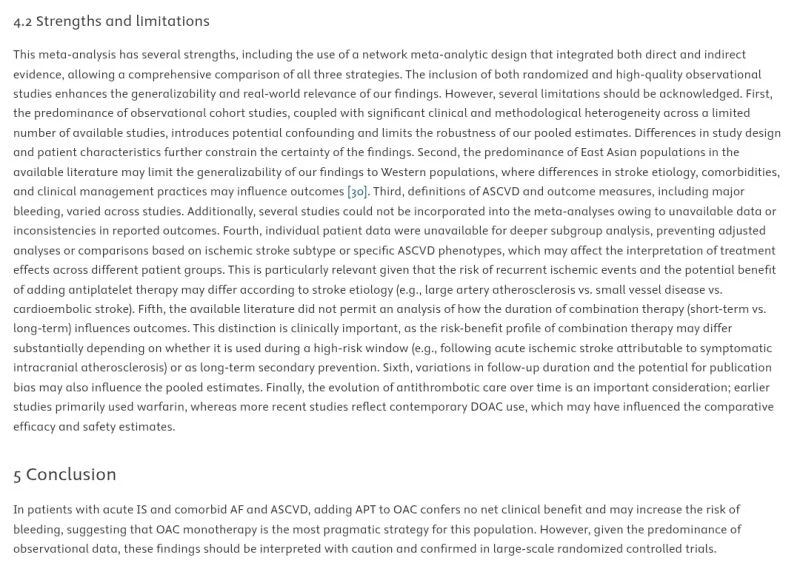
Less is More: Adding antiplatelet therapy (APT) to an anticoagulant did not provide additional clinical benefit. It may increase the risk of major bleeding without significantly reducing the risk of further ischemic events or death.
APT Alone: While APT monotherapy had the lowest bleeding risk, it was associated with a concerning trend toward increased all-cause mortality and was the least effective at preventing recurrent ischemic strokes.
Take-Home Message:
- In secondary stroke prevention for patients with AF and ASCVD, OAC monotherapy appears to offer a favorable balance between efficacy and safety.
- While combination therapy may be considered in select cases with compelling indications, routine use of antiplatelet therapy alongside anticoagulation should be approached with caution due to potential increased bleeding risk without clear added benefit.
Grateful to my colleagues Elsayed Balbaa, Ameer Awashra, Abdalhakim Shubietah, Giulia Cavolina, Alessio villari.
Heartfelt thanks to our seniors, Prof. Giuseppe Andò and Dr. Pierre F. Sabouret, for their invaluable support and guidance.”
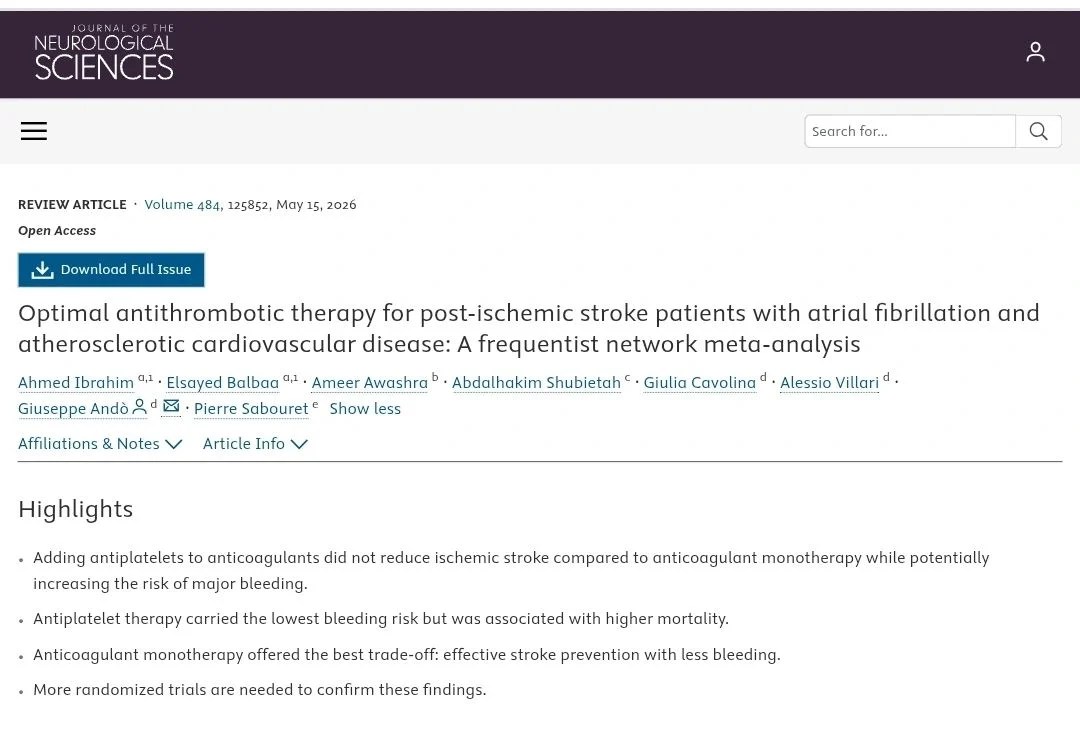
Title: Optimal antithrombotic therapy for post-ischemic stroke patients with atrial fibrillation and atherosclerotic cardiovascular disease: A frequentist network meta-analysis
Authors: Ahmed Ibrahim, Elsayed Balbaa, Ameer Awashra, Abdalhakim Shubietah, Giulia Cavolina, Alessio Villari, Giuseppe Andò, Pierre Sabouret
Read Full Article on Journal of the Neurological Sciences.
Stay updated with Hemostasis Today.
-
Sep 25, 2026, 09:49Haley Coleman: Volunteering to Support Hemophilia Awareness
-
Sep 25, 2026, 08:55Hitarth Mehta: BHMS Students Gain Practical Exposure to Haemophilia Diagnosis
-
Sep 25, 2026, 07:25Varun Capoor: How Therapeutic Apheresis and Transfusion Medicine Can Complement Clinical Management in SCD
-
Sep 25, 2026, 07:14Manshi Kesharwani: SAK-GQDs Modulate Thrombus Burden and Endothelial Function in Deep Vein Thrombosis
-
Sep 25, 2026, 06:20Farjah Hassan Algahtani: How Can We Better Identify Patients at Risk of Blood Clots after Metabolic and Bariatric Surgery?
-
Sep 25, 2026, 05:59Carla Lewis: Kids Conquering Sickle Disease Joins Nemours Children’s Hospital for 2nd Annual Awareness Event
-
Sep 25, 2026, 05:47Omid Seidizadeh: Evolutionary Constraint and Population Variation Across Coagulation Genes
-
Sep 25, 2026, 05:40Gerald Bertrand: Presenting UMi-NGS Non-Invasive Foetal HPA Genotyping at DGTI 2026
-
Sep 25, 2026, 05:33Urge Congress to support the Sickle Cell Disease Comprehensive Care Act – ASH