


Jim Hoffman: Exploring Extracorporeal Strategies to Target NETs in Cardiovascular Disease
Jim Hoffman, Former Technical Advisor at Cygnus Technologies, LLC, shared Apherese ForschungsInstitut – AFI’s post on LinkedIn, adding:
”Lp(a) does not act alone to help facilitate potentially life-threatening occlusive atheromas. Other factors, such as NETosis dysfunction and poor NET clearance, are likely at play, increasing the risk of CVD, heart failure, MI, and strokes.
Here are two other extracorporeal methods that target elevated extracellular chromatin/NETs that I believe should be trialed for potentially reversing diet and drug-refractory atherogenesis. They are simpler to perform and could be more efficacious than H.E.L.P. apheresis and other extracorporeal methods of lipid lowering.
A Novel Role for Lipoprotein(a) in Potentiating Neutrophil Extracellular Trap Formation.
More research linking NETosis dysfunction to atherosclerosis progression and atheroma development can be found
Quoting Apherese ForschungsInstitut – AFI’s post:
”Elevated Lipoprotein(a) is a major, genetically determined driver of cardiovascular risk, yet it remains largely untouched by traditional lifestyle changes and statins.
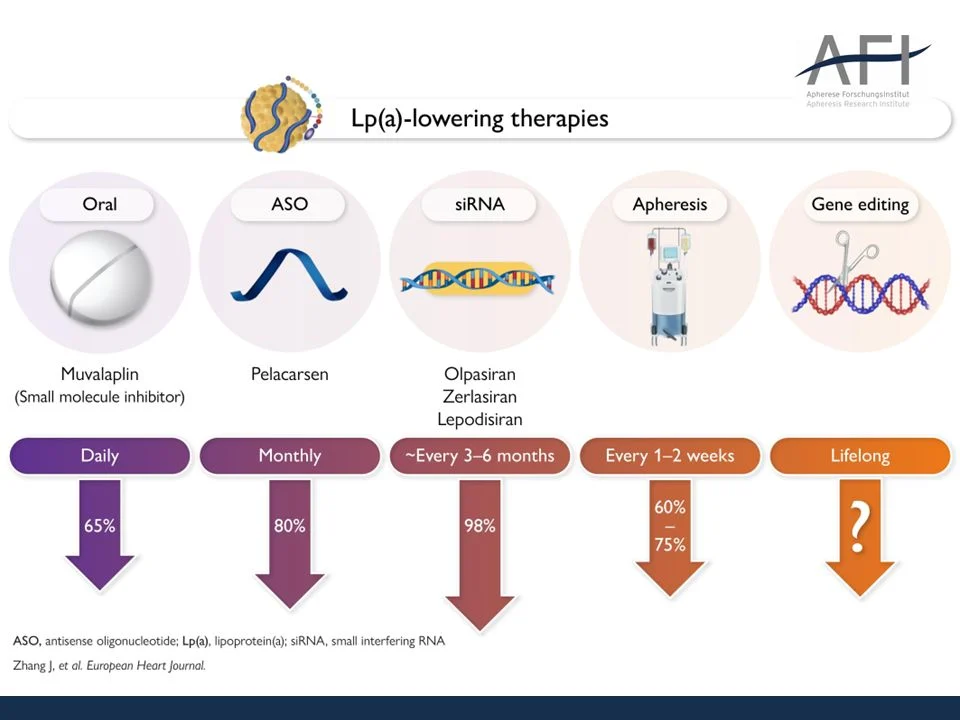
A recent review in the European Heart Journal titled ‘Lipoprotein(a)-lowering therapies: a promising future’ highlights the evolving landscape of treatment.
At the Apherese Forschungsinstitut, we closely follow these developments. Phase III trials of RNA-based therapies specifically targeting Lp(a) are currently underway. Until these new drugs reach the market and prove long-term outcomes, Lipoprotein Apheresis continues to be the life-saving ‘gold standard’ for patients with extreme Lp(a) elevation and progressive ASCVD.
In the current therapeutic landscape, Lipoprotein Apheresis remains the only established and highly effective method to significantly reduce Lp(a) levels and mitigate cardiovascular events in high-risk patients.”
Title: Lipoprotein(a)-lowering therapies: a promising future
Authors: Jingwen Zhang, Ann Marie Navar, Lale Tokgozoglu
Read the Full Article on Apherese ForschungsInstitut – AFI

Stay updated on all scientific advances with Hemostasis Today.
-
Oct 26, 2026, 15:37Sally Mandour: Lupus Anticoagulant-The Tree Key Diagnostic Criteria
-
Oct 26, 2026, 15:37Aryabhatta Sadhu: Intrauterine Red-Cell and Platelet Transfusion in Fetal Medicine
-
Oct 26, 2026, 15:25Christine Tunkl: Telestroke – Expanding Access to Evidence-Based Stroke Care
-
Oct 26, 2026, 15:13Heghine Khachatryan: Approaching Thrombocytopenia Through Mechanism and Clinical Context
-
Oct 26, 2026, 15:03Quentin Eichbaum։ AABB 2026 Annual Meeting Personal Highlights
-
Oct 26, 2026, 14:57A Father’s Marathon Journey Inspired by His Son – National Bleeding Disorders Foundation
-
Oct 26, 2026, 14:48Fran Huelsmeyer: The Clinical Importance of Blood Donation in Maternal Care
-
Oct 26, 2026, 14:45Maria Elisa Mancuso: Shaping the Future of Hemophilia Care with Patients
-
Oct 26, 2026, 14:35Choosing the Right VTE Risk Assessment Model for Clinical Practice