

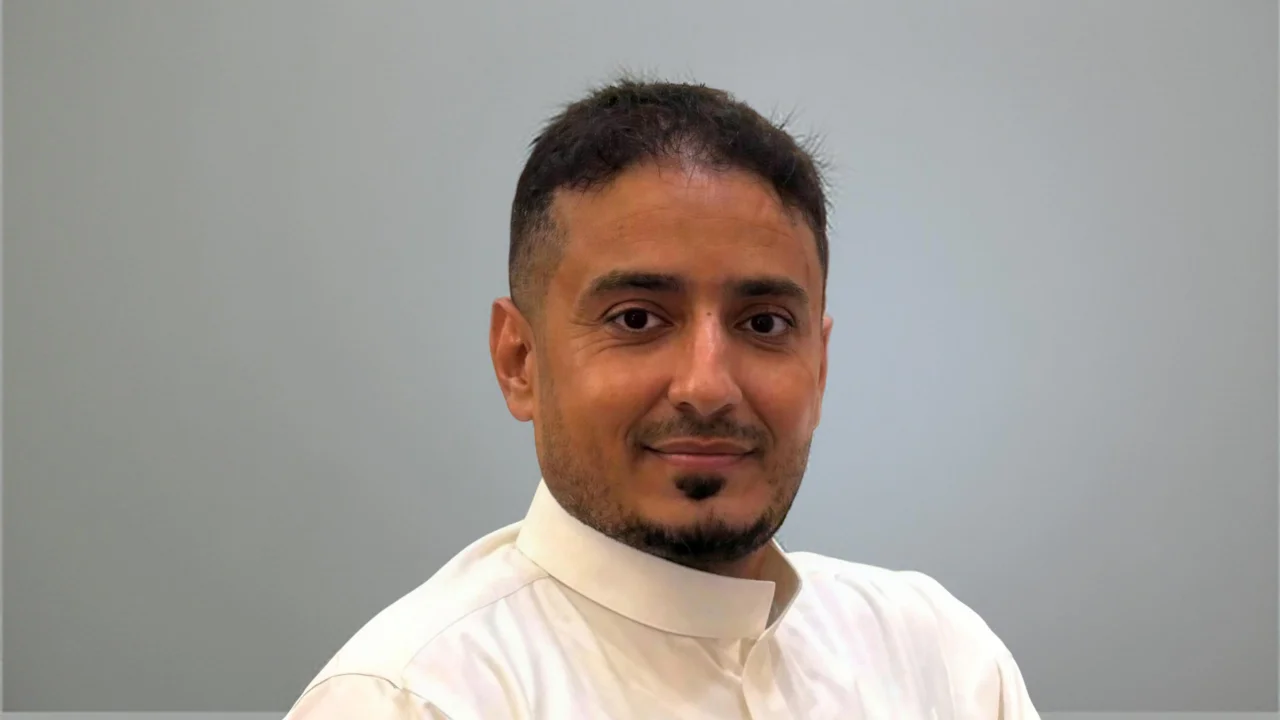
Tareq Abadl: Why Do Some People Bruise And Bleed So Easily?
Tareq Abadl, Medical Laboratory Specialist and Director of the Blood Bank at Dr. Abdelkader Al-Mutawakkil Hospital, shared a post on LinkedIn:
”’Why do some people bruise and bleed so easily?’
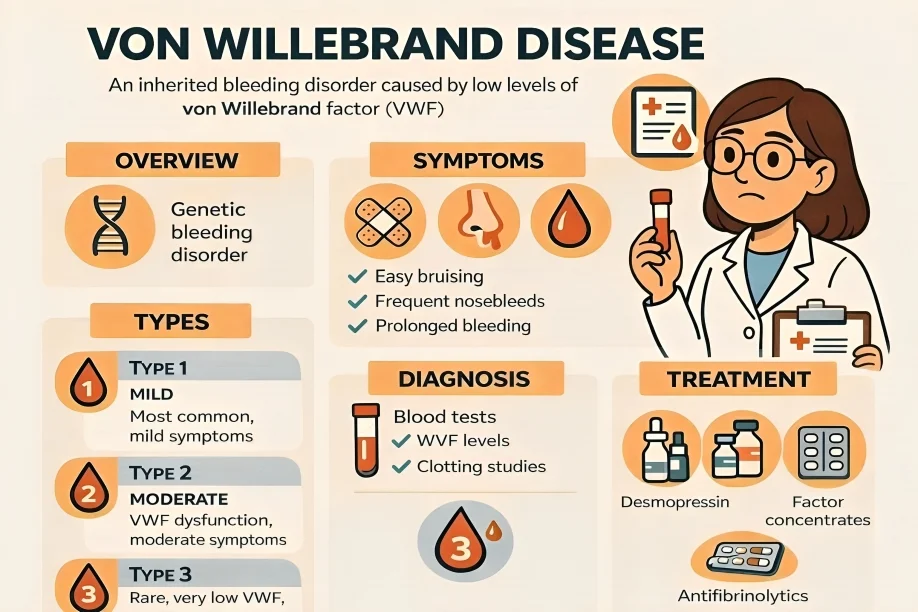
It’s not just weakness or coincidence… it could be linked to something called von Willebrand Disease (VWD)
What is it?
- A genetic disorder that affects a protein called von Willebrand Factor (VWF).
- This factor acts like a ‘bridge’ between platelets and blood vessel walls at the site of injury.
- It also protects an important protein called Factor VIII from breaking down.
- If VWF is missing or not working properly platelets don’t stick well plus Factor VIII decreases, leading to longer and heavier bleeding.
Symptoms you might notice:
- Easy bruising even from minor bumps
- Frequent nosebleeds
- Prolonged bleeding after surgery or tooth extraction
- Heavy menstrual bleeding in women
- Bleeding into joints or muscles after injury or surgery
- Internal bleeding (digestive or urinary tract) in severe cases
- Sometimes anemia due to chronic blood loss
Types:
Type 1:
Mild to moderate, reduced amount of VWF (most common)
Type 2:
Moderate, VWF is present but doesn’t function properly (subtypes include 2A, 2B, 2M, 2N)
Type 3:
Very severe and rare, almost complete absence of VWF serious and chronic bleeding
Diagnosis involves:
- Standard blood tests
- Measuring VWF levels
- Platelet function tests
- Clotting studies
- Factor VIII measurement
- Family medical history is very important
- Sometimes tests need repeating because results can vary depending on timing (e.g., during infection or pregnancy)
Treatment depends on severity:
- Desmopressin (DDAVP): stimulates the body to release more VWF (useful in mild to moderate cases)
- Factor concentrates: for severe cases or Type 3
- Antifibrinolytic drugs like Tranexamic acid to reduce bleeding, especially in dental procedures or menstruation
- Special interventions for surgical or joint bleeding
Preventive advice:
Avoid medications that increase bleeding risk (like aspirin or certain painkillers)
- Regular follow-up with a hematologist
Important note:
This condition doesn’t stop someone from living a normal life, but they need to know their diagnosis and avoid risks—especially before surgery or medical procedures.
Women should also be aware that heavy menstrual bleeding isn’t always ‘normal’; it can be a sign of an underlying disorder.”
Other posts featuring Tareq Abadl on Hemostasis Today.
-
Sep 30, 2026, 10:55Rana Al Hrout: Diagnostic Approach to Hypochromic Microcytic Anemia
-
Sep 30, 2026, 01:52Javed Anees: DADA2 – When a Young Stroke Is More Than a Stroke
-
Sep 30, 2026, 01:51How a Venous Thrombus Becomes Revascularized – ISTH
-
Sep 29, 2026, 22:45Victor Agunyego: Paracetamol – The Most Common Drug We Underestimate
-
Sep 29, 2026, 22:42Nova Sinclair: Advancing the Future of Hematology – Meet Our 2027 Organizing Committee
-
Sep 29, 2026, 22:41Lorenz Räber: Intracoronary Imaging in PCI – Why, When, How, and Which Modality?
-
Sep 29, 2026, 22:31Selma Turkovic: Pleased to Deliver the Opening Presentation at Kingston Hospital
-
Sep 29, 2026, 22:31Miguel Teran: Ultrasound and Simulation in Arterial Blood Sampling
-
Sep 29, 2026, 22:28Mohammad Refaei: Navigating Your Career in Hematology From Training to Practice