


Jack Hadfield: An Important Step Toward Finding Measurable Biology in Long COVID
Jack Hadfield, Co-founder and Research Lead at Amatica Health, shared a post on LinkedIn about a recent article by Asghar Abbasi et al, published in Infection:
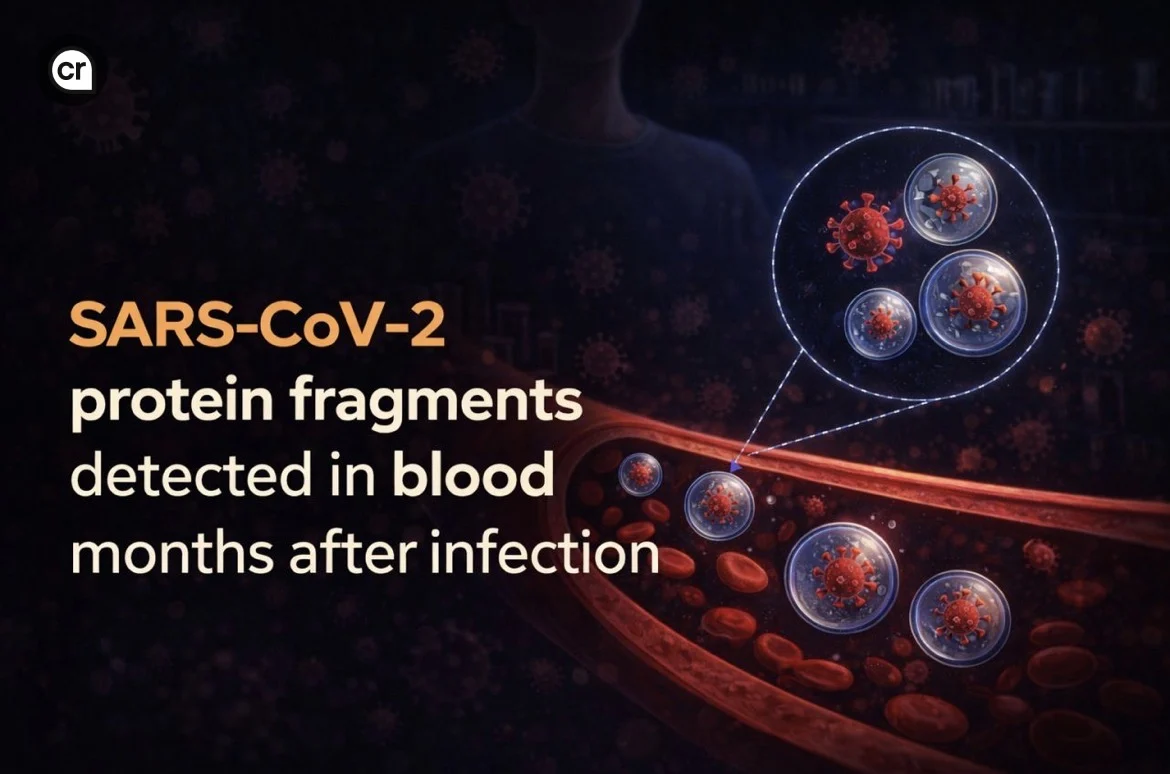
”Pieces of SARS-CoV-2 proteins were found in tiny blood particles in people with long COVID, even many months after infection.
These particles are called extracellular vesicles, or EVs. EVs are small packages released by cells into the blood that can carry proteins and other biological material.
In this study, researchers looked at 14 adults with long COVID symptoms including fatigue, shortness of breath, exercise intolerance, and post-exertional malaise. On average, they were studied about 17 months after infection.
The team isolated EVs from blood samples and used mass spectrometry, a lab method that identifies molecules by their molecular pattern, to look for pieces of SARS-CoV-2 proteins.
They detected 65 viral protein fragments linked to a viral protein called Pp1ab in 22 of 56 samples. The authors also reported that each participant had at least one SARS-CoV-2 peptide detected in EVs at some point across the sampling period.
They then used a more targeted confirmation method and verified one specific viral peptide in 12 of the 14 participants across multiple time points. None of the 20 pre-pandemic control samples showed the same signal.
This does not prove live virus is still present. It does not prove these protein fragments are causing symptoms. And it does not establish a clinical test.
But it may point to an ongoing biological signal in at least some people with long COVID, and that is why this paper is worth paying attention to.
The main caveats are also important. This was a very small study. It was a short correspondence paper, not a large validation study. The signal was not found in every sample, and the study did not include a key comparison group of people who had COVID and recovered without long COVID.
So the balanced takeaway is this: early evidence, not proof, but a potentially important step toward finding measurable biology in long COVID.
The details above come directly from the paper’s cohort description, EV proteomics methods, peptide findings, targeted validation, and control comparisons”
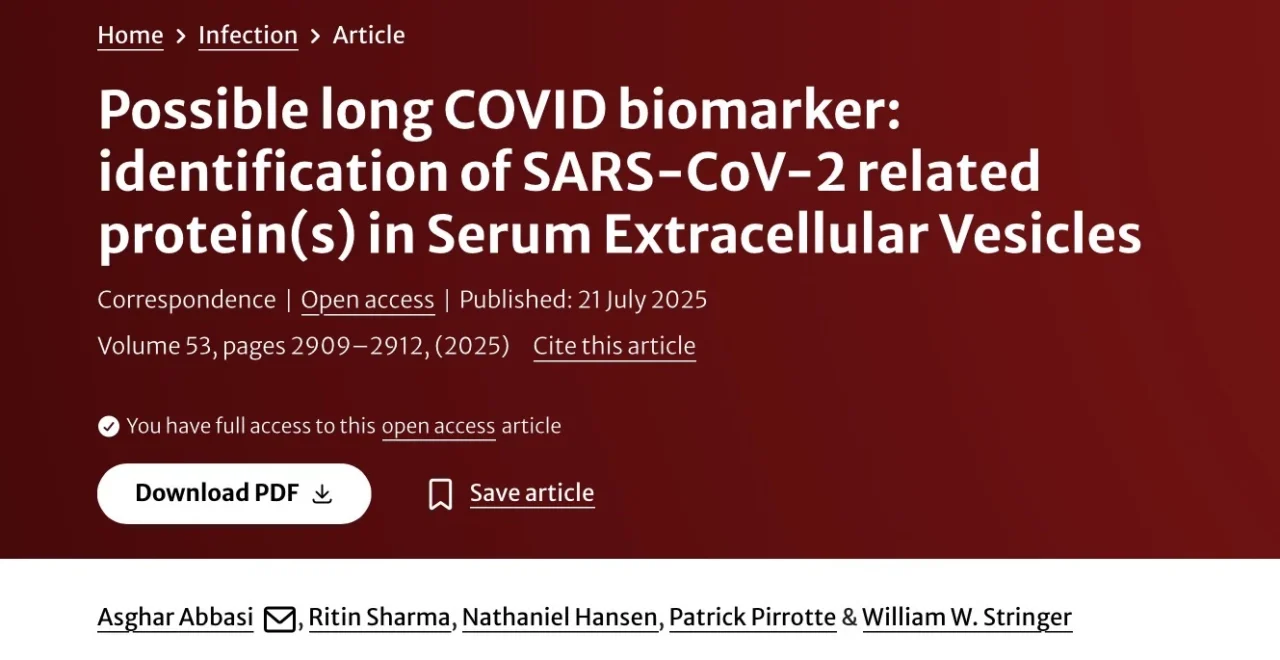
Title: Possible long COVID biomarker: identification of SARS-CoV-2 related protein(s) in Serum Extracellular Vesicles
Authors: Asghar Abbasi, Ritin Sharma, Nathaniel Hansen, Patrick Pirrotte, William W. Stringer
Read the Full Article on Infection
Stay updated on all scientific advances with Hemostasis Today.
-
Sep 30, 2026, 10:55Rana Al Hrout: Diagnostic Approach to Hypochromic Microcytic Anemia
-
Sep 30, 2026, 01:52Javed Anees: DADA2 – When a Young Stroke Is More Than a Stroke
-
Sep 30, 2026, 01:51How a Venous Thrombus Becomes Revascularized – ISTH
-
Sep 29, 2026, 22:45Victor Agunyego: Paracetamol – The Most Common Drug We Underestimate
-
Sep 29, 2026, 22:42Nova Sinclair: Advancing the Future of Hematology – Meet Our 2027 Organizing Committee
-
Sep 29, 2026, 22:41Lorenz Räber: Intracoronary Imaging in PCI – Why, When, How, and Which Modality?
-
Sep 29, 2026, 22:31Selma Turkovic: Pleased to Deliver the Opening Presentation at Kingston Hospital
-
Sep 29, 2026, 22:31Miguel Teran: Ultrasound and Simulation in Arterial Blood Sampling
-
Sep 29, 2026, 22:28Mohammad Refaei: Navigating Your Career in Hematology From Training to Practice