

Antiphospholipid Syndrome in Pregnancy – One of Hematology’s Most Complex Challenges – RPTH
RPTH Journal shared a post on LinkedIn about a recent article by Andrew J. Doyle, adding:
“Antiphospholipid syndrome in pregnancy: one of hematology’s most complex challenges
Antiphospholipid syndrome (APS) is a multisystem autoimmune disorder that significantly raises the risk of blood clots and adverse pregnancy outcomes.
Diagnosing it is often difficult, treatment options remain limited – and pregnancy adds a whole new layer of complexity.
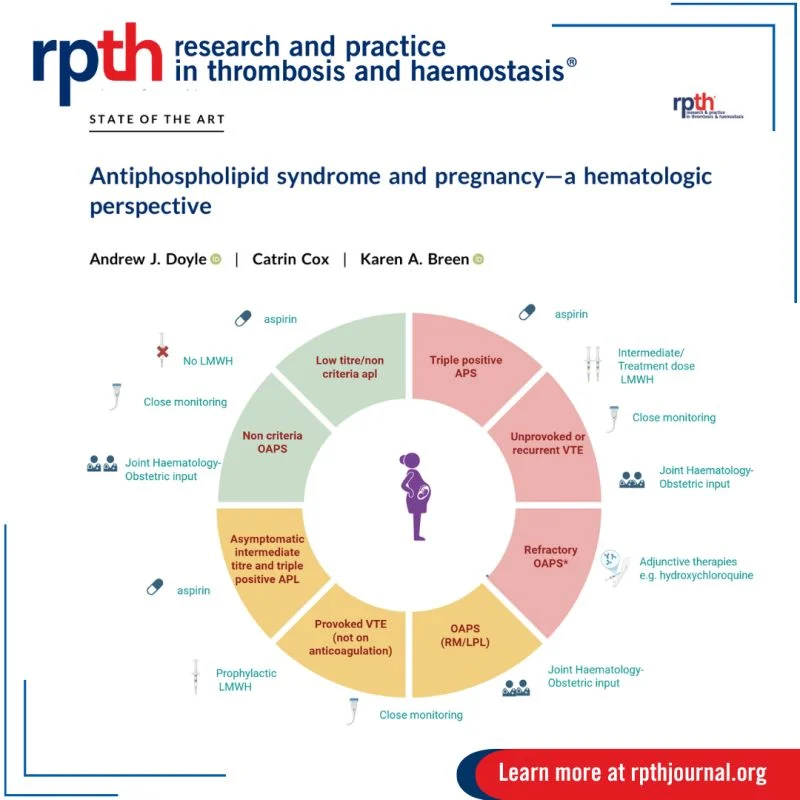
A state-of-the-art review in RPTH Journal based on a lecture presented at the International Society on Thrombosis and Haemostasis (ISTH) 2025 Congress, offers a hematologic perspective on APS management during pregnancy, including prepregnancy counseling and thrombosis-related issues.
Key takeaways:
- APS carries high risks of thrombosis and late adverse pregnancy outcomes
- Management relies on anticoagulation and close specialist monitoring
- Risk stratification remains a major unmet need
Few novel treatments are on the horizon…
This review focuses primarily on late pregnancy complications and thrombotic issues rather than earlier events such as recurrent miscarriage, which fall more within the obstetric perspective.
More than 40 years after the initial description of APS by Graham Hughes, there is still much to improve, especially in personalizing treatment to enhance outcomes for pregnant patients.”
Oliver Tiebel, Medical Director, Laboratory Director MVZ at the Carl Gustav Carus University Hospital Dresden GmbH, reposted RPTH’s a post on LinkedIn:
“Very interesting paper … great compilation covering this extreme important issue … many thx to the authors Andrew Doyle, Catrin Cox and Karen Breen”
Title: Antiphospholipid syndrome and pregnancy – a hematologic perspective
Authors: Andrew J. Doyle, Catrin Cox, Karen A. Breen
Read the Full Article on RPTH
Stay updated on all scientific advances with Hemostasis Today.
-
Nov 21, 2026, 20:00Jeyda Star: The FAST Signs of Stroke and the Reality of Life Afterward
-
Nov 21, 2026, 19:59Daniel Lindholm: Women Showed the Largest Improvement in Stroke Risk Over Time in Heart Failure
-
Nov 21, 2026, 19:56Neil Arrowsmith: Raising Awareness of Pulmonary Embolism in Young People
-
Nov 21, 2026, 19:52Muhammad Zeeshan Jamal: Thrilled to Present Our Research on Intermediate-Risk Acute PE in Abu Dhabi
-
Nov 21, 2026, 19:50Mounisha Devireddy: Proud to Share Our Research on High-Risk PE in Pregnancy
-
Nov 21, 2026, 19:47Melissa Hollo: How Severe Anemia Increases the Odds of Acute HF During Pregnancy and Postpartum
-
Nov 21, 2026, 19:44Ashenafi Tazebew Amare: Building Sustainable Systems to Close the Anti-D Immunoglobulin Access Gap in LMICs
-
Nov 21, 2026, 19:43Sheharyar Raza: Interpreting Clotting Times Through Reptilase Time and Thrombin Time Assays
-
Nov 21, 2026, 19:42Minoo Ahmadinejad: Serving on the ISTH 2027 Scientific Theme Committee for Women’s Health