

Wolfgang Miesbach: Greater Symptom Burden in Women with Bleeding Disorders – Insights from Irish Data
Wolfgang Miesbach, Professor of Medicine at Frankfurt University Hospital, shared a post on LinkedIn:
”Eye-opening session at EAHAD 2026 Dublin!
At the 19th Annual EAHAD Congress, Petra Elvinge delivered a compelling talk on ‘Adapting our haemophilia nursing roles to meet the needs of Women and Girls with Bleeding Disorders (WGBD)’:
- Subclinical joint damage on MRI detected in haemophilia carriers with FVIII >40% and no history of overt bleeding – ankles (92%), knees (100%), elbows (100%) affected
50% of carriers reported chronic joint pain vs. 3.3% of controls (p<0.001), and 26% joint swelling vs. 0% (p=0.002) – independent of baseline factor activity - BMI matters: carriers with BMI ≥25 kg/m² had significantly more haemarthroses vs. normal BMI (23% vs. 0%, p=0.037)
- 40% of VWD-JB patients developed arthropathy (HJHS ≥10) vs. 10% controls (p<0.01); 25% showed X-ray joint damage vs. 4% controls (p=0.01) – strongly associated with pain, radiological abnormalities and reduced social participation
- Sports participation in Type 3 VWD most limited – fear of bleeding, restricted walking ability, and daily activity limitations all cited as barriers
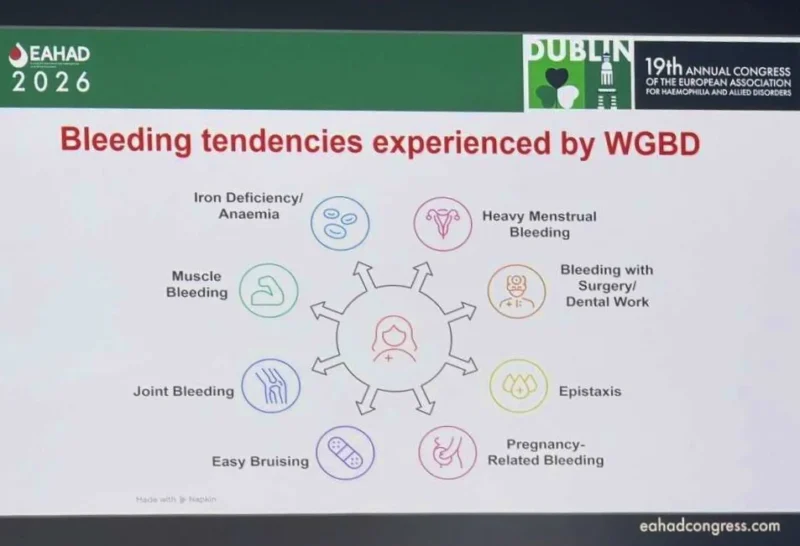
Irish unpublished data showed women with bleeding disorders report far higher rates of joint symptoms, epistaxis, gum bleeding, bruising, surgical bleeding, and heavy menstrual bleeding vs. women without bleeding disorders.
And then this patient voice stopped the room:
‘As a carrier, I feel we get ignored when it comes to symptoms of pain.’
4 key take-home messages:
- WGBD experience joint bleeds — including clinically silent, asymptomatic ones
- Joint bleeding significantly impairs physical function and quality of life
- Management remains suboptimal despite clear evidence
- Patient-centred, multidisciplinary care co-designed with WGBD is urgently needed
Nursing roles are evolving to meet these women where they are – with dedicated assessment, tailored treatment pathways, and above all, being heard.”
Stay updated with Hemostasis Today.
-
Oct 10, 2026, 17:58Archo Farzana Batool: Exploring Medical Writing Through an Article on Iron Deficiency Anemia
-
Oct 10, 2026, 17:53Assessing Frailty in Adults With Hemophilia – JTH
-
Oct 10, 2026, 17:52Fatma Sadeghi: Reducing Maternal Health Inequalities Through Nursing Advocacy
-
Oct 10, 2026, 17:50Grzegorz Hensler: How Apheresis Transformed Blood Cell Separation and Collection
-
Oct 10, 2026, 17:47Hemant K Sharma: Japan’s Universal Artificial Blood Research – A Potential Breakthrough in Transfusion Medicine
-
Oct 10, 2026, 17:40John Strouse: Learning About Bleeding Disorders and Sickle Cell Disease at FWGBD
-
Oct 10, 2026, 17:34Mae Caime: Speaking at the Annual Women’s Retreat for the Hemophilia Community in Florida
-
Oct 10, 2026, 17:30Chokri Ben Lamine: PNH beyond the Textbook Triad
-
Oct 10, 2026, 17:29Ruah Alyamany: Thrombosis and Anticoagulation in Hematological Malignancies at SOHO KSA 2026