


Zack Rosanova: What Happens to Your Brain Without Sleep
Zack Rosanova, Owner of Core Elements Wellness, shared a post on LinkedIn:
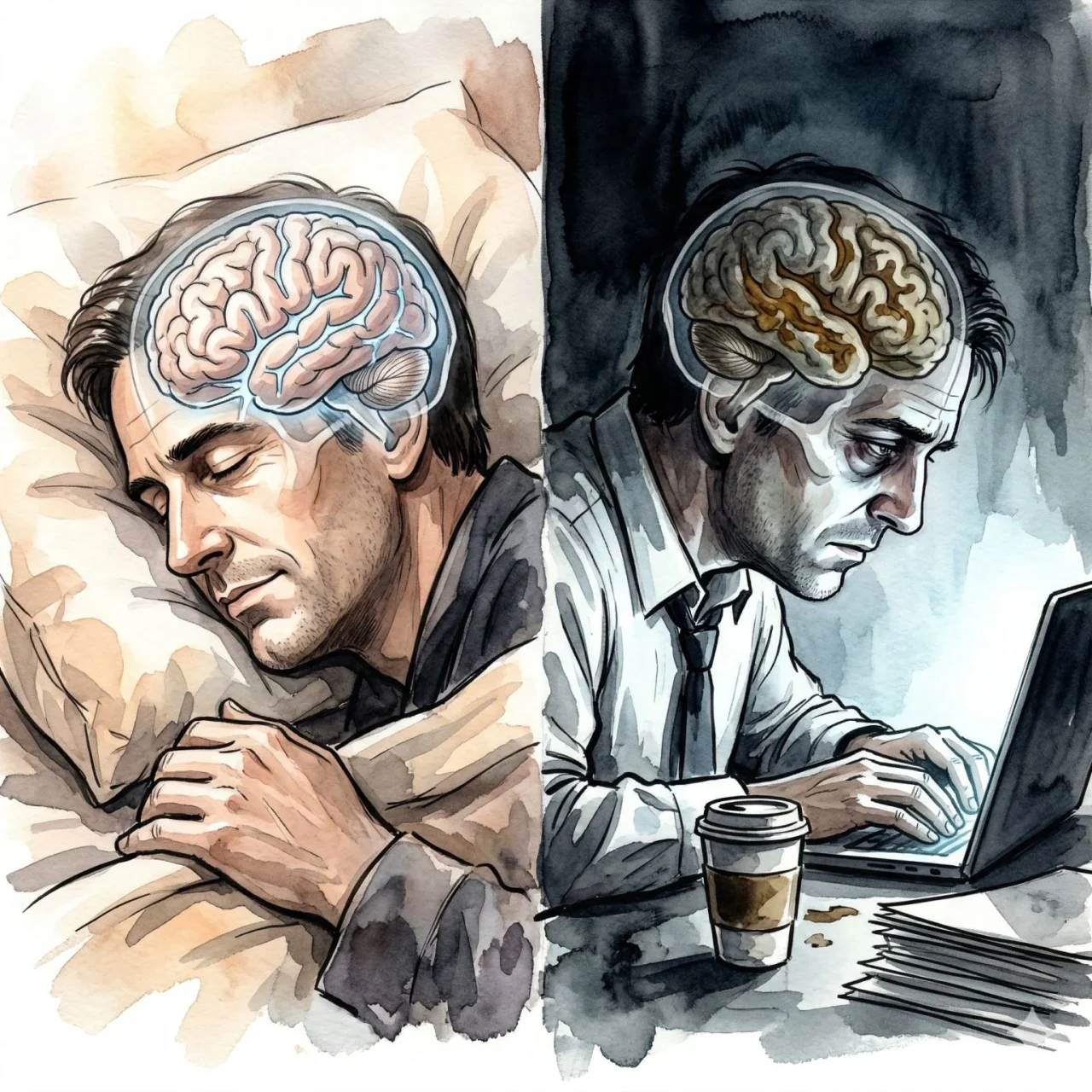
“A week of 5-hour nights impairs your brain the same as a blood alcohol level of 0.10%. (That’s legally drunk.)
‘We would never say, ‘This person is a great worker! He’s drunk all the time!’
Yet we continue to celebrate people who sacrifice sleep for work.’
But it goes deeper than performance.
Your brain produces waste proteins: Beta-amyloid and Tau.
The same proteins found in Alzheimer’s patients.
The good news is your brain has a cleaning system called the glymphatic system.
During deep sleep, your brain cells shrink by about 60% (sounds bad but bear with me).
That opens channels for cerebrospinal fluid to rush through and flush those proteins out.
Researchers at the NIH scanned 20 healthy adults after one night of sleep deprivation.
Beta-amyloid increased 5% in the two regions hit first in Alzheimer’s.
But sleep isn’t the only way to clear it.
Exercise also drives amyloid clearance through a completely separate pathway.
Sleep flushes the waste.
Movement helps clear what’s left.
Without either?
Short term, you’re making decisions drunk.
Long term, your brain never gets cleaned.
Here’s how to ‘sober up.’
𝟭. Protect deep sleep
This is when the cleaning happens.
Light sleep doesn’t trigger it.
- Set a thermostat schedule: 67°F at 9pm, automatic.
- Switch to non-alcoholic beer or sparkling water at dinner.
- Eat dinner by 7 if you’re in bed by 10.
Active digestion pulls blood to your gut and away from the cleaning process.
Lock the schedule
The glymphatic system runs on circadian rhythm.
Irregular sleep blunts the cleaning cycle.
Set an alarm for 7pm to pop on red lights and turn off overheads.
Morning light within 30 minutes of waking:
- walk the dog
- sit on the porch with coffee
- install a 10,000-lux full spectrum bulb in your office.
If you fly weekly, use sunshine and magnesium to help reset.
𝟯. Move every day
Exercise isn’t optional for brain maintenance.
It drives the secondary clearance pathway your sleep missed.
- 20-minute walk after your worst night of sleep. (It does more for your brain than an extra hour in bed.)
- 3 resistance training sessions per week. (Muscle contractions drive blood flow to your brain.)
- If you sit 10+ hours, get a damn walking pad already. It’s the easiest fix.
You’re not going to get Alzheimer’s from one bad night.
These processes are reversible and the brain is resilient.
But the guy who’s been running on 5 hours for a decade, skipping the gym because he’s ‘too busy,’ and calling it discipline?
That brain hasn’t been cleaned in years.
And he’s been making decisions at a 0.10% BAC the whole time.
You won’t sleep more because you have time.
You’ll sleep because you can’t afford not to.”
Stay updated with Hemostasis Today.
-
Oct 21, 2026, 00:58Anees Ur Rahman: Completing a Two-Week Clinical Rotation at Haemophilia Treatment Centre Rawalpindi
-
Oct 21, 2026, 00:56Caitlyn Mooney: Pulmonary Embolism in Athletes, Recognition and Return to Sport
-
Oct 21, 2026, 00:54Hani Karrar: Pleased to Share Our Review on Emicizumab in Hemophilia A Management
-
Oct 21, 2026, 00:53Akshay Sharma: HSCT Leads to Sustained Improvements in Sickle Cell Cardiomyopathy for Up to 3 Years
-
Oct 21, 2026, 00:51Prateek Meena: The F. A. T. R. N. Mnemonic for Recognizing TTP
-
Oct 20, 2026, 23:51Registration Is Open for WFH CCS 2027 – World Federation of Hemophilia
-
Oct 20, 2026, 23:44Edward Lee Carter: AF in Nursing Homes – When Stroke Risk Scores Tell Only Part of the Story
-
Oct 20, 2026, 22:59Building Effective Patient Advocacy Through Collaboration Between Patients and Clinicians – EHC
-
Oct 20, 2026, 21:22Intezar Mehdi: When Prolonged Bleeding May Indicate an Underlying Bleeding Disorder