


Ifeanyichukwu Ifechidere: When Fibrinogen isn’t Really Fibrinogen
Ifeanyichukwu Ifechidere, Specialist Biomedical Scientist at Sheffield Teaching Hospitals NHS Foundation Trust, shared a post on LinkedIn:
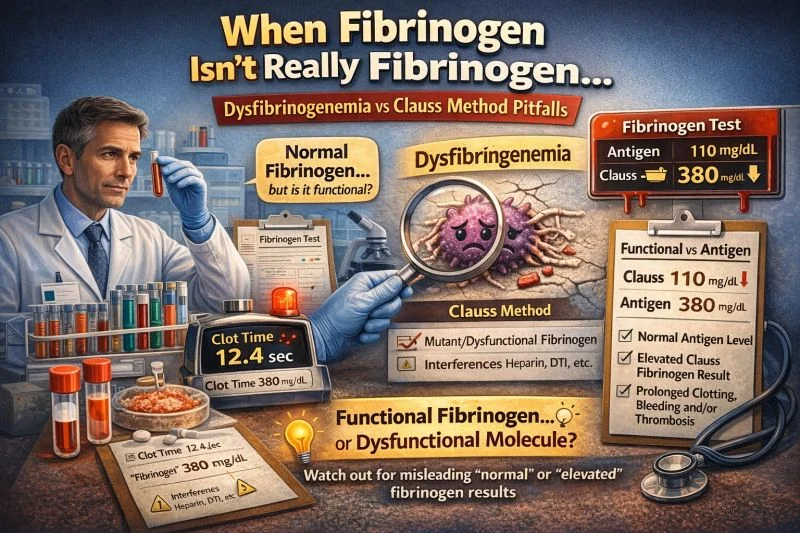
“When fibrinogen isn’t really fibrinogen…
A ‘normal’ or even elevated fibrinogen result can be reassuring.
But what if that number isn’t telling the full story?
Welcome to one of the most overlooked pitfalls in coagulation testing
The Clauss fibrinogen assay – trusted, but not foolproof
The Clauss method measures functional fibrinogen by assessing clot formation after high thrombin concentration.
But here’s the catch:
It assumes fibrinogen is functionally normal
When it’s not… results can mislead.
Dysfibrinogenemia: the great imitator
In dysfibrinogenemia, fibrinogen antigen levels may be normal… but function is impaired.
What you might see:
Discrepancy between Clauss fibrinogen (low) and antigen (normal)
Unexplained bleeding… or paradoxically, thrombosis
Prolonged clotting times (sometimes subtle, sometimes not)
In other words:
There is fibrinogen present — it just doesn’t work properly
But it’s not always dysfibrinogenemia…
The Clauss assay can be affected by multiple interferences:
- Direct thrombin inhibitors (e.g. dabigatran)
- Heparin (depending on reagent sensitivity)
- High FDPs / D-dimer
- Paraproteins
- Severe inflammation
All of these can – falsely low functional fibrinogen
So what should you do?
- Correlate with clinical context
- Compare functional vs antigen fibrinogen
- Review medications and interferences
- Consider reptilase time or genetic testing if needed
Take-home message
Not all fibrinogen results reflect true functional capacity.
Sometimes, what looks like ‘low fibrinogen’ is actually a measurement limitation – or a dysfunctional molecule hiding in plain sight.
Want more clear, practical insights into coagulation testing pitfalls?”
More posts featuring Ifeanyichukwu Ifechidere on Hemostasis Today.
-
Oct 10, 2026, 17:58Archo Farzana Batool: Exploring Medical Writing Through an Article on Iron Deficiency Anemia
-
Oct 10, 2026, 17:53Assessing Frailty in Adults With Hemophilia – JTH
-
Oct 10, 2026, 17:52Fatma Sadeghi: Reducing Maternal Health Inequalities Through Nursing Advocacy
-
Oct 10, 2026, 17:50Grzegorz Hensler: How Apheresis Transformed Blood Cell Separation and Collection
-
Oct 10, 2026, 17:47Hemant K Sharma: Japan’s Universal Artificial Blood Research – A Potential Breakthrough in Transfusion Medicine
-
Oct 10, 2026, 17:40John Strouse: Learning About Bleeding Disorders and Sickle Cell Disease at FWGBD
-
Oct 10, 2026, 17:34Mae Caime: Speaking at the Annual Women’s Retreat for the Hemophilia Community in Florida
-
Oct 10, 2026, 17:30Chokri Ben Lamine: PNH beyond the Textbook Triad
-
Oct 10, 2026, 17:29Ruah Alyamany: Thrombosis and Anticoagulation in Hematological Malignancies at SOHO KSA 2026