


Tareq Abadl: Not Every Low Platelet Count Is True – Check the Smear First
Tareq Abadl, Medical Lab Specialist, shared a post on LinkedIn:
“Not Every Low Platelet Count Is True – Check the Smear First!
What if a reported low platelet count isn’t true at all?
Sometimes, one subtle clue on the peripheral smear can completely change the diagnosis
What is Platelet Satellitism?
Platelet satellitism is a phenomenon where platelets form a rosette (ring) around white blood cells — especially neutrophils — on a peripheral blood smear.
According to the American Society of Hematology Image Bank, this is an immunologic in vitro phenomenon.
In simple terms:
It happens outside the body (in the tube), not inside the patient.
Why Does It Matter?
Because it can lead to:
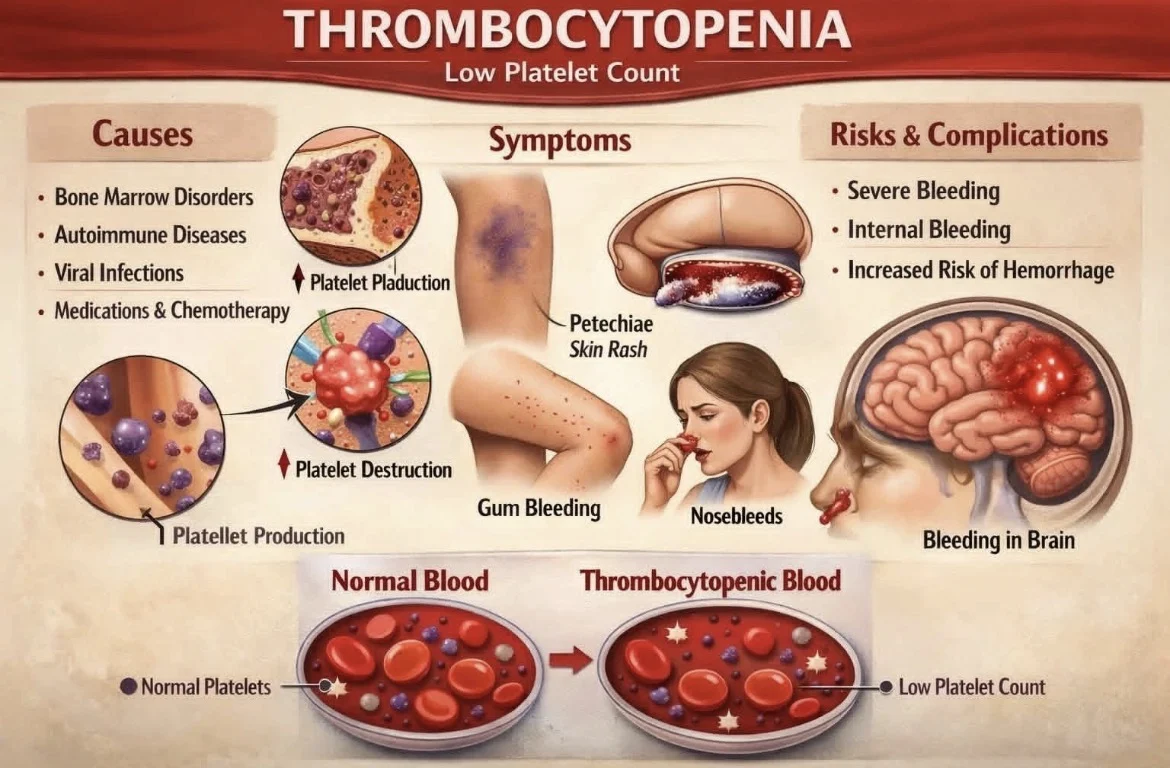
Pseudo thrombocytopenia (false low platelet count)
Automated analyzers may:
- Miss platelet clumps
- Miscount platelets attached to WBCs
Result:
A falsely low platelet count, even when the patient is actually normal
The Merck emphasizes that smear review is essential in thrombocytopenia evaluation for this exact reason.
What Causes It?
Most commonly :
- EDTA-dependent antibodies
- Platelet binding to neutrophils in vitro
- Same mechanism behind EDTA-related platelet clumping
Key Smear Clue
Look carefully
- Platelets surrounding neutrophils (rosetting)
- Reported platelet count very low
- Patient often clinically normal
Practical Lab Solution
Here’s the important part
Recollect the sample using:
- Sodium citrate
- Heparin
This usually resolves the phenomenon and reveals the true platelet count
Why the Peripheral Smear Still Matters
One morphology pattern can:
- Prevent misdiagnosis
- Avoid unnecessary panic
- Reduce repeat testing or wrong treatment
Bottom Line
Not every low platelet count is real.
Always correlate:
- Analyzer result
- Peripheral smear
Because sometimes…
The smear tells the truth the machine misses.”
Other posts featuring Tareq Abadl on Hemostasis Today.
-
Jul 28, 2026, 15:00Rucha Patil: Grateful to Contribute to the National Coagulation Conclave 2026
-
Jul 28, 2026, 14:51Islam Aboumoussa: A New Perspective on Dual Antithrombotic Therapy in Stroke Prevention
-
Jul 28, 2026, 14:40Marilena Vrana: Join the Conversation at Plasma Protein Forum 2026
-
Jul 28, 2026, 14:24Jon Wright: Pushing the Boundaries of Hemophilia Care
-
Jul 28, 2026, 14:11Improving Care for People with Bleeding Disorders Through Teamwork – WFH
-
Jul 28, 2026, 14:10Blessing Oluwasanya: When Heavy Periods Are More Than Just an Inconvenience
-
Jul 28, 2026, 13:46Manal Rayyan: Efanesoctocog Alfa Shows Excellent Real-World Performance
-
Jul 28, 2026, 13:22Raelene Kambli: Advocating for Safer Blood Access
-
Jul 28, 2026, 13:07Connie Montgomery: Conversations That Change Hemophilia Care