

Sarah Walbolt։ Have You Ever Wondered What Actually Happens to Your Donated Blood?
Sarah Walbolt, Program Manager at University of Utah Health, Chief Executive Officer Sanguine Health Holdings Inc, shared a post on LinkedIn:
“Have You Ever Wondered What Actually happens to Your Donated Blood?
Most people donate blood and never think twice about what happens next.
But behind the scenes, donated blood goes through a fascinating and carefully monitored journey.
Here is what is happening to those red blood cells from the moment they leave your body:
What Happens to Donated Blood Over Time:
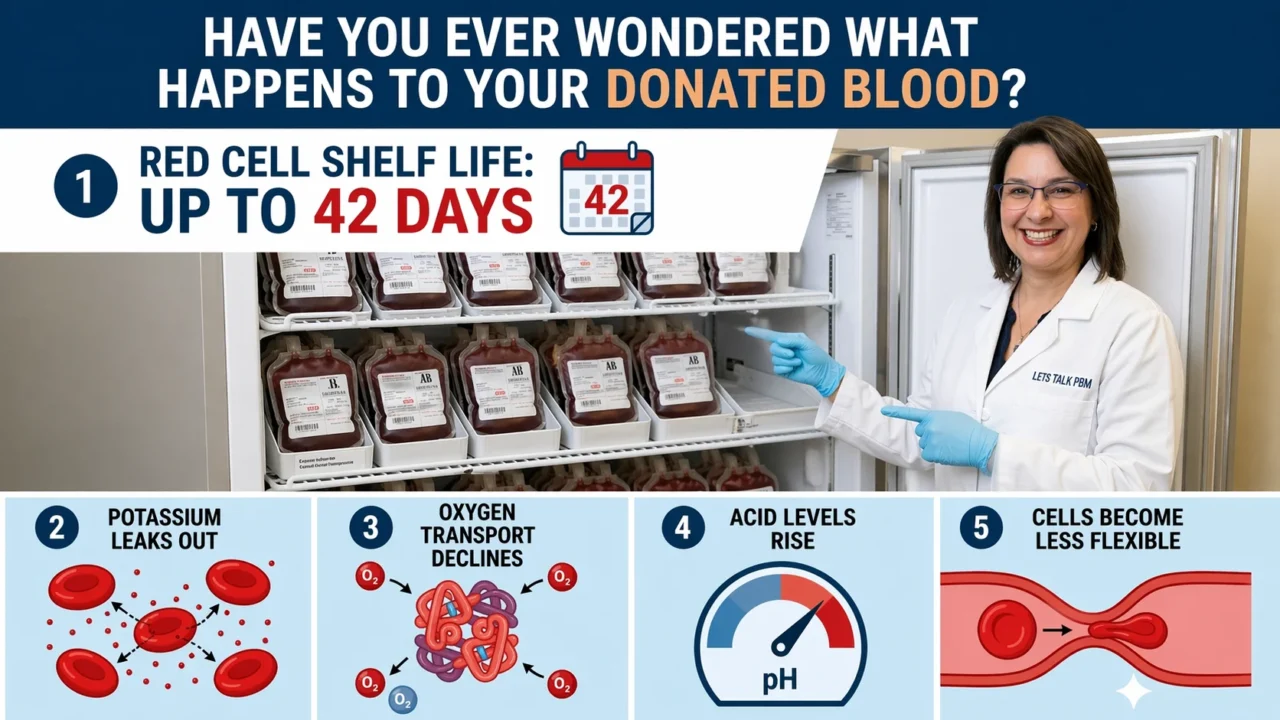
- Red blood cells can be stored for up to 42 days – but they are not just sitting still during that time
- Potassium leaks out of the cells gradually as they age in storage
- Oxygen transport declines- meaning older stored blood is less efficient at delivering oxygen to the body
- Acid levels rise – the pH of stored blood changes over time, making it more acidic Cells become less fresh red blood cells are soft and bendable, allowing them to squeeze through tiny blood vessels; older stored cells lose that ability.
- Cells become less flexible – fresh red blood cells are soft and bendable, allowing them to squeeze through tiny blood vessels; older stored cells lose that ability.
Why does this matter?
Understanding how blood ages in storage helps medical teams make smarter decisions about which blood to use, when, and for whom, especially for vulnerable patients like newborns, cancer patients, and those in critical care.
Did you know donated blood has a shelf life?
Share this with someone who would find this fascinating!
Follow our page for more blood health content, and subscribe to our YouTube channel for more in-depth health education.”
Stay updated with Hemostasis Today.
-
Sep 30, 2026, 01:52Javed Anees: DADA2 – When a Young Stroke Is More Than a Stroke
-
Sep 30, 2026, 01:51How a Venous Thrombus Becomes Revascularized – ISTH
-
Sep 29, 2026, 22:45Victor Agunyego: Paracetamol – The Most Common Drug We Underestimate
-
Sep 29, 2026, 22:42Nova Sinclair: Advancing the Future of Hematology – Meet Our 2027 Organizing Committee
-
Sep 29, 2026, 22:41Lorenz Räber: Intracoronary Imaging in PCI – Why, When, How, and Which Modality?
-
Sep 29, 2026, 22:31Selma Turkovic: Pleased to Deliver the Opening Presentation at Kingston Hospital
-
Sep 29, 2026, 22:31Miguel Teran: Ultrasound and Simulation in Arterial Blood Sampling
-
Sep 29, 2026, 22:28Mohammad Refaei: Navigating Your Career in Hematology From Training to Practice
-
Sep 29, 2026, 22:27Matteo Foschi: 10 Clinical Pearls for Antithrombotic Therapy in Secondary Stroke Prevention