

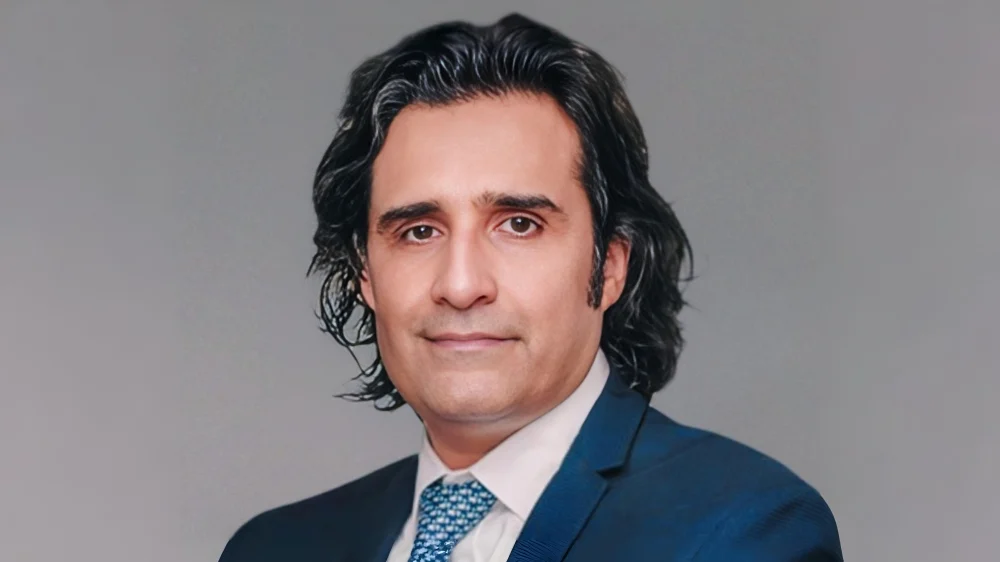
Hisam Siddiqi: Review of Interactive Cases by Blood Academy First Edition
Hisam Siddiqi, Consultant Haematologist at LycaHealth, The Blackheath Hospital, Dartford and Gravesham NHS Trust, shared a post on LinkedIn:
“Review of Interactive Cases by Blood Academy First Edition
Full disclosure
- I have not been paid to write this.
- I haven’t received any vouchers.
- Ali (the author) and I have never met – we interact mainly on social media around haematology education.
I told him: send me the book and I’ll give an honest opinion.
Back in 2014, I started haematology as an ST3 after switching from medical oncology.
I felt completely out of my depth, surrounded by colleagues who had already done haematology fellow jobs.
In a (toxic) deanery, the expectation was that you should already ‘know things’. The usual advice? Read Robbins.
Read the Oxford Handbook. Not exactly realistic.
If I’d had a resource like this book, I’d have built confidence, structure and fluency much earlier.
The book offers:
- 45 interactive, case‑based scenarios
- High‑definition blood film images, with the ability to pan across fields
- Video slide reviews, not just static pictures
I randomly opened Case 2: a 64‑year‑old with lymphocytosis.
Clear morphology, exam ‑ oriented language (FRCPath‑relevant), sensible discussion around smudge cells, immunophenotyping tables
across LPDs, and – crucially – real ‑ world next steps.
It constantly switches between theory, exams and clinical reality, which is exactly how haematology is practiced.
Where does this book sit?
- Ideal for ST3‑level trainees
- Excellent case‑based introduction
- Embraces digital haematology
- Very importantly: easy to read
I now see our registrars reading it in the office – and getting better. That, for me, is the ultimate test of an educational resource.
Only thought: a PDF version in the future would be fantastic.
If I had to choose between this and some of the ‘big name’ books out there?
This wins – any day of the week.”

More posts featuring Hisam Siddiqi on Hemostasis Today.
-
Nov 18, 2026, 01:45Shikha Jha: My Takeaways from the 4th GANSID International Congress
-
Nov 18, 2026, 01:34Zeeshan Ahmed Khattak: Treatment of Fever and Neutropenia in Hematology/Oncology and Hematopoietic Cell Transplant Patients
-
Nov 17, 2026, 23:45Cajetan Reichardt: LAAO vs. OAC in AF – Balancing Nonprocedural Bleeding and Ischemic Stroke Risk
-
Nov 17, 2026, 23:42Brian Tegtmeyer: Expanding Pre-Hospital Administration of Low-Titer O Positive Whole Blood
-
Nov 17, 2026, 23:41Mansi Kala: Advancing Hematology – From Evidence to Clinical Excellence
-
Nov 17, 2026, 23:40Nathan Connell: Registered for the WFH Comprehensive Care Summit 2027 in Prague
-
Nov 17, 2026, 23:38Yaariv Khaykin: Does Reducing AF Burden After Ablation Change the Need for Anticoagulation?
-
Nov 17, 2026, 23:38Amos Gitonga Mbaabu: Strengthening Care and Advocacy for Haemophilia and SCD across Southern Africa
-
Nov 17, 2026, 23:35Muhammad Sameed Altaf: A Decade of Working Together for Thalassemia Awareness and Patient Support