

Tareq Abadl։ Why You Should Never Separate Serum Before Clotting Is Complete
Tareq Abadl, Medical Lab Specialist, shared a post on LinkedIn:
”Why You Should never Separate Serum Before Clotting Is Complete
In many labs, there’s a tendency to rush and centrifuge samples immediately after collection…
But doing this can seriously compromise your results.
What Actually Happens?
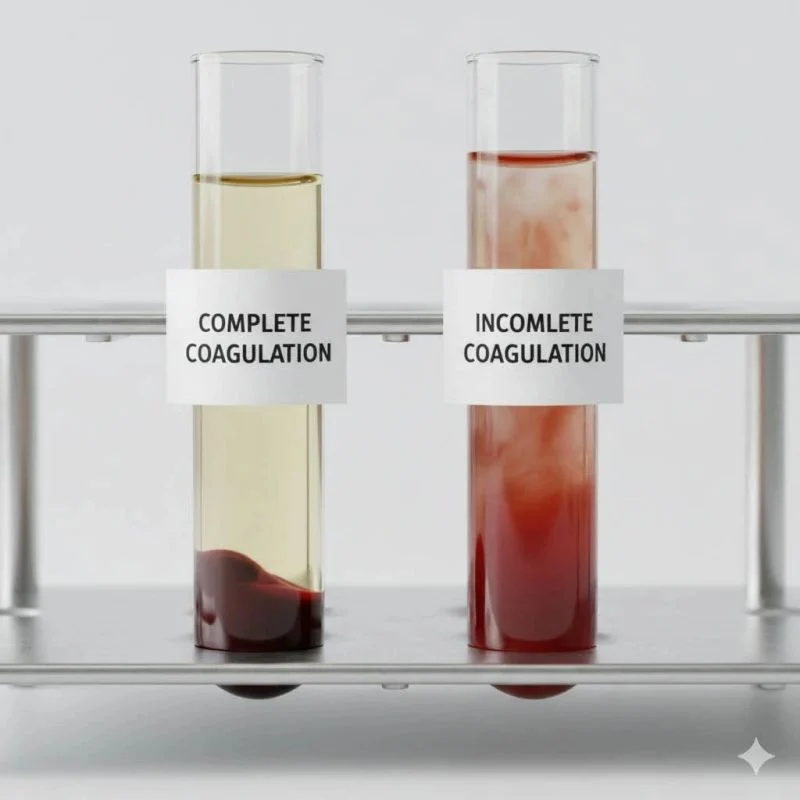
When blood is collected in a plain tube (no anticoagulant), it naturally begins the clotting process.
Fibrinogen is converted into fibrin, forming a mesh that traps blood cells and allows clear serum to separate.
This process takes about 20 to 30 minutes to complete.
If you centrifuge before full clot formation:
Clotting continues during centrifugation, leading to serum that is:
Not clear
- Contains fibrin strands or microclots
- Appears turbid or uneven
Impact on Laboratory Results
Enzymes (AST, ALT, CK, LDH):
Premature separation can cause cellular stress or microclot formation, leading to falsely elevated enzyme levels.
Glucose:
Blood cells continue consuming glucose if clotting is not complete, resulting in falsely low values.
Urea and Creatinine:
Ongoing interaction between cells and partially separated serum may alter concentrations and reduce accuracy.
Proteins and Albumin:
Residual clots can trap proteins, leading to falsely decreased values.
Bottom Line:
Early separation results in an unreliable sample.
Repeat testing leads to wasted time, effort, and cost.
Waiting 20 to 30 minutes ensures clear serum and accurate results.
Practical Lab Tips:
Always allow 20 to 30 minutes for complete clotting
Centrifuge at appropriate settings (about 3000 revolutions per minute for 10 minutes)
Visually inspect serum to ensure it is free of fibrin
Key Message: Good pre-analytical practice leads to trustworthy results.”
Other posts featuring Tareq Abadl on Hemostasis Today.
-
Sep 30, 2026, 01:52Javed Anees: DADA2 – When a Young Stroke Is More Than a Stroke
-
Sep 30, 2026, 01:51How a Venous Thrombus Becomes Revascularized – ISTH
-
Sep 29, 2026, 22:45Victor Agunyego: Paracetamol – The Most Common Drug We Underestimate
-
Sep 29, 2026, 22:42Nova Sinclair: Advancing the Future of Hematology – Meet Our 2027 Organizing Committee
-
Sep 29, 2026, 22:41Lorenz Räber: Intracoronary Imaging in PCI – Why, When, How, and Which Modality?
-
Sep 29, 2026, 22:31Selma Turkovic: Pleased to Deliver the Opening Presentation at Kingston Hospital
-
Sep 29, 2026, 22:31Miguel Teran: Ultrasound and Simulation in Arterial Blood Sampling
-
Sep 29, 2026, 22:28Mohammad Refaei: Navigating Your Career in Hematology From Training to Practice
-
Sep 29, 2026, 22:27Matteo Foschi: 10 Clinical Pearls for Antithrombotic Therapy in Secondary Stroke Prevention