


Neema Ngugi: Understanding the D-Dimer Test – A Key Tool in Detecting Blood Clots
Neema Ngugi, Nephrology Nurse Nephrology at The Nairobi South Hospital, shared a post on LinkedIn:
“Understanding the D-Dimer Test: A Key Tool in Detecting Blood Clots
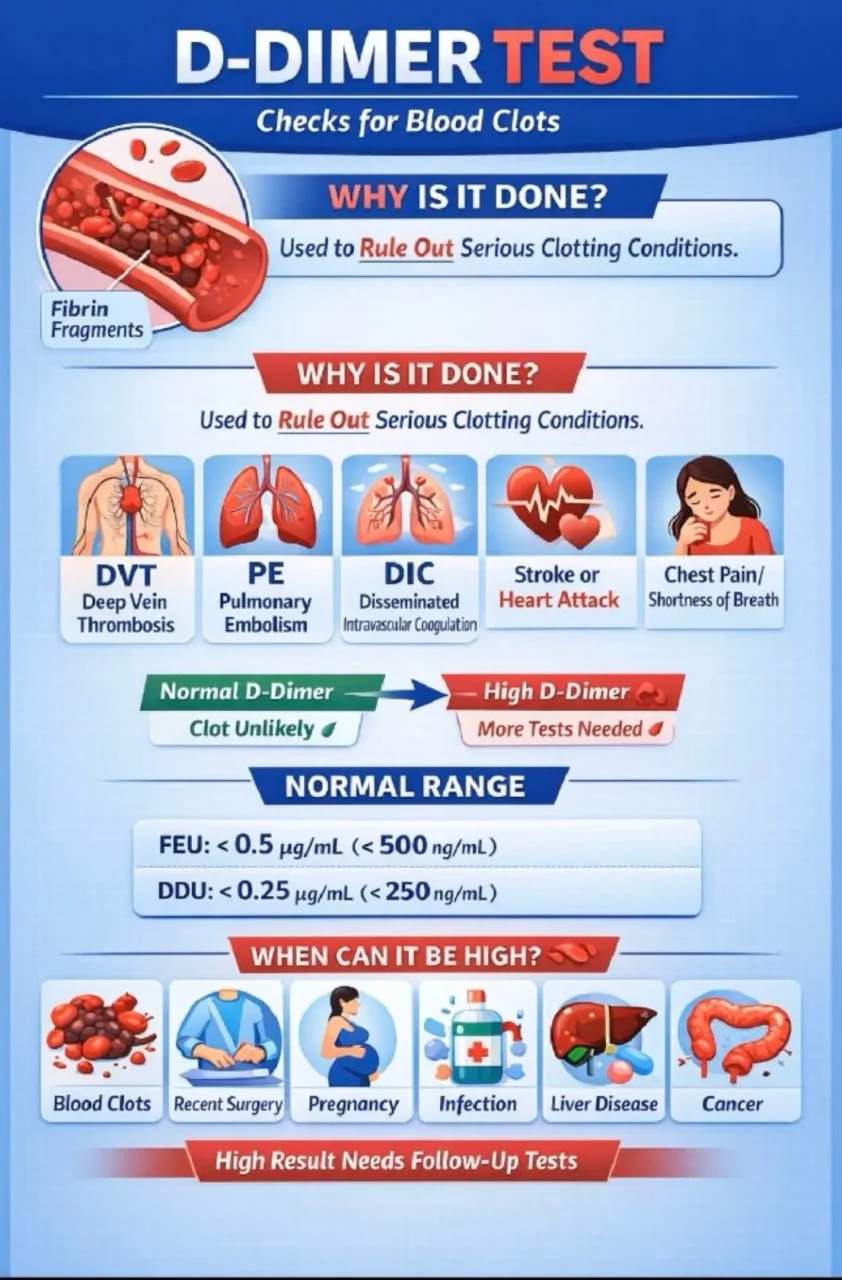
The D-Dimer test plays a crucial role in clinical decision-making, especially when evaluating patients for suspected thrombotic events.
It measures fibrin degradation products – essentially fragments produced when a blood clot dissolves in the body.
Why is it done?
Primarily, the D-Dimer test is used to rule out serious clotting conditions such as:
- Deep Vein Thrombosis (DVT)
- Pulmonary Embolism (PE)
- Disseminated Intravascular Coagulation (DIC)
- Stroke or Myocardial Infarction
How to interpret results?
- Normal D-Dimer – Clotting is unlikely
- Elevated D-Dimer – Not diagnostic, but signals the need for further investigation (e.g., imaging studies)
Important to remember:
An elevated D-Dimer is not specific.
Levels can also rise in conditions such as:
- Infection
- Pregnancy
- Recent surgery
- Liver disease
- Cancer
Clinical takeaway:
The D-Dimer test is most powerful when used appropriately – especially in low to moderate-risk patients – to safely exclude life-threatening clotting conditions and avoid unnecessary imaging.
As healthcare professionals, understanding when and how to use this test ensures accurate diagnosis, timely intervention, and improved patient outcomes.”
Stay updated on all scientific advances with Hemostasis Today.
-
Sep 25, 2026, 07:25Varun Capoor: How Therapeutic Apheresis and Transfusion Medicine Can Complement Clinical Management in SCD
-
Sep 25, 2026, 07:14Manshi Kesharwani: SAK-GQDs Modulate Thrombus Burden and Endothelial Function in Deep Vein Thrombosis
-
Sep 25, 2026, 06:20Farjah Hassan Algahtani: How Can We Better Identify Patients at Risk of Blood Clots after Metabolic and Bariatric Surgery?
-
Sep 25, 2026, 05:59Carla Lewis: Kids Conquering Sickle Disease Joins Nemours Children’s Hospital for 2nd Annual Awareness Event
-
Sep 25, 2026, 05:47Omid Seidizadeh: Evolutionary Constraint and Population Variation Across Coagulation Genes
-
Sep 25, 2026, 05:40Gerald Bertrand: Presenting UMi-NGS Non-Invasive Foetal HPA Genotyping at DGTI 2026
-
Sep 25, 2026, 05:33Urge Congress to support the Sickle Cell Disease Comprehensive Care Act – ASH
-
Sep 25, 2026, 05:24Isabelle Mahé: Reduced-Dose Apixaban in Extended CAT Treatment
-
Sep 25, 2026, 05:15Maria Cherska: High Cholesterol Isn’t Always Diet or Lifestyle – Sometimes It’s Genetic