


Amrit Kaur Kaler: The Hidden Genetic Drivers of Thrombosis
Amrit Kaur Kaler, Consultant in the Department of Genetics and Molecular Medicine at Kokilaben Dhirubhai Ambani Hospital, shared a post on LinkedIn about a recent article she and his colleagues co-authored, published in Journal of Thrombosis and Haemostasis, adding:
”Thrombophilia genetic polymorphisms are inherited variations in genes controlling blood coagulation, increasing the risk of venous and arterial thrombosis.
Common polymorphisms include Factor V Leiden (FVL 1691GA), Prothrombin (FII 20210GA), and MTHFR variants, which enhance clot formation or inhibit fibrinolysis. These genetic factors can cause hypercoagulable states, leading to VTE or reproductive issues.
Thanks to Dr R Sekhar, our vascular surgeon for sharing deep insights into the management of thrombosis. Thanks to Sameer Tulpule and all the authors for their contribution.”
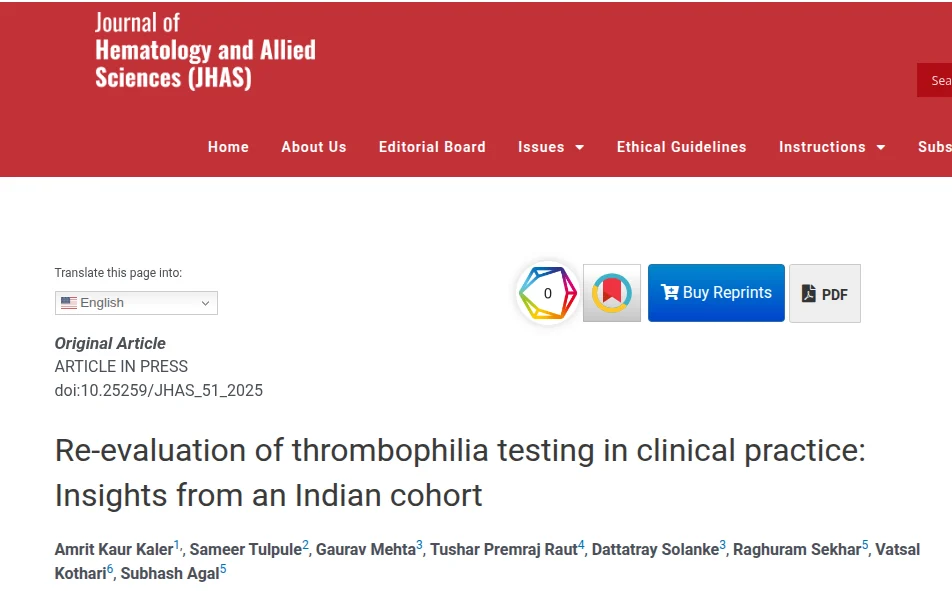
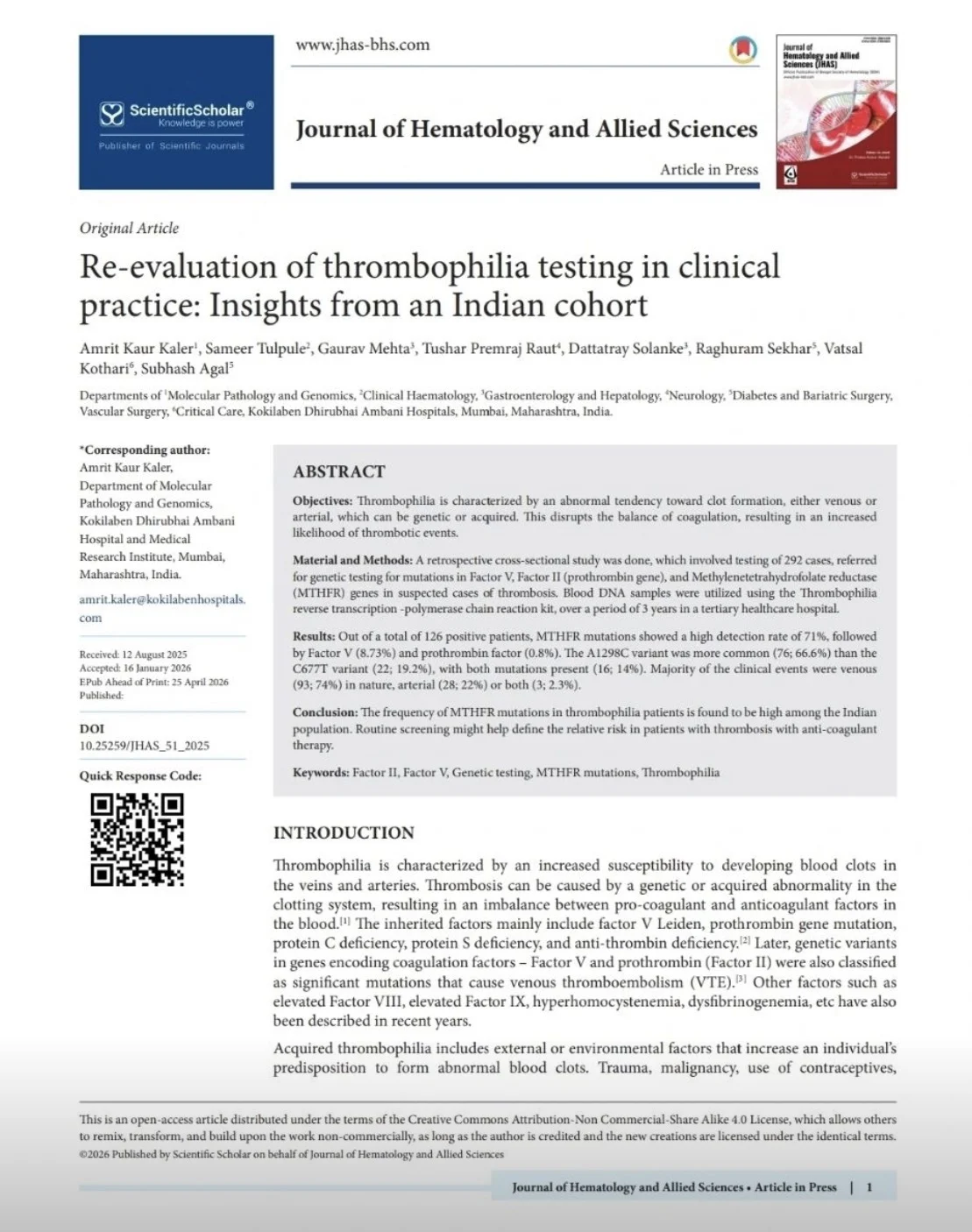
Title: Re-evaluation of thrombophilia testing in clinical practice: Insights from an Indian cohort
Authors: Amrit Kaur Kaler, Sameer Tulpule, Gaurav Mehta, Tushar Premraj Raut, Dattatray Solanke, Raghuram Sekhar, Vatsal Kothari, Subhash Aga
Stay updated on all scientific advances with Hemostasis Today.
-
Sep 30, 2026, 01:52Javed Anees: DADA2 – When a Young Stroke Is More Than a Stroke
-
Sep 30, 2026, 01:51How a Venous Thrombus Becomes Revascularized – ISTH
-
Sep 29, 2026, 22:45Victor Agunyego: Paracetamol – The Most Common Drug We Underestimate
-
Sep 29, 2026, 22:42Nova Sinclair: Advancing the Future of Hematology – Meet Our 2027 Organizing Committee
-
Sep 29, 2026, 22:41Lorenz Räber: Intracoronary Imaging in PCI – Why, When, How, and Which Modality?
-
Sep 29, 2026, 22:31Selma Turkovic: Pleased to Deliver the Opening Presentation at Kingston Hospital
-
Sep 29, 2026, 22:31Miguel Teran: Ultrasound and Simulation in Arterial Blood Sampling
-
Sep 29, 2026, 22:28Mohammad Refaei: Navigating Your Career in Hematology From Training to Practice
-
Sep 29, 2026, 22:27Matteo Foschi: 10 Clinical Pearls for Antithrombotic Therapy in Secondary Stroke Prevention