

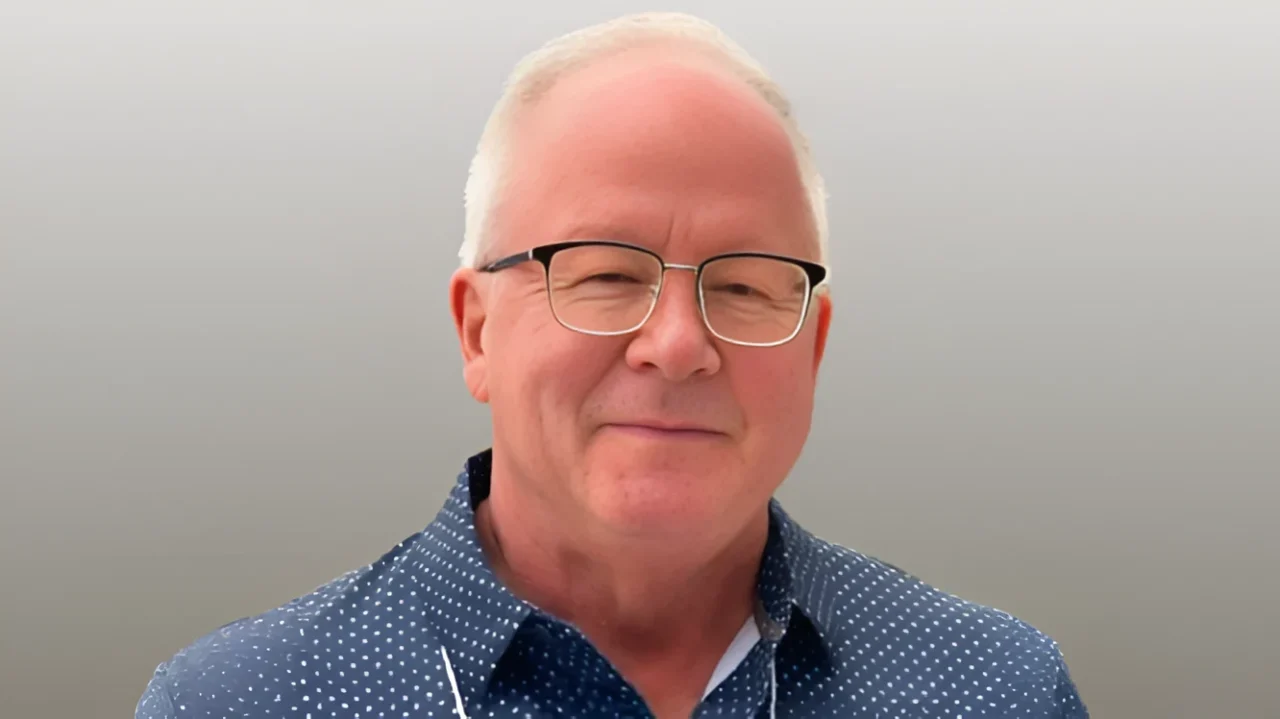
Dan Purser: Redefining Hyperhomocysteinemia Through 22 Critical SNPs
Dan Purser, Co-Founder of AO Biologix, LLC, shared a post on LinkedIn:
“Open Evidence AI finding—’The medical literature confirms that functional glutathione reduces cytokine formation at the monocyte level (Frontiers in Immunology, 2019)’
The ultimate guide to homocysteine: The Purser Model and The 60% Calamity
A Medical Manifesto for the 21st Century By Dan C. Purser
Introduction: The Semmelweis Moment
In 1847, Ignaz Semmelweis discovered that simple hand-washing could virtually eliminate childbed fever.
He was mocked, hounded, and eventually marginalized by an establishment that found his discovery too disruptive to the status quo.
Today, we face a similar ‘Semmelweis Moment.’
For nearly a century, medicine has viewed Hyperhomocysteinemia (HHcy) as a metabolic marker—a number to be ‘lowered’ with simple B-vitamins.
We were wrong.
After treating over 25,000 patients, I am declaring a national health calamity:
50–60% of the U.S. population is standing in the path of cytokine destruction that standard medicine simply cannot see.
Chapter 1: The Bull Elephant (Why 38.8% is a Lie)
Standard medical texts quote a comfortable statistic: 38.8% of the population has a homocysteine problem.
This figure is a relic of an era when we only looked at just a few genes: MTHFR C677T, A1298C, CBS and maybe MTRR, or MTR.
The Purser Model reveals a much darker reality.
By mapping the full genetic architecture, we have identified 22 specific homozygous SNPs—lifelong genetic ‘breaks’—that dictate a patient’s inflammatory setpoint.
When you account for this complete architecture, the number of affected individuals skyrockets to 60% of our civilization.
This is the bull elephant in the china shop, and it is leaving a trail of strokes, heart attacks, and kidney failure in its wake.”
Stay updated on all scientific advances with Hemostasis Today.
-
Sep 25, 2026, 07:25Varun Capoor: How Therapeutic Apheresis and Transfusion Medicine Can Complement Clinical Management in SCD
-
Sep 25, 2026, 07:14Manshi Kesharwani: SAK-GQDs Modulate Thrombus Burden and Endothelial Function in Deep Vein Thrombosis
-
Sep 25, 2026, 06:20Farjah Hassan Algahtani: How Can We Better Identify Patients at Risk of Blood Clots after Metabolic and Bariatric Surgery?
-
Sep 25, 2026, 05:59Carla Lewis: Kids Conquering Sickle Disease Joins Nemours Children’s Hospital for 2nd Annual Awareness Event
-
Sep 25, 2026, 05:47Omid Seidizadeh: Evolutionary Constraint and Population Variation Across Coagulation Genes
-
Sep 25, 2026, 05:40Gerald Bertrand: Presenting UMi-NGS Non-Invasive Foetal HPA Genotyping at DGTI 2026
-
Sep 25, 2026, 05:33Urge Congress to support the Sickle Cell Disease Comprehensive Care Act – ASH
-
Sep 25, 2026, 05:24Isabelle Mahé: Reduced-Dose Apixaban in Extended CAT Treatment
-
Sep 25, 2026, 05:15Maria Cherska: High Cholesterol Isn’t Always Diet or Lifestyle – Sometimes It’s Genetic