

Daniel Ben-Mordechay: Portal Vein Thrombosis – Ultrasound Perspective
Daniel Ben-Mordechay, Chief Executive Officer at Orimed GTD, shared a post on LinkedIn:
“Portal Vein Thrombosis (PVT): Ultrasound Perspective
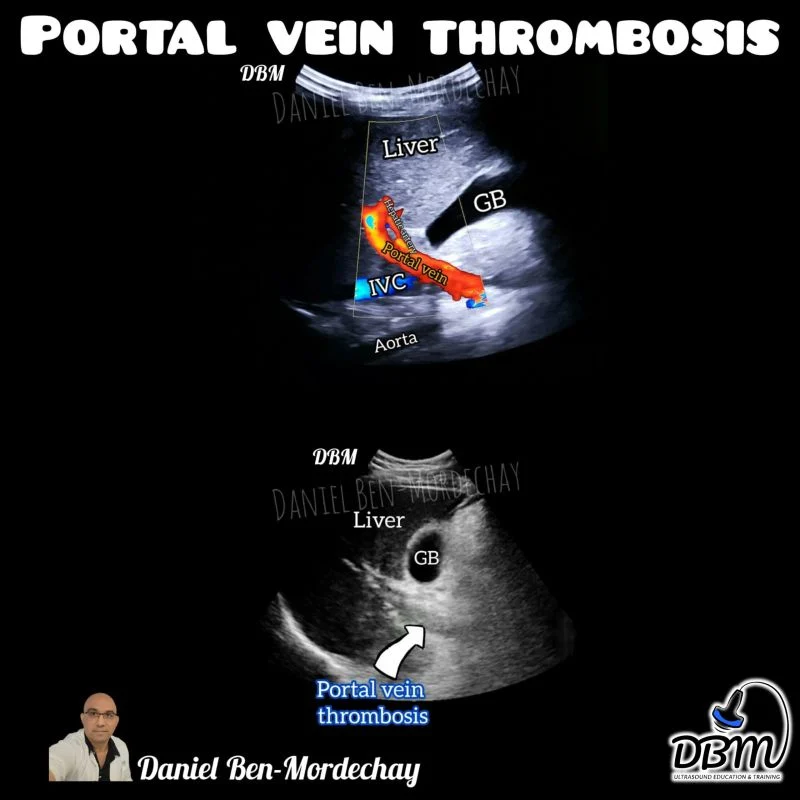
Portal vein thrombosis is a key cause of prehepatic portal hypertension, resulting from partial or complete obstruction of the portal vein lumen by thrombus formation.
Clinically, PVT may be asymptomatic, particularly in chronic settings, and is often detected incidentally during imaging follow-up in patients with underlying liver disease.
However, in acute cases, it may present with abdominal pain or signs related to mesenteric venous involvement.
From an imaging standpoint, multiple modalities can be used for diagnosis and characterization, including CT and MRI.
Nevertheless, ultrasound remains the first-line imaging modality due to its availability, safety, and real-time assessment capabilities.
Ultrasound findings:
- Gray-scale imaging
Acute PVT typically appears as echogenic or heterogeneous material within the portal vein lumen. The vein may appear distended compared to normal, especially in early stages.
- Color Doppler evaluation
The hallmark finding is partial or complete absence of flow within the portal vein. In some cases, reduced or altered flow patterns may be observed rather than complete absence.
- Chronic PVT considerations
In longstanding cases, cavernous transformation may develop, characterized by multiple serpiginous collateral vessels replacing the normal portal vein.
From a POCUS perspective, recognizing the combination of intraluminal material and absent or abnormal Doppler flow is critical for raising suspicion and prompting further evaluation.
Early identification has direct clinical implications, particularly in guiding anticoagulation, evaluating underlying etiologies, and preventing complications such as portal hypertension and bowel ischemia.”
Stay updated with Hemostasis Today.
-
Sep 25, 2026, 10:49Shefina S: From Presenting to Hosting at TRANSCON 2026
-
Sep 25, 2026, 10:37Michelle Leona Cecil: Hemophilia Advocacy and the Power of Community
-
Sep 25, 2026, 10:13Michael Baria: Platelet Concentration and PRP Outcomes in Partial Rotator Cuff Tears
-
Sep 25, 2026, 09:49Haley Coleman: Volunteering to Support Hemophilia Awareness
-
Sep 25, 2026, 08:55Hitarth Mehta: BHMS Students Gain Practical Exposure to Haemophilia Diagnosis
-
Sep 25, 2026, 07:25Varun Capoor: How Therapeutic Apheresis and Transfusion Medicine Can Complement Clinical Management in SCD
-
Sep 25, 2026, 07:14Manshi Kesharwani: SAK-GQDs Modulate Thrombus Burden and Endothelial Function in Deep Vein Thrombosis
-
Sep 25, 2026, 06:20Farjah Hassan Algahtani: How Can We Better Identify Patients at Risk of Blood Clots after Metabolic and Bariatric Surgery?
-
Sep 25, 2026, 05:59Carla Lewis: Kids Conquering Sickle Disease Joins Nemours Children’s Hospital for 2nd Annual Awareness Event