

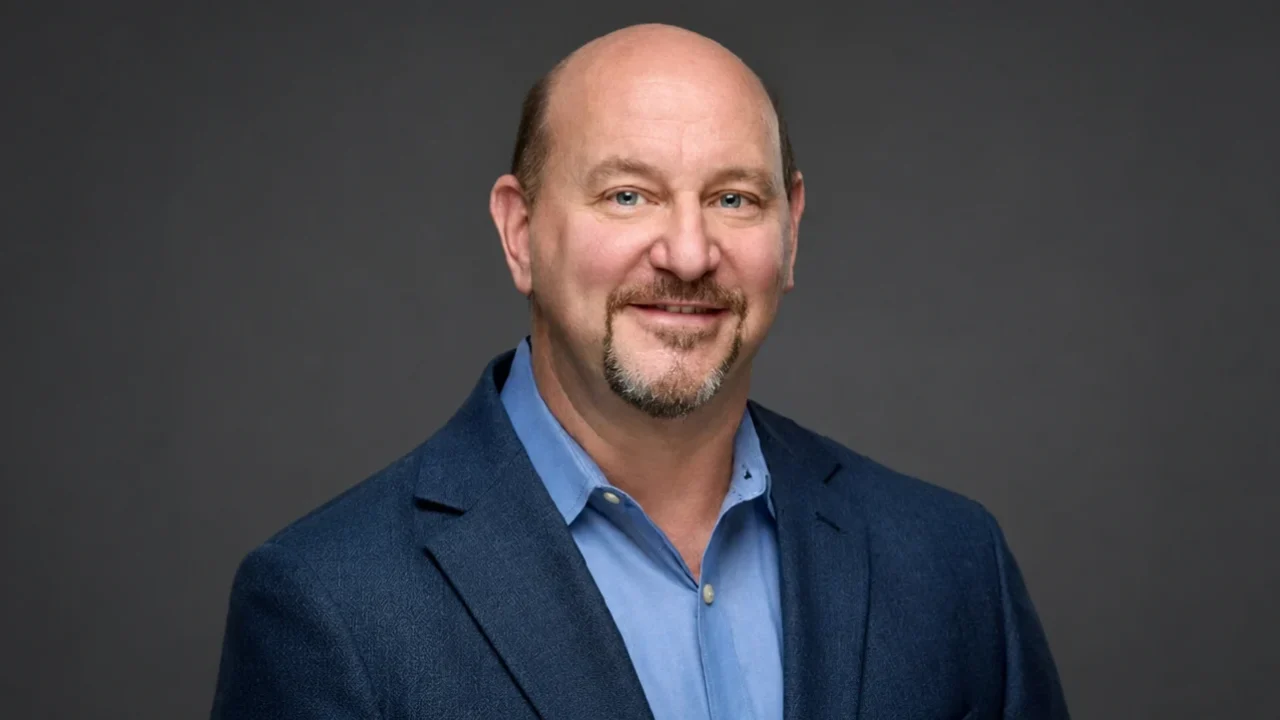
Tom Heck: Why Some Gene Therapies Succeed While Others Fail Commercially
Tom Heck, Senior Vice President at Peritia, shared a post on LinkedIn:
“CGT PART 1
The science of cell and gene therapy is extraordinary.
The commercial execution, is challenging.
I’ve spent more than 25 years on the commercial side of biopharma and clinical research.
I’ve watched the CGT space transform from theoretical promise to FDA-approvals – and in that same window, I’ve watched some of the most scientifically compelling therapies ever developed fail commercially in ways that were, frankly, avoidable.
The industry needs to have an honest conversation about this. Here it is.
The wins are real – and instructive.
Let’s start with what’s working.
CARVYKTI (J&J/Legend Biotech) has become the world’s leading CAR-T therapy: approximately $1.9B in 2025 net sales, up from $963M in 2024 – 83.5% YoY growth in Q3 2025 alone, more than 10,000 patients treated globally, and franchise profitability achieved in Q4 2025.
YESCARTA (Gilead/Kite) hit $1.57B in 2024 sales.
ZOLGENSMA (Novartis) has sustained approximately $1.2B annually through 2024, and a 2026 FDA label expansion for older SMA patients could push peak sales to $2.1B by 2033.
ELEVIDYS (Sarepta) generated $898.7M in full-year 2025 net product revenue following a label expansion in June 2024.
What do these therapies share?
They addressed large enough eligible populations, achieved strong durability signals, built infrastructure to reach patients – including CARVYKTI’s deliberate expansion into community hospitals – and repositioned earlier in the line of therapy to capture more patients before disease progression narrowed eligibility.
The failures are even more instructive.
Now the harder conversation.
ROCTAVIAN (BioMarin, hemophilia A): priced at $2.9M per dose, voluntarily withdrawn from the US market in February 2026 after generating only $36M in lifetime sales – roughly 12 patients per year.
Losses totaled $240M, including a $119M inventory write-off. No acquirer was found despite active divestiture efforts.
BEQVEZ (Pfizer, hemophilia B): approved April 2024 at $3.5M per dose, discontinued February 2025.
Zero patients treated commercially.
Pfizer cited a lack of community demand and clinician engagement – a therapy that never found its market before it was pulled.
HEMGENIX (CSL Behring/UniQure): launched in 2022 as the most expensive drug in history at $3.5M per dose.
Sales remain undisclosed – which is itself a signal – and uptake has been universally described as sluggish despite compelling efficacy data.
Bluebird bio assembled three approved gene therapies – Zynteglo, Lyfgenia, and Skysona – for sickle cell and rare diseases.
In February 2025, the company sold to Carlyle/SK Capital for approximately $29M after generating only $83.8M in total 2024 revenue across all three.
A commercial collapse, full stop.
For historical context: PROVENGE (Dendreon) was the first cell therapy FDA approval, in 2010, for prostate cancer.
Dendreon filed for bankruptcy in 2014.
A $93,000 price tag, a narrow indication, physician skepticism, and payer pushback combined to sink a pioneering therapy.”
Stay updated with Hemostasis Today.
-
Sep 26, 2026, 17:34Arwa Z. Al-Riyami: Join ISBT and Advance Your Career
-
Sep 26, 2026, 16:58Paul Whiteley: Iron Deficiency and Behavioral Problems in Children With Autism
-
Sep 26, 2026, 16:41Matthew Smeds: Management of Thoracic Endograft Thrombosis and Mesenteric Embolization
-
Sep 26, 2026, 16:04Isabelle Feldhaus: What the New ASH Iron Deficiency Guidance Means for Care
-
Sep 26, 2026, 15:55Francesca Palandri: The R-NAT Score Developed in Ruxolitinib-Treated MF Patients
-
Sep 26, 2026, 15:49Alex Ehsan: Antiphospholipid Syndrome – A Practical Guide
-
Sep 26, 2026, 15:42Michael Tadao Inouye: The Next Frontier in Genomic Population Health
-
Sep 26, 2026, 15:32Katariina Öörni: Familial Hypercholesterolaemia in Children Why Early Diagnosis Matters
-
Sep 26, 2026, 15:30P-Selectin as a Therapeutic Target in Thrombosis