

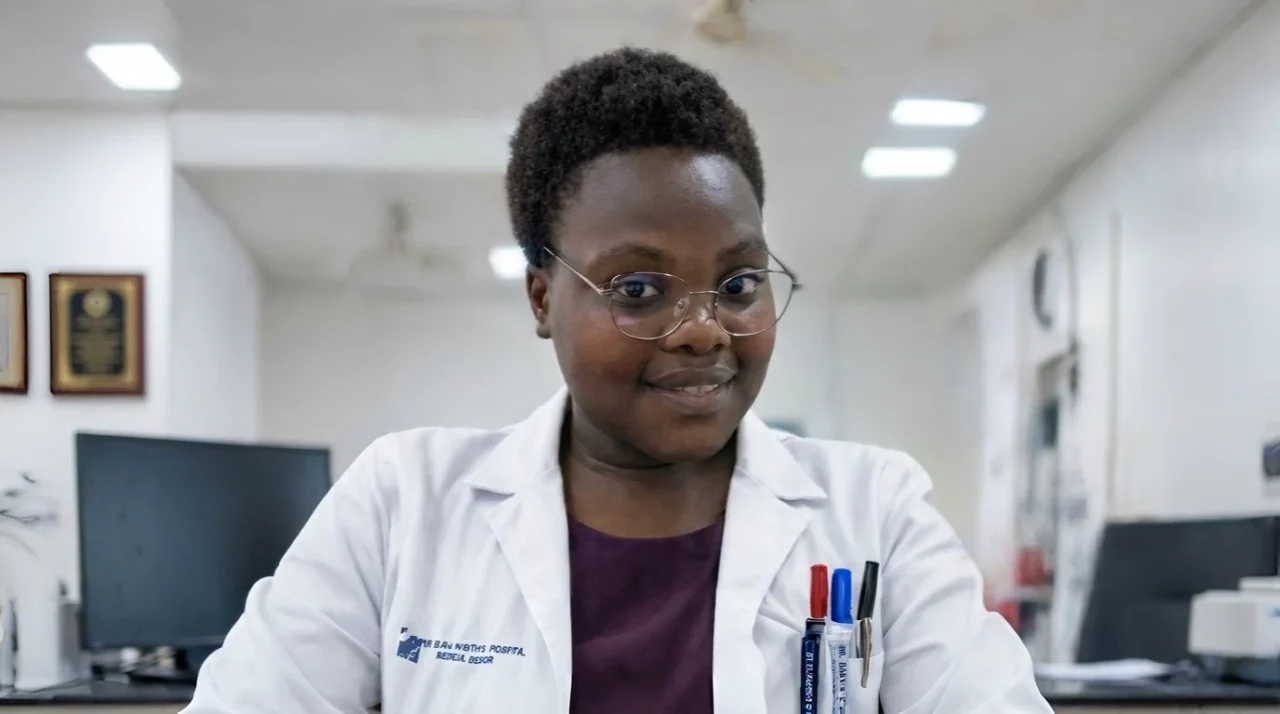
Pauline Nerwande: Hemostasis and the Balance Between Bleeding and Thrombosis
Pauline Nerwande, Aspiring Medical Laboratory Technologist in AI‑Driven Healthcare, shared a post on LinkedIn:
“Understanding Hemostasis: How the Body Stops Bleeding
Imagine a water pipe gets damaged.
If nothing blocks the leak, water keeps flowing out.
Your blood vessels work the same way. When a vessel is injured, the body immediately activates a repair system called hemostasis to stop blood loss while still keeping blood flowing normally elsewhere.
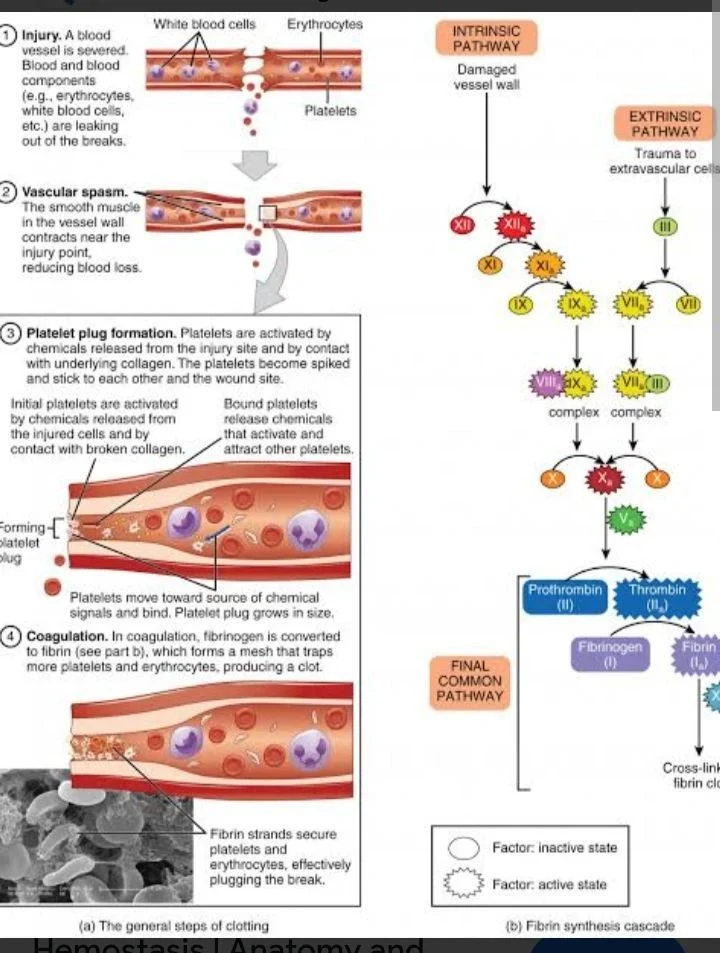
Hemostasis happens in four major stages:
- Vasoconstriction (The Vessel Tightens)
The moment a blood vessel is damaged, the vessel wall contracts and becomes narrower.
Think of squeezing a leaking hose pipe to reduce water flow.
This narrowing:
- Reduces blood loss
- Slows blood flow to the injured area
- Gives the body time to start repairs
Damaged tissues release chemicals such as endothelin that help the vessel constrict.
2. Platelet Plug Formation (Temporary Repair)
Platelets are tiny cell fragments circulating in blood.
Normally, they move smoothly without sticking to vessels.
But when injury exposes the inner collagen layer of the vessel:
What happens?
- Adhesion: Platelets stick to the damaged area using a protein called von Willebrand factor (vWF).
- Activation: The platelets change shape and become “sticky.”
They release chemicals like:
- ADP
- Thromboxane A₂
- Serotonin
These chemicals attract more platelets.
- Aggregation
More and more platelets gather together, forming a platelet plug.
This plug is only temporary and weak, like using tape to close a crack before proper repair.
3. Coagulation (Blood Clot Formation)
Now the body builds a stronger seal.
Special proteins called clotting factors activate one another in a chain reaction called the coagulation cascade.
The main goal is to produce thrombin.
Fibrin forms long thread-like fibers that create a mesh over the platelet plug.
Think of it like steel bars reinforcing wet cement.
This forms a stable blood clot that firmly seals the damaged vessel.
4. Clot Retraction and Fibrinolysis (Cleanup and Healing)
After the vessel heals:
- Clot Retraction: Platelets contract and pull the clot edges closer together.
This helps: Strengthen the repair and reduce the size of the wound
- Fibrinolysis
The body must remove the clot once healing is complete.
An enzyme called plasmin breaks down fibrin.
This prevents unnecessary blockage inside blood vessels.
Why Hemostasis Matters in Hematology?
Problems in hemostasis can cause serious diseases:
- Hemophilia: Blood fails to clot properly
- Thrombosis: Excessive clot formation
- Stroke and heart attack: Clots blocking blood vessels
This is why coagulation studies are very important in laboratories and hospitals.”
Stay updated with Hemostasis Today.
-
Sep 29, 2026, 22:45Victor Agunyego: Paracetamol – The Most Common Drug We Underestimate
-
Sep 29, 2026, 22:42Nova Sinclair: Advancing the Future of Hematology – Meet Our 2027 Organizing Committee
-
Sep 29, 2026, 22:41Lorenz Räber: Intracoronary Imaging in PCI – Why, When, How, and Which Modality?
-
Sep 29, 2026, 22:31Selma Turkovic: Pleased to Deliver the Opening Presentation at Kingston Hospital
-
Sep 29, 2026, 22:31Miguel Teran: Ultrasound and Simulation in Arterial Blood Sampling
-
Sep 29, 2026, 21:47Javed Anees: DADA2 – When a Young Stroke Is More Than a Stroke
-
Sep 29, 2026, 22:28Mohammad Refaei: Navigating Your Career in Hematology From Training to Practice
-
Sep 29, 2026, 22:27Matteo Foschi: 10 Clinical Pearls for Antithrombotic Therapy in Secondary Stroke Prevention
-
Sep 29, 2026, 22:26A Global Call for Action on Cardiovascular Health on World Heart Day – ISTH