


Judeline Casimir: Preeclampsia Awareness Month – Moving From Knowing the Risks to Saving Lives
Judeline Casimir, CEO, Founder of Casimir Public Health Empowerment, shared a post on LinkedIn:
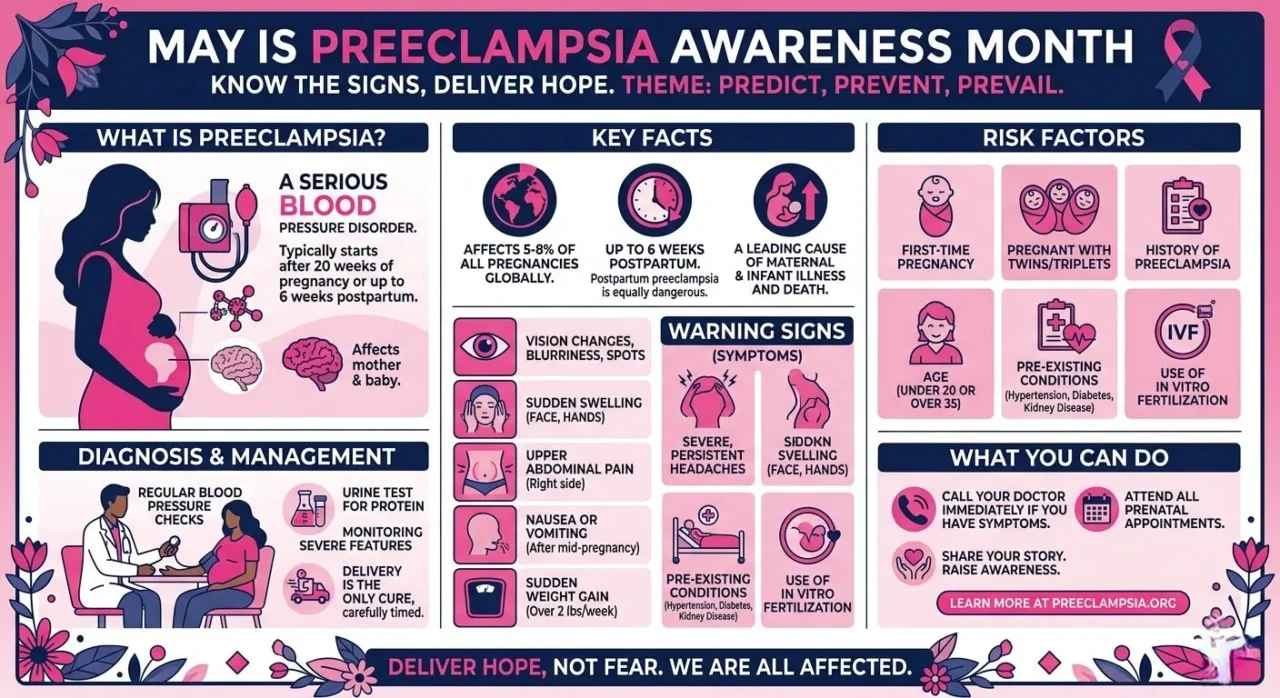
“May is Preeclampsia Awareness Month.
And this is one of the clearest examples of a larger issue in maternal health:
We know.
Preeclampsia affects 5–8% of pregnancies in the U.S.
- We know the symptoms.
- We know it can occur up to 6 weeks postpartum.
- We know Black women are at higher risk.
And yet outcomes are still inconsistent.
So the question is no longer:
- What do we need to know?
It’s:
Why isn’t what we already know working?
Because in many cases:
- Symptoms are dismissed
- Guidance is unclear
- Postpartum follow-up is inconsistent
And mothers are left navigating risk on their own.
This is the gap.
The space between clinical knowledge and real-world care delivery.
Awareness matters.
But outcomes change when systems are designed to respond in time.
If your organization is working to improve maternal outcomes, the next step is clear:
Identify where your system is failing to translate what it already knows.
Let’s fix that.”
Stay updated with Hemostasis Today.
-
Oct 20, 2026, 16:51Suzan Nakasendwa: A Growing Stroke Challenge in Uganda
-
Oct 20, 2026, 16:38Steve Moon: How Does Smoking Cessation Duration Affect Ischemic Stroke Risk
-
Oct 20, 2026, 16:25Cedrice Mentor: Reducing Platelet Wastage Through Cold Storage
-
Oct 20, 2026, 16:09Thirunavukkarasu Angappan: Can a Purified Fibrinogen Concentrate Replace Cryoprecipitate
-
Oct 20, 2026, 16:01Kalyan Roy: Platelet Conservation Through Evidence-Based Transfusion Practice
-
Oct 20, 2026, 15:28Stacy E. Croteau: 33 Countries, One Mission – Better Bleeding Disorder Care
-
Oct 20, 2026, 15:19Teresa Barnes: What Does a Pulmonary Embolism Mean for Jalen Hurts?
-
Oct 20, 2026, 15:04Laura S.: Could Speaking Up Prevent Maternal Deaths from Thrombosis?
-
Oct 20, 2026, 14:44Pete Stibbs: VTE in Professional Athletes – When Fitness Is Not Enough