


Tim Nutbeam: Women With Major Trauma Receive Less Care
Tim Nutbeam, Consultant in Emergency Medicine at University Hospitals Plymouth NHS Trust, shared a post on LinkedIn:
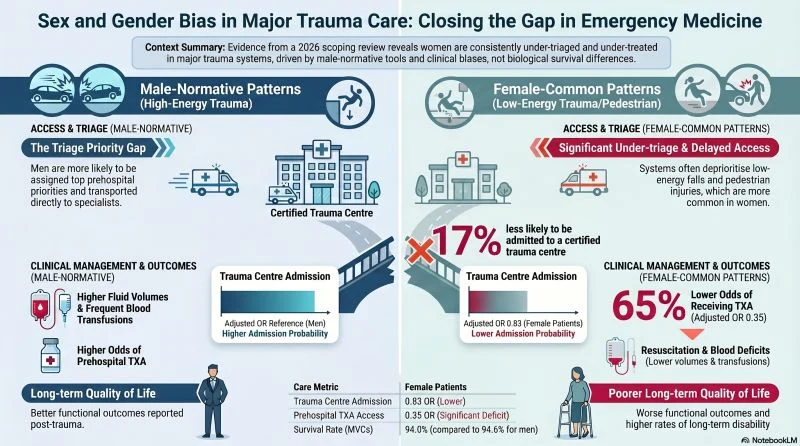
”Women with major trauma receive less care.
They are less likely to receive blood products.
Less likely to receive tranexamic acid.
Less likely to be taken to a trauma centre.
Less likely to be admitted to intensive care.
And they experience worse long-term outcomes – including higher rates of disability and poorer functional recovery.
We now have a clearer picture of why that matters.
Working with an excellent team including long term collaborator François-Xavier AGERON – proud to present this large international scoping review; looking across the trauma pathway, from prehospital care through to hospital treatment.
The signal is consistent and these differences are not fully explained by mechanism or severity.
They appear to be features of the system.
Not biology. Not evidence. The system.
This is difficult work.
Not because the data are unclear – but because the implications are.
The question now is not whether inequity exists.
It’s what we do about it.”
Stay updated with Hemostasis Today.
-
Oct 20, 2026, 16:51Suzan Nakasendwa: A Growing Stroke Challenge in Uganda
-
Oct 20, 2026, 16:38Steve Moon: How Does Smoking Cessation Duration Affect Ischemic Stroke Risk
-
Oct 20, 2026, 16:25Cedrice Mentor: Reducing Platelet Wastage Through Cold Storage
-
Oct 20, 2026, 16:09Thirunavukkarasu Angappan: Can a Purified Fibrinogen Concentrate Replace Cryoprecipitate
-
Oct 20, 2026, 16:01Kalyan Roy: Platelet Conservation Through Evidence-Based Transfusion Practice
-
Oct 20, 2026, 15:28Stacy E. Croteau: 33 Countries, One Mission – Better Bleeding Disorder Care
-
Oct 20, 2026, 15:19Teresa Barnes: What Does a Pulmonary Embolism Mean for Jalen Hurts?
-
Oct 20, 2026, 15:04Laura S.: Could Speaking Up Prevent Maternal Deaths from Thrombosis?
-
Oct 20, 2026, 14:44Pete Stibbs: VTE in Professional Athletes – When Fitness Is Not Enough