


Dilini Christina Ranasinghe: Paediatric TPE Is Not Simply Adult TPE in a Smaller Patient
Dilini Christina Ranasinghe, Registrar in Transfusion Medicine at National Blood Centre, shared a post on LinkedIn:
“Paediatric TPE is not simply ‘adult TPE in a smaller patient’
Therapeutic plasma exchange (TPE) in children requires a different level of procedural planning and vigilance.
Key paediatric considerations include:
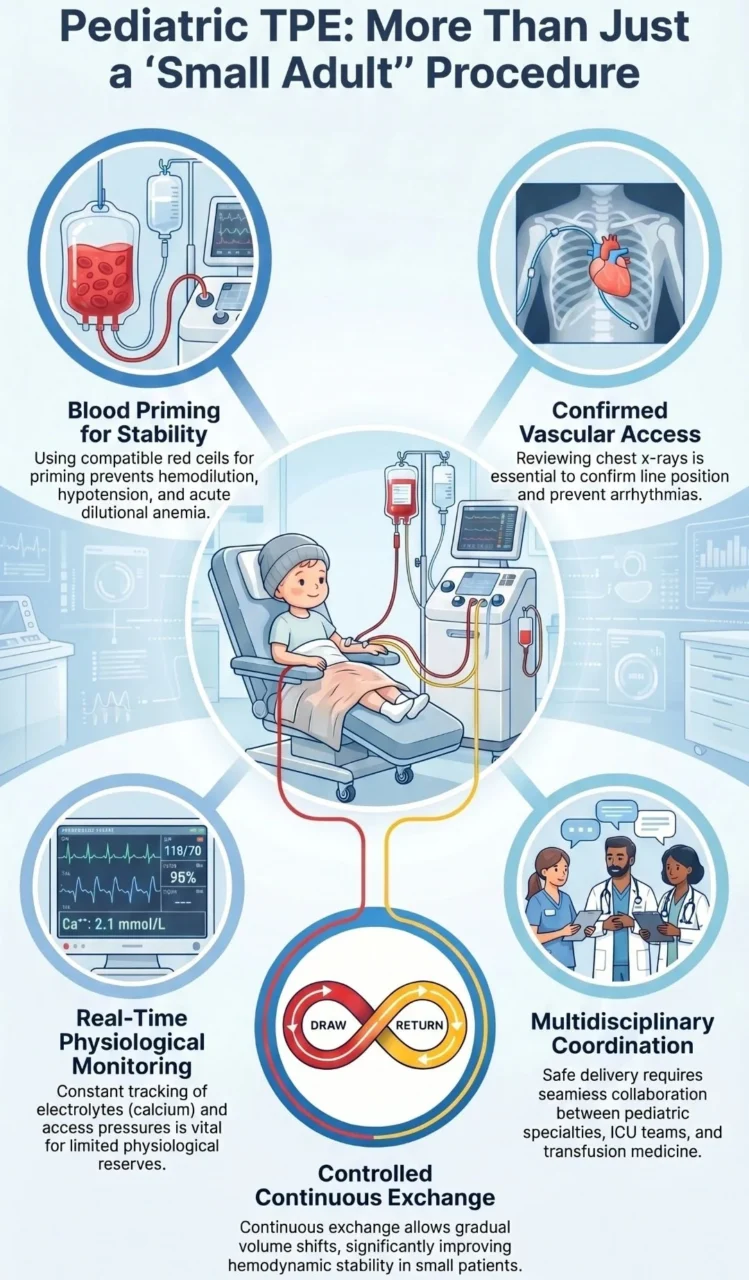
Extracorporeal volume and blood priming
In children, the circuit volume may represent a significant proportion of total blood volume. Initiating TPE with a saline-primed circuit can lead to haemodilution and hypotension. Blood priming with compatible red cells helps maintain haemodynamic stability and improves tolerance.
Vascular access and line position
Central lines may be malpositioned into unintended vessels or advanced too far due to smaller anatomy. This can lead to poor flow, ineffective exchange, or arrhythmias if the tip irritates the atrial wall — making confirmation of position with imaging essential before starting TPE.
Continuous rather than intermittent exchange
Children tolerate rapid intravascular shifts poorly. A controlled, continuous exchange allows gradual removal and replacement, improving haemodynamic stability.
Continuous monitoring and vigilance
With limited physiological reserve, deterioration can be rapid.
Close monitoring of haemodynamics, electrolytes (especially calcium), access pressures, and clinical status is essential.
Early recognition of subtle changes is key to preventing significant complications.
Team coordination
Safe paediatric TPE requires coordination between paediatric specialties, transfusion medicine, ICU teams when required, and microbiology, across all staff categories — ensuring safe delivery in different care settings.
In paediatric TPE, safety lies in anticipating physiological changes and responding before instability develops.”
Stay updated with Hemostasis Today.
-
Oct 20, 2026, 16:51Suzan Nakasendwa: A Growing Stroke Challenge in Uganda
-
Oct 20, 2026, 16:38Steve Moon: How Does Smoking Cessation Duration Affect Ischemic Stroke Risk
-
Oct 20, 2026, 16:25Cedrice Mentor: Reducing Platelet Wastage Through Cold Storage
-
Oct 20, 2026, 16:09Thirunavukkarasu Angappan: Can a Purified Fibrinogen Concentrate Replace Cryoprecipitate
-
Oct 20, 2026, 16:01Kalyan Roy: Platelet Conservation Through Evidence-Based Transfusion Practice
-
Oct 20, 2026, 15:28Stacy E. Croteau: 33 Countries, One Mission – Better Bleeding Disorder Care
-
Oct 20, 2026, 15:19Teresa Barnes: What Does a Pulmonary Embolism Mean for Jalen Hurts?
-
Oct 20, 2026, 15:04Laura S.: Could Speaking Up Prevent Maternal Deaths from Thrombosis?
-
Oct 20, 2026, 14:44Pete Stibbs: VTE in Professional Athletes – When Fitness Is Not Enough