


Yassin Taher/ LinkedIn
May 29, 2026, 09:53
Yassin Taher: Recognizing Clonal Eosinophilic Disorders in Pediatric Hypereosinophilic Syndrome
Yassin Taher, Pediatric Oncology Consultant at Children’s Cancer Hospital, shared a post on LinkedIn:
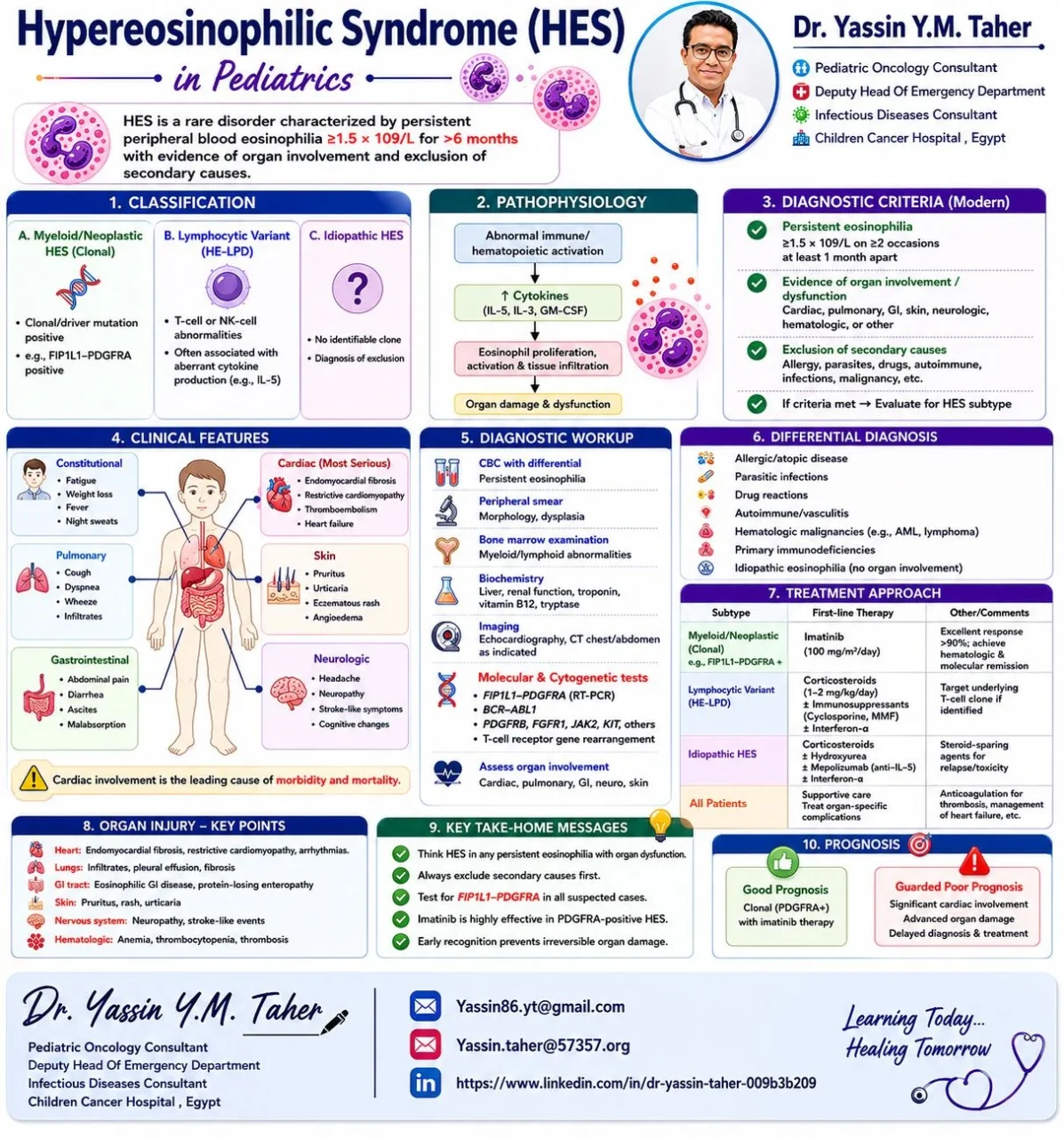
“Pediatric Hypereosinophilic Syndrome (HES) can mimic infection, autoimmune disease, lymphoma, or primary immunologic disorders.
I created this high-yield visual summary to simplify:
- Classification
- Diagnostic approach
- Molecular testing
- Organ involvement
- Modern targeted therapies
Key takeaway: Always evaluate persistent eosinophilia with evidence of organ dysfunction for possible clonal eosinophilic disorders, particularly FIP1L1–PDGFRA–associated disease due to its dramatic response to imatinib.”
Stay updated with Hemostasis Today.
-
Oct 20, 2026, 16:51Suzan Nakasendwa: A Growing Stroke Challenge in Uganda
-
Oct 20, 2026, 16:38Steve Moon: How Does Smoking Cessation Duration Affect Ischemic Stroke Risk
-
Oct 20, 2026, 16:25Cedrice Mentor: Reducing Platelet Wastage Through Cold Storage
-
Oct 20, 2026, 16:09Thirunavukkarasu Angappan: Can a Purified Fibrinogen Concentrate Replace Cryoprecipitate
-
Oct 20, 2026, 16:01Kalyan Roy: Platelet Conservation Through Evidence-Based Transfusion Practice
-
Oct 20, 2026, 15:28Stacy E. Croteau: 33 Countries, One Mission – Better Bleeding Disorder Care
-
Oct 20, 2026, 15:19Teresa Barnes: What Does a Pulmonary Embolism Mean for Jalen Hurts?
-
Oct 20, 2026, 15:04Laura S.: Could Speaking Up Prevent Maternal Deaths from Thrombosis?
-
Oct 20, 2026, 14:44Pete Stibbs: VTE in Professional Athletes – When Fitness Is Not Enough