

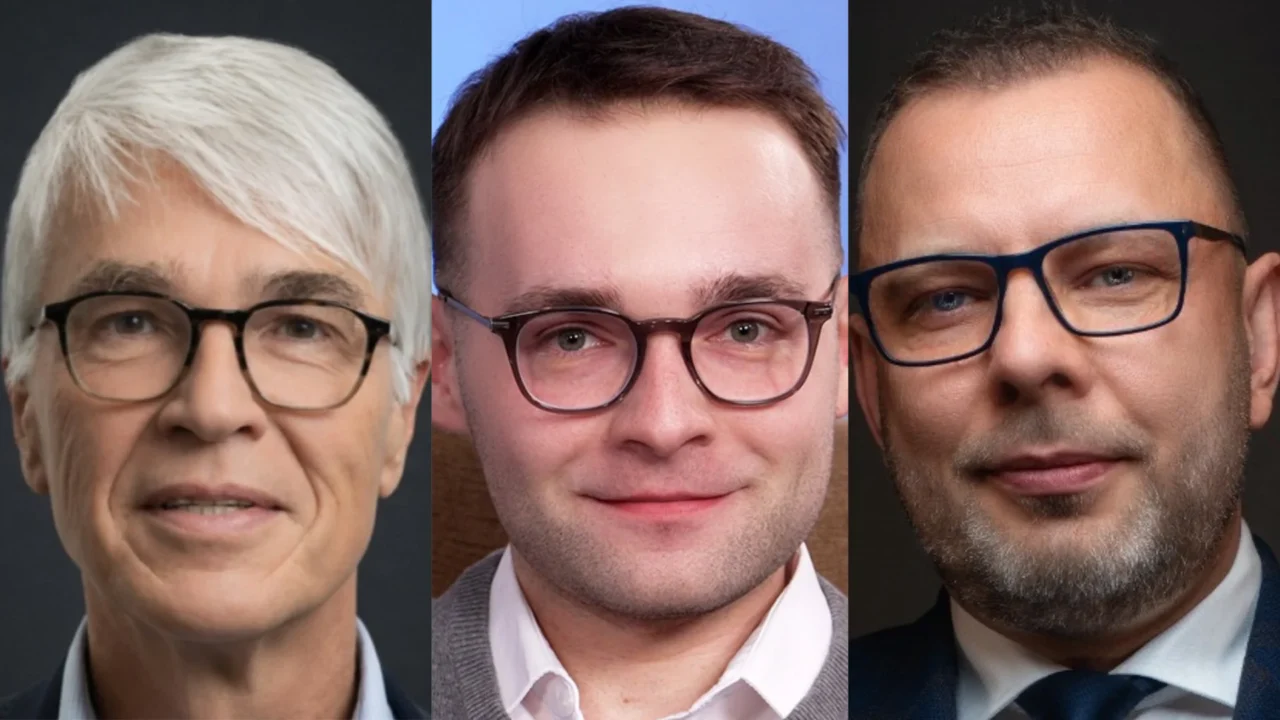
Wolfgang Miesbach: When to Stop Anticoagulation after AF Ablation in 2026?
Wolfgang Miesbach, Professor of Medicine at Frankfurt University Hospital, shared a post on LinkedIn about a recent article by Karol Momot et al, published in Medical Science Monitor, adding:
”When to stop anticoagulation after AF ablation in 2026?
For the first time, two randomized trials – ALONE‑AF and OCEAN – directly address this clinical dilemma:
Guidelines
Current ESC and ACC/AHA guidelines still mandate at least 2–3 months of OAC after AF ablation in all patients and recommend that long‑term therapy be decided by CHA₂DS₂‑VA / CHA₂DS₂‑VASc rather than ‘successful ablation’ or sinus rhythm alone.
New randomized data
ALONE‑AF (JAMA 2025): In 840 low–intermediate risk patients ≥1 year post‑ablation without AF recurrence, stopping DOACs reduced major bleeding without increasing ischemic stroke over 2 years.
OCEAN (NEJM 2026): In 1,284 higher‑risk patients, rivaroxaban 15 mg vs aspirin showed no significant stroke advantage but more bleeding, questioning routine long‑term OAC after apparently stable ablation.
A large 2026 meta‑analysis (>270,000 patients) suggests no overall rise in thromboembolism or mortality when OAC is stopped, but CHA₂DS₂‑VASc >2 is a red flag (higher thromboembolic risk if you discontinue).
Timing matters
All randomized data so far assume OAC is continued for ≥12 months after ablation before considering withdrawal;the optimal earlier time point (for example 6 months) remains unknown and is hypothesis‑generating only.
Practical 2026 message
In selected, well‑monitored patients, OAC withdrawal ≥1 year after ‘successful’ AF ablation is now evidence‑supported, but high‑risk patients should still stay on lifelong anticoagulation.
Congratulations to Karol Momot, LukaszSzarpak and co-authors on this excellent review.”
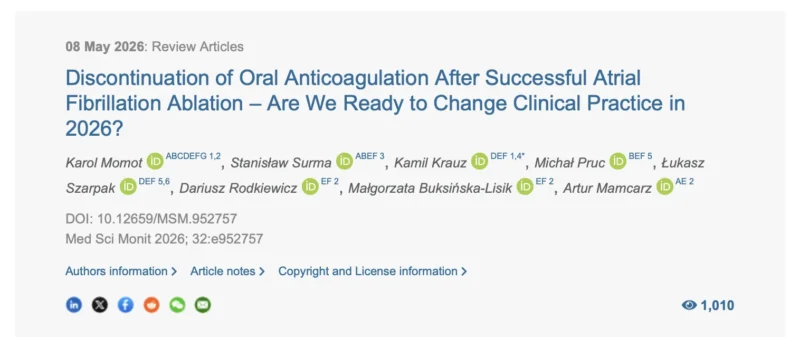
Title: Discontinuation of Oral Anticoagulation After Successful Atrial Fibrillation Ablation – Are We Ready to Change Clinical Practice in 2026?
Authors: Karol Momot, Stanisław Surma, Kamil Krauz, Michał Pruc, Łukasz Szarpak, Dariusz Rodkiewicz, Małgorzata Buksińska-Lisik, Artur Mamcarz
Stay updated on all scientific advances with Hemostasis Today.
-
Oct 20, 2026, 16:51Suzan Nakasendwa: A Growing Stroke Challenge in Uganda
-
Oct 20, 2026, 16:38Steve Moon: How Does Smoking Cessation Duration Affect Ischemic Stroke Risk
-
Oct 20, 2026, 16:25Cedrice Mentor: Reducing Platelet Wastage Through Cold Storage
-
Oct 20, 2026, 16:09Thirunavukkarasu Angappan: Can a Purified Fibrinogen Concentrate Replace Cryoprecipitate
-
Oct 20, 2026, 16:01Kalyan Roy: Platelet Conservation Through Evidence-Based Transfusion Practice
-
Oct 20, 2026, 15:28Stacy E. Croteau: 33 Countries, One Mission – Better Bleeding Disorder Care
-
Oct 20, 2026, 15:19Teresa Barnes: What Does a Pulmonary Embolism Mean for Jalen Hurts?
-
Oct 20, 2026, 15:04Laura S.: Could Speaking Up Prevent Maternal Deaths from Thrombosis?
-
Oct 20, 2026, 14:44Pete Stibbs: VTE in Professional Athletes – When Fitness Is Not Enough