


Yauheniya Baranchykava: Changing Lives Through Innovation in Hemophilia Care
Yauheniya Baranchykava, Hemofilia Squad Lead at Roche, shared a post on LinkedIn:
“Change the lives of people with hemophilia. That is our purpose.
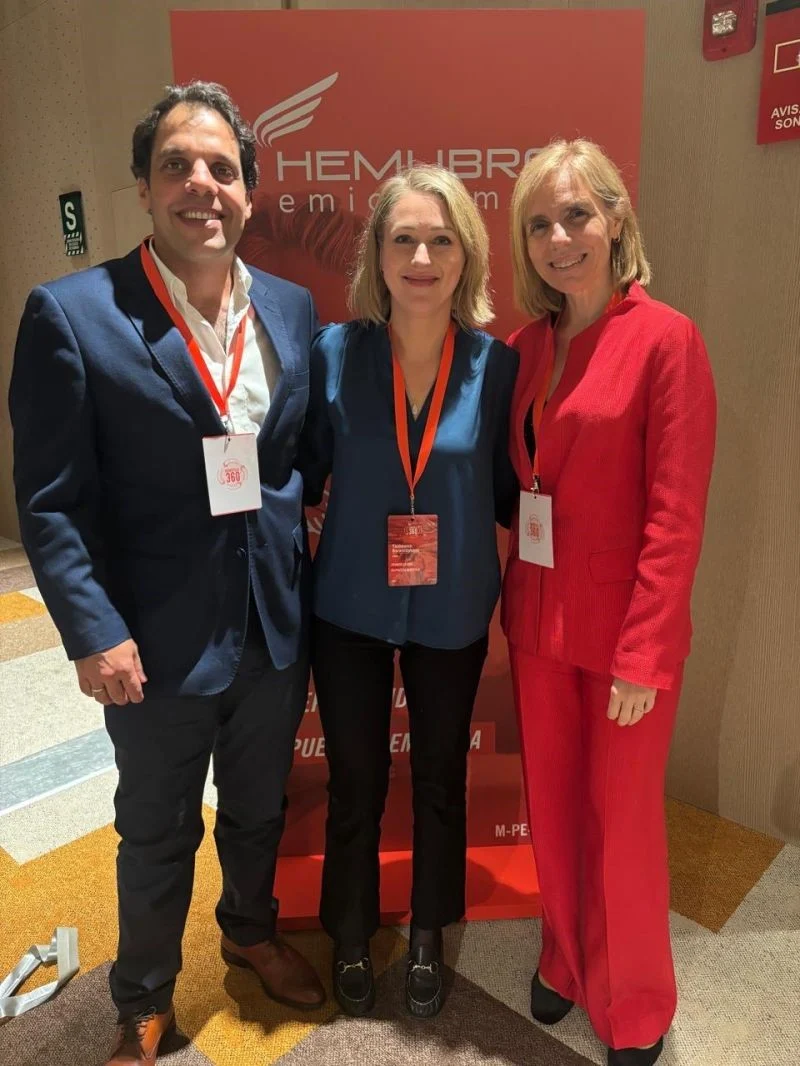
This week we had the privilege of being part of the LATAM Hemophilia Meeting, along with medical specialists from all over Latin America committed to bringing the best science to their patients.
A meeting where knowledge is shared, experiences multiply and the objective is always the same: how do we get more people to access care that really transforms their lives?
Team Chile is committed to bringing science to our medical community.
Because we are convinced: the best science must reach our doctors and, through them, our patients.
Innovation in hemophilia goes far beyond reducing bleeding.
We are talking about children who can go to school without fear, adults who work, families who breathe easier.
Roche Chile’s commitment to hemophilia is real, it is continuous and it is growing.
Thanks to LATAM team, Carolina Ocampo, Josue Hidalgo G Andrea, Morales Heerlein, and their teams to make it possible and team Peru to receive us.
It was amazing!”
Stay updated with Hemostasis Today.
-
Sep 29, 2026, 22:41Lorenz Räber: Intracoronary Imaging in PCI – Why, When, How, and Which Modality?
-
Sep 29, 2026, 22:31Selma Turkovic: Pleased to Deliver the Opening Presentation at Kingston Hospital
-
Sep 29, 2026, 22:31Miguel Teran: Ultrasound and Simulation in Arterial Blood Sampling
-
Sep 29, 2026, 21:47Javed Anees: DADA2 – When a Young Stroke Is More Than a Stroke
-
Sep 29, 2026, 22:28Mohammad Refaei: Navigating Your Career in Hematology From Training to Practice
-
Sep 29, 2026, 22:27Matteo Foschi: 10 Clinical Pearls for Antithrombotic Therapy in Secondary Stroke Prevention
-
Sep 29, 2026, 22:26A Global Call for Action on Cardiovascular Health on World Heart Day – ISTH
-
Sep 29, 2026, 19:00Caitlin Raymond: Can Artificial Blood Solve Blood Supply Shortages?
-
Sep 29, 2026, 18:51Chaza Alaji: Dyslipidemia, Thrombosis and the DIC Diagnostic Trap