

Long-Term Outcomes and Future Directions in Hemophilia Gene Therapy: Insights from EHA 2026
At EHA 2026, Professor Wolfgang Miesbach of Frankfurt University Hospital reviewed the remarkable evolution of gene therapy for hemophilia, highlighting long-term efficacy data from landmark clinical trials while addressing the practical, biological and economic challenges that continue to shape implementation in routine care.
The presentation underscored that although gene therapy has entered clinical practice, careful patient selection, long-term surveillance, and sustainable healthcare systems remain essential for its success.
From experimental procedures to routine care
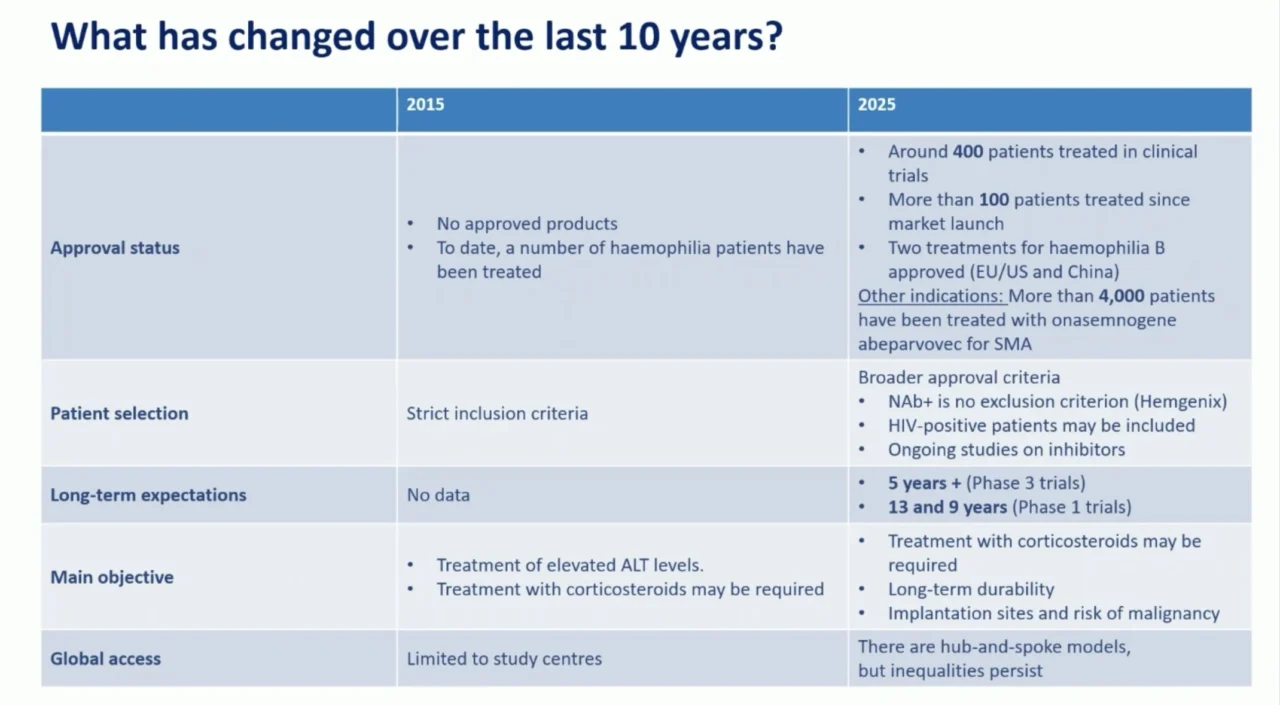
Early gene-therapy patients were treated under intensive monitoring and strict protocols, with each case representing a significant milestone in the field. Today, gene therapy is increasingly delivered in outpatient settings within specialized hemophilia centers.
Years of accumulated experience and standardized follow-up have strengthened physician confidence and improved patient management, moving gene therapy toward routine clinical practice for appropriately selected patients.
However, this transition does not reduce the complexity of care. Comprehensive pre-treatment evaluation, structured follow-up, and multidisciplinary expertise remain essential.
Careful patient selection, monitoring of liver function and factor expression, and ongoing patient education continue to be integral to successful gene-therapy programs.
Long-term clinical experience
The evidence base has grown substantially, with hundreds of patients now treated across clinical trials and post-approval settings.
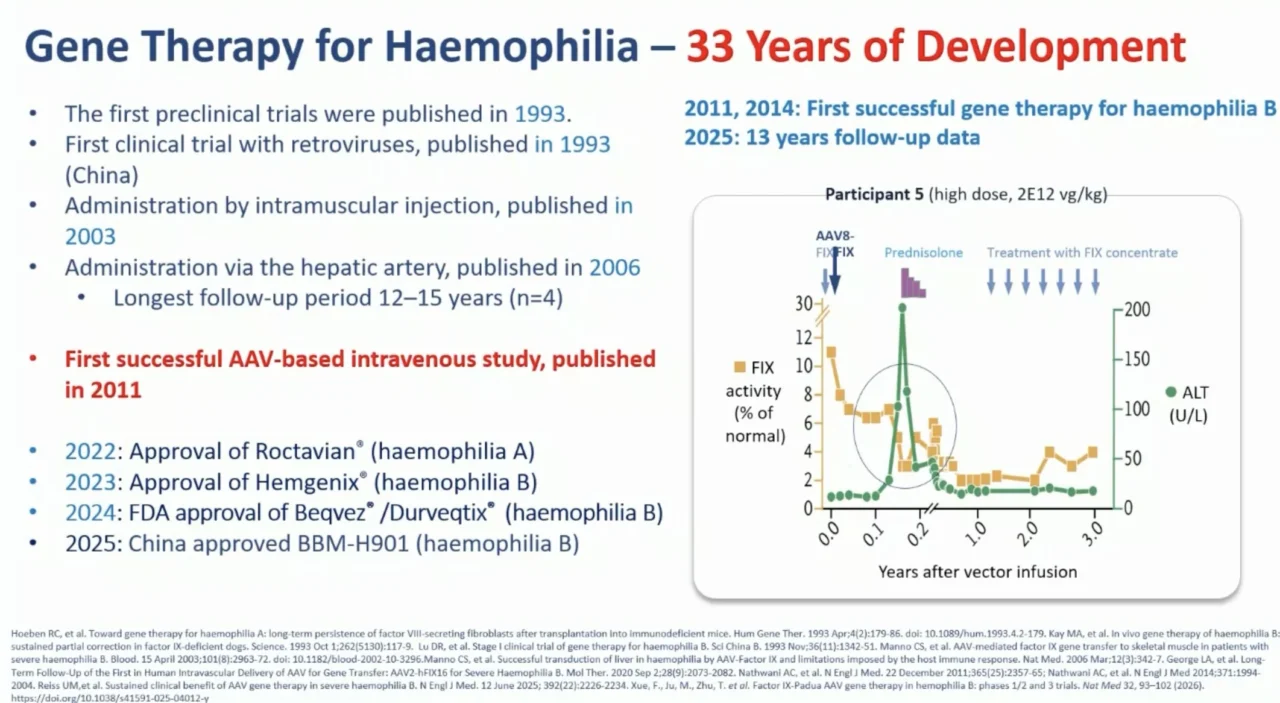
Long-term follow-up data, in some cases extending beyond 33 years, are now available, providing important insights into durability and safety.
Experience gained from other genetic diseases, such as spinal muscular atrophy, has further strengthened confidence in AAV-based platforms and broader gene-delivery systems.
Landmark trials and durability
Key trials highlighted included long-term follow-up data from pivotal gene-therapy studies in hemophilia A and B.
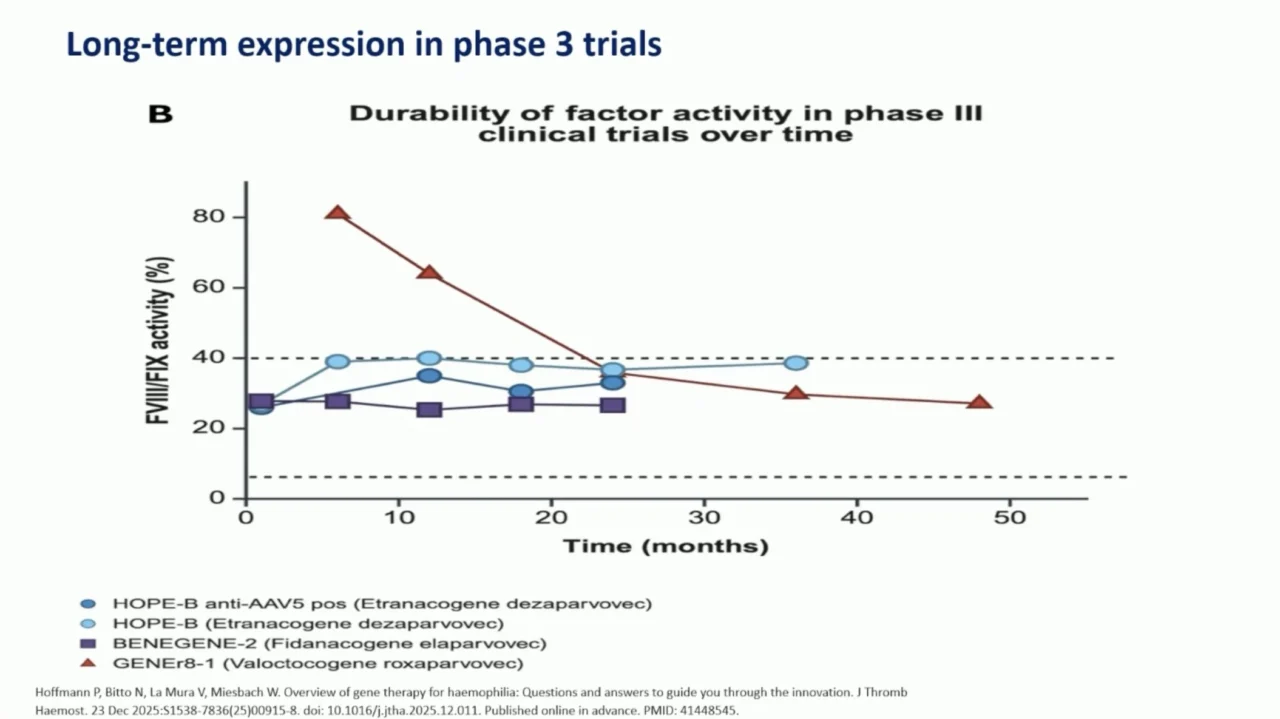
In hemophilia B, the HOPE-B trial of etranacogene dezaparvovec (Hemgenix) demonstrated sustained factor IX expression at five years, with a mean level of approximately 37%.
Most patients remained off prophylaxis and continued to experience very low annualized bleeding rates. The study also included patients with pre-existing AAV5 antibodies, thereby expanding potential eligibility criteria in clinical practice.
In hemophilia A, the GENEr8-1 trial of valoctocogene roxaparvovec (Roctavian) reported five-year follow-up data showing mean factor VIII levels of around 16%, with more than 80% of patients remaining off prophylaxis.
However, unlike hemophilia B, factor VIII expression demonstrated a gradual decline over time, highlighting important differences in durability between the two indications.
Safety and Long-Term Monitoring
Safety remains central. Infusion reactions are generally mild and transient. The major clinical issue has been liver toxicity: ALT elevations are more common and often more pronounced after hemophilia A gene therapy, frequently requiring corticosteroids and prolonged monitoring.
Published management algorithms now guide initiation and tapering of immunosuppression based on labs and clinical response.
AAV Integration and Oncogenic Risk
AAV integration into the host genome occurs at low frequency, estimated at approximately 1–6 events per 1,000 cells in some studies.
Current large-scale sequencing analyses in hemophilia gene therapy demonstrate that the vast majority of vector genomes remain episomal or exist as concatemeric forms (>99% of reads), with only rare integration events detected.
These integrations show slight enrichment in chromatin-accessible regions but, importantly, have not been associated with clonal expansion or preferential enrichment near known oncogenic loci.
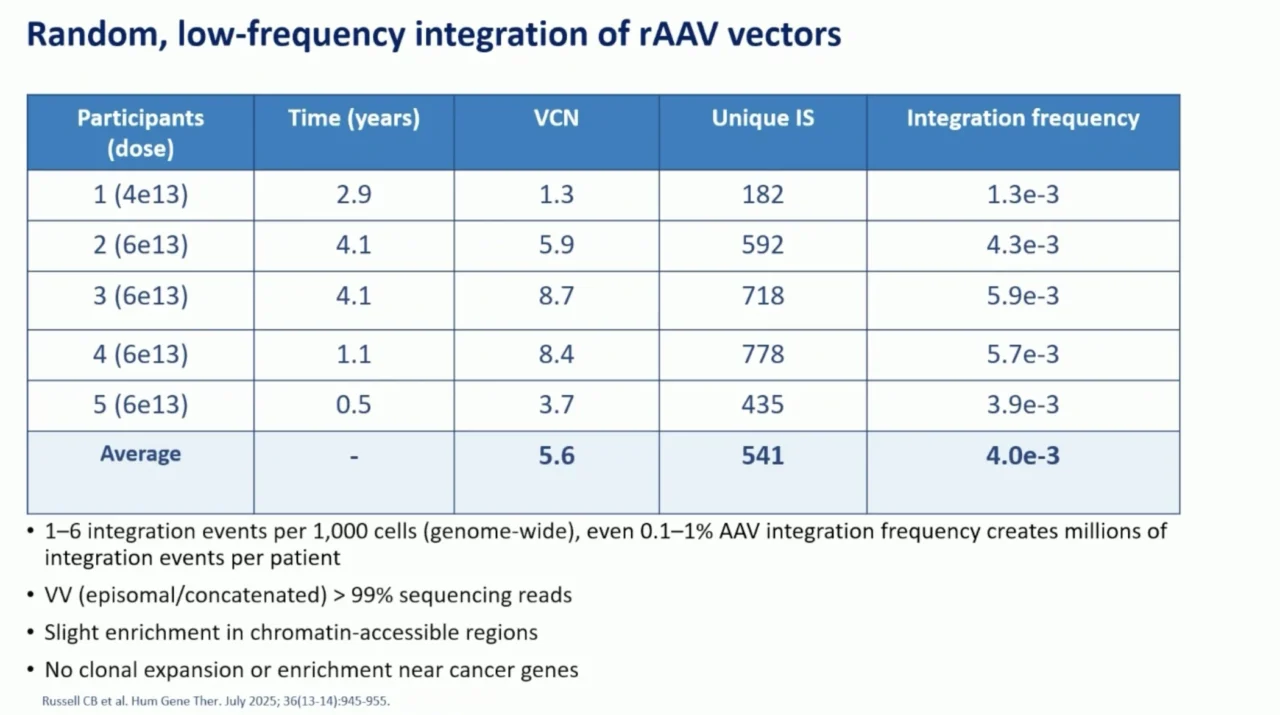
Across clinical datasets, even when integration frequencies reach measurable levels (0.1–1% in certain analyses), this still translates into millions of individual integration events per treated patient. Despite this, no consistent evidence of oncogenic transformation has been observed in hemophilia gene therapy trials to date.
However, long-term safety surveillance remains essential as gene therapy exposure expands to larger and more diverse populations.
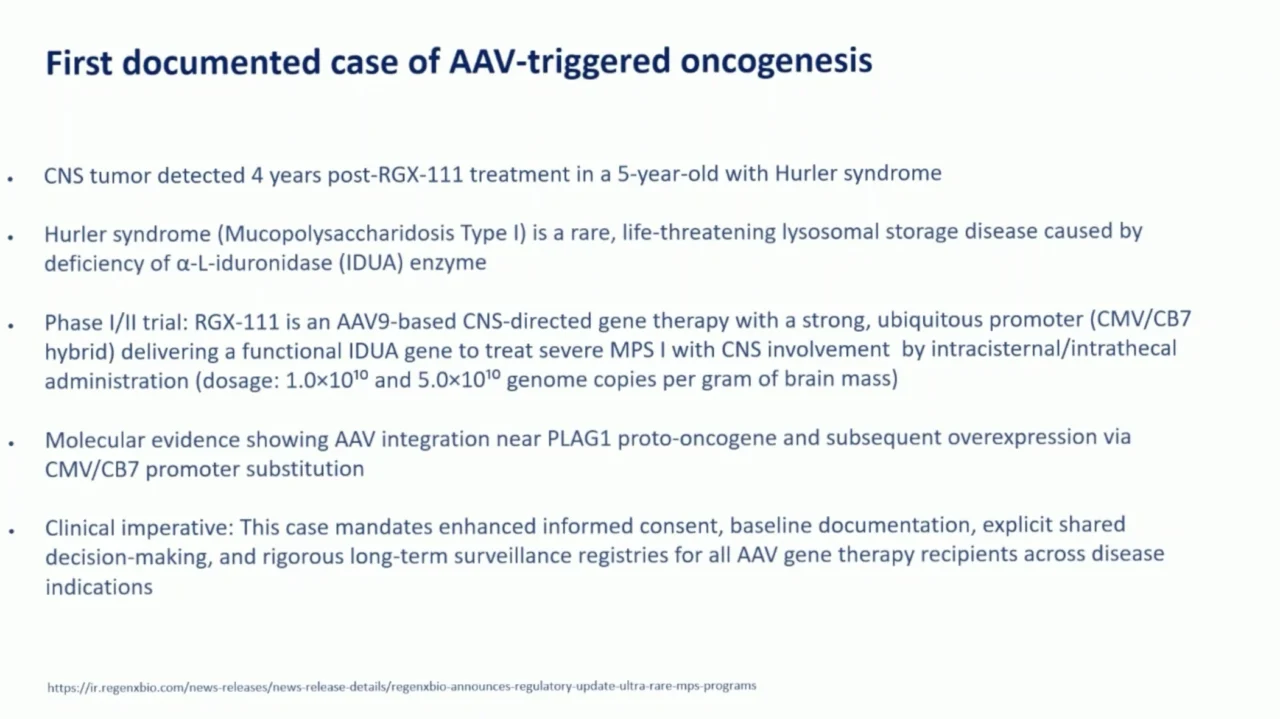
This case in a child with Hurler syndrome after RGX-111 described CNS tumor development four years post-treatment. Molecular studies suggested AAV integration near the PLAG1 proto-oncogene with possible promoter disruption, although a causal link was not confirmed.
The finding underscores the need for long-term surveillance, particularly in high-dose or CNS-directed AAV therapies.
Overall, current hemophilia gene therapy data remain reassuring regarding oncogenic risk, but continued registry-based follow-up, baseline documentation, and transparent informed consent are essential for safe long-term use.
Can Specialized Care Be Scaled Beyond Expert Centers?
Successful gene therapy requires more than vector infusion.
Careful patient selection – including assessment of prior hepatitis infections, liver steatosis, and overall hepatic function – together with clear expectation management and coordinated multidisciplinary teams are essential. A hub-and-spoke model, linking regional specialized centers with referring sites, was recommended to support safe delivery and more equitable access to treatment.
International Guidance and Registries
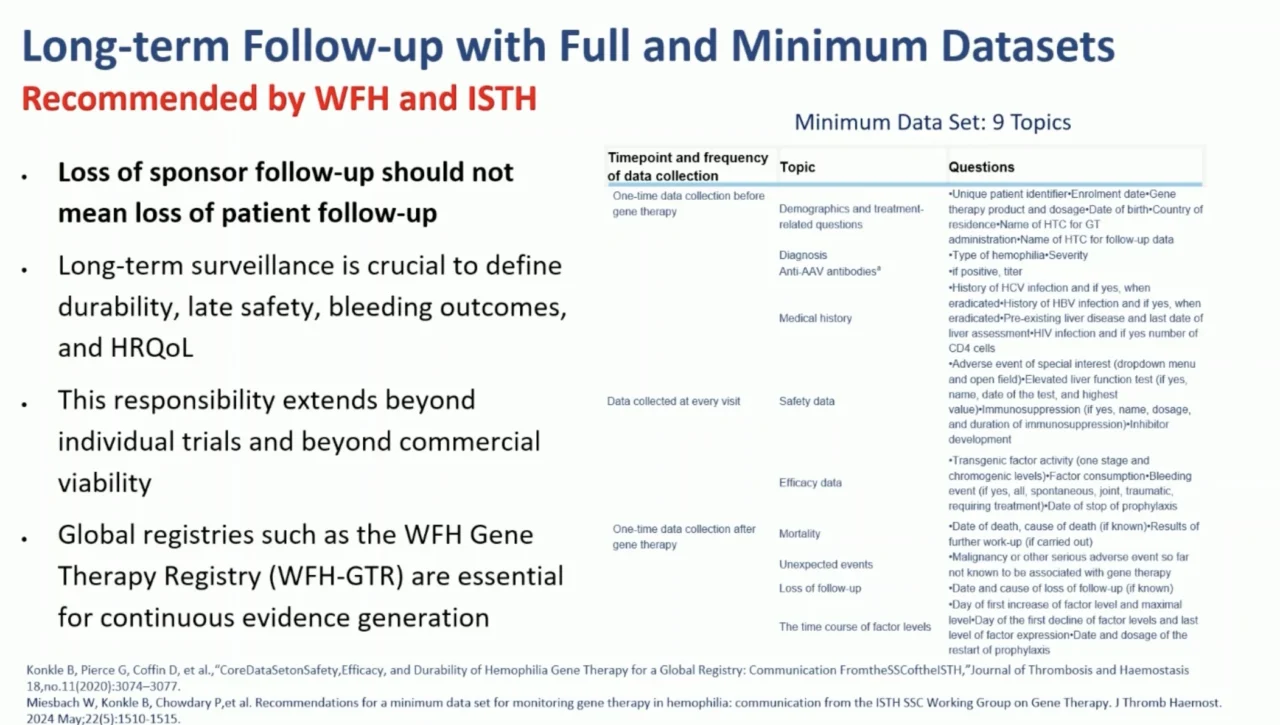
Global initiatives from the World Federation of Hemophilia, ISTH, and EHA provide important frameworks for center qualification and patient management.
Given the relatively small number of patients treated worldwide, comprehensive international registries are essential to capture long-term efficacy, safety outcomes, and rare adverse events, ensuring continuous learning as gene therapy moves further into clinical practice.
Economic Challenges and Access
Several advanced therapies approved in Europe later left the market because reimbursement models were unsustainable.
The future of hemophilia gene therapy will depend not only on clinical success but on viable financing and distribution systems; otherwise access will remain unequal.
Looking Ahead
The next generation of therapies aims not only to improve durability and safety but also to overcome current limitations such as immune responses, declining expression and challenges with re-dosing.
Novel AAV capsids, optimized vector engineering, non-viral delivery platforms, and genome-editing technologies may further expand treatment possibilities in the coming years.
-
Sep 21, 2026, 15:56Anita Zaidi: Why Only 2% of Health Research and Development Goes to Women’s Conditions
-
Sep 21, 2026, 15:49Omid Khalafi: Gating Strategy and How Do We Decide Which Cells to Analyze
-
Sep 21, 2026, 15:44Levacetylleucine: A New Therapeutic Approach to Ataxia Telangiectasia
-
Sep 21, 2026, 15:40Andreas Tridimas: The Diagnostic Traps of Lipaemic Blood – Why a Normal Amylase Can Mislead You
-
Sep 21, 2026, 15:33Arsene Mekinian: Exploring Cardiac Involvement in Behçet’s Disease
-
Sep 21, 2026, 15:23Anis Mahjoubi: MRI Findings of Krukenberg Tumors
-
Sep 21, 2026, 15:08Fikreab Tesfaye Tefera: 10 Practical Take-Home Points for Diagnosing Iron Deficiency Anemia
-
Sep 21, 2026, 14:10Aswin K Mohan: Lessons from TRANSCON 2026 – Building Resilient Blood Supply Systems Before Crisis Hits
-
Sep 21, 2026, 14:00Vincent Lu: Beyond PT and aPTT – How Hemostasis Evolves Across a Lifetime