


Akshat Jain: Does Mitapivat Translate to Clinical Benefit in SCD?
Akshat Jain, Hematology Pediatric Workforce Task Force at American Society of Hematology, shared a post on LinkedIn:
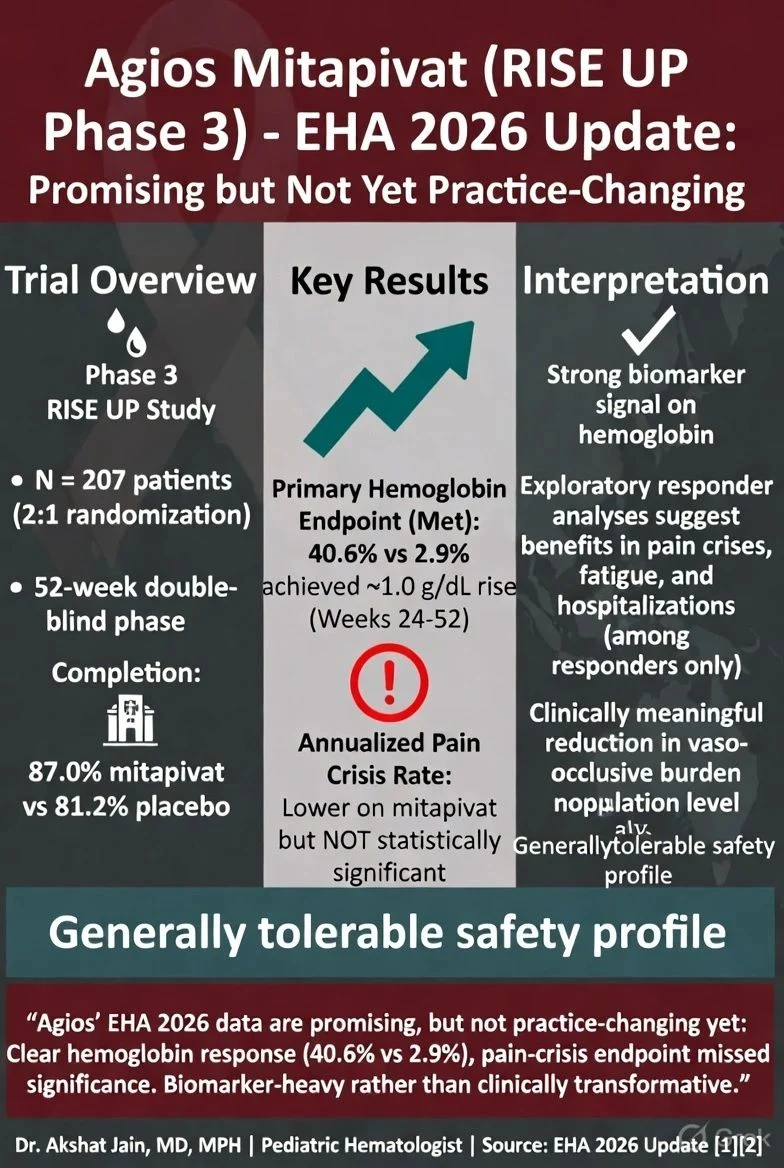
“2026 data are promising, but not practice-changing yet:
I had high hopes for this drug,but am disappointed because the most clinically important endpoints did not meet statistical significance.
Knowing that a small rise in hemoglobin doesnt always translate into life changing VOC reduction in the Real World especially while adjudicating risk and benefit (adverse effects of PKAs), this readout confirms why pain crisis end point did not meet statistically signifance and more importantly reduction in fatigue despite rise in hemoglbin in <50% subjects.
In the Phase 3 RISE UP study, mitapivat met the primary hemoglobin-response endpoint, with 40.6% of treated patients achieving a hemoglobin rise of at least 1.0 g/dL from Weeks 24 to 52 versus 2.9% on placebo, but the annualized pain-crisis endpoint did not reach statistical significance- That matters in Sickle Cell Disease, because hemoglobin improvement is biologically interesting, but patients and clinicians ultimately care most about whether the drug meaningfully reduces vaso-occlusive burden, fatigue, and hospitalizations in a durable way.
We are compelled to exercise caution in the interest of accuracy and not overstate the true treatment effect in SCD given the painful journey from recent drug fails,that warrioirs have to endure, but I remain hopeful that another formulation addresing PK pathway will come along ,showing statistical significant reduction in pain crisis.
We await the manuscript to see abut my takeaway from European Hematology Association (EHA) 2026 is: Pyruvate kinase looks promising, appears generally tolerable, and may help a subset of patients, but the current dataset still does not justify calling it a practice-changing sickle cell therapy without seeing the full peer-reviewed analysis and long-term real-world benefit.”
Stay updated with Hemostasis Today.
-
Sep 29, 2026, 19:00Caitlin Raymond: Can Artificial Blood Solve Blood Supply Shortages?
-
Sep 29, 2026, 18:51Chaza Alaji: Dyslipidemia, Thrombosis and the DIC Diagnostic Trap
-
Sep 29, 2026, 17:31Rajnikant Patel: Bridging Ayurvedic Concepts and Modern Toxin-Mediated Disease
-
Sep 29, 2026, 17:13Nicholas Lang։ A Meaningful Case of Immune Thrombocytopenia
-
Sep 29, 2026, 16:55Ayatullah Gamal Wahab: When the CBC Lies
-
Sep 29, 2026, 16:35Jonathan Douxfils: Navigating the VTE Risk Continuum in Reproductive Medicine
-
Sep 29, 2026, 16:35Chaima Rajeh: Types of Anemia and Their Laboratory Features
-
Sep 29, 2026, 16:27Scott Isaacs: How GLP-1 RAs Target Systemic Inflammation to Drive Cardio, Autoimmune, and Gut Health
-
Sep 29, 2026, 16:21Yitshak Kreiss: From Treating Patients to Defining the Standard of Knowledge