

VAYHIT3: Durable 12-Month Responses with Ianalumab in Primary ITP
Primary immune thrombocytopenia (ITP) is an autoimmune disorder where low platelet counts increase bleeding risk. Many patients remain heavily pretreated with limited treatment options.
Ianalumab is a monoclonal antibody that depletes pathogenic B-cells driving ITP.
Unlike most treatments requiring continuous therapy, ianalumab is given as a short four-dose regimen with potential for durable remission.
The VAYHIT3 trial tested ianalumab in heavily pretreated ITP patients, showing 24% achieved 12-month stable responses with many discontinuing concomitant therapy.
These data were presented by David Kuter, Director of Clinical Hematology at Massachusetts General Hospital and Professor of Medicine at Harvard Medical School, at EHA 2026.
Study Design and Eligibility
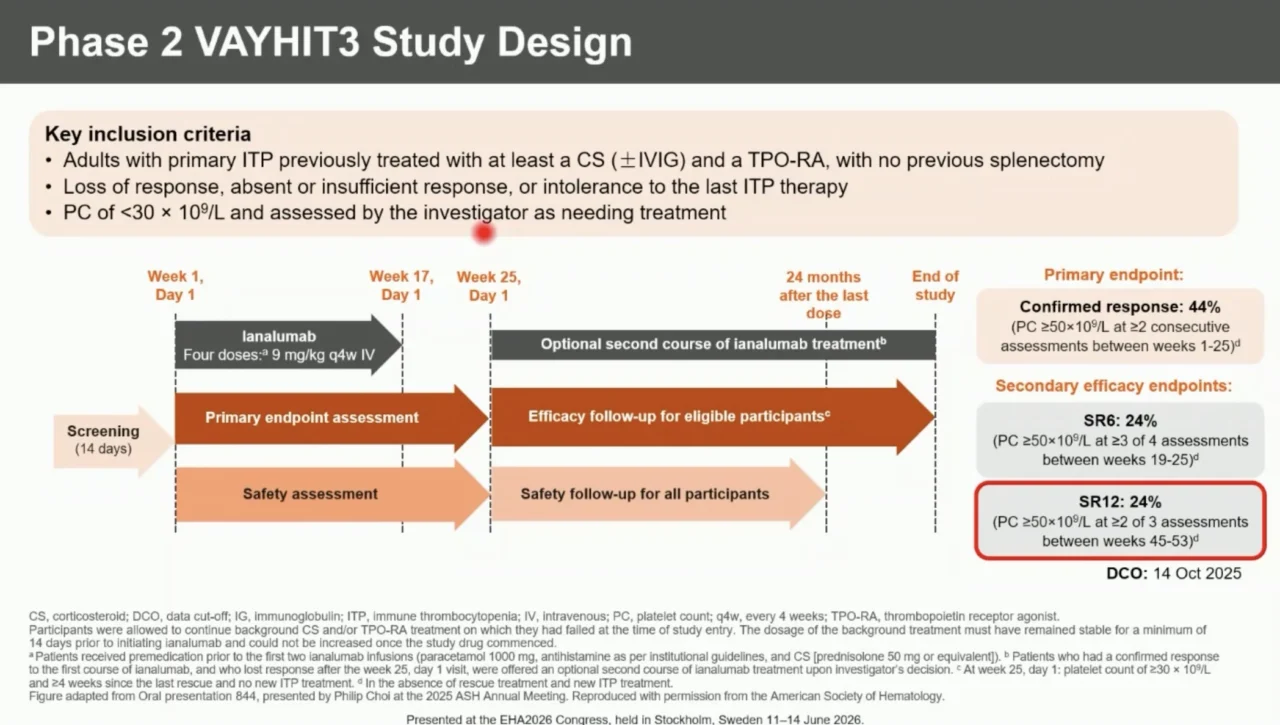
The VAYHIT3 study is a phase 2, open-label, single-arm trial evaluating ianalumab in adults with primary immune thrombocytopenia (ITP).
Eligible patients had previously received at least corticosteroids (CS) and intravenous immunoglobulin (IVIG), as well as a thrombopoietin receptor agonist (TPO-RA), with no prior splenectomy.
Patients had either loss of response, insufficient response or intolerance to their last ITP therapy and required treatment with a platelet count below 30 × 10⁹/L as assessed by the investigator.
Participants were allowed to continue stable background corticosteroids and/or TPO-RA therapy on which they had previously failed, provided doses remained unchanged for at least 14 days before study entry and were not increased after initiation of study treatment.
The design allows assessment of both hematologic response and treatment-free remission potential after limited exposure.
Treatment and Study Procedures
Patients received ianalumab at a dose of 9 mg/kg intravenously every four weeks for four doses.
The study included screening over 14 days, followed by dosing at week 1 (day 1), week 17 (day 1), and week 25 (day 1).
Patients who achieved a confirmed response and subsequently lost response after week 25 could receive an optional second course of ianalumab at the investigator’s discretion.
Follow-up continued for up to 24 months after the last dose.
What Were the Study Endpoints?
Primary Endpoint: Confirmed Response
The primary endpoint was confirmed response, defined as a platelet count ≥50 × 10⁹/L on at least two consecutive assessments between weeks 1 and 25. This endpoint was achieved in 44% of patients.
This demonstrates clinically meaningful response in a heavily pretreated population.
Secondary Endpoint: SR6
Stable response at six months (SR6) was defined as a platelet count ≥50 × 10⁹/L in at least 75% of assessments between weeks 19 and 25 without rescue therapy or initiation of new ITP therapy.
SR6 was achieved in 24% of patients.
Secondary Endpoint: SR12
Stable response at 12 months (SR12) was defined as a platelet count ≥50 × 10⁹/L on at least two of three assessments between weeks 45 and 53 without rescue therapy or new ITP therapy.
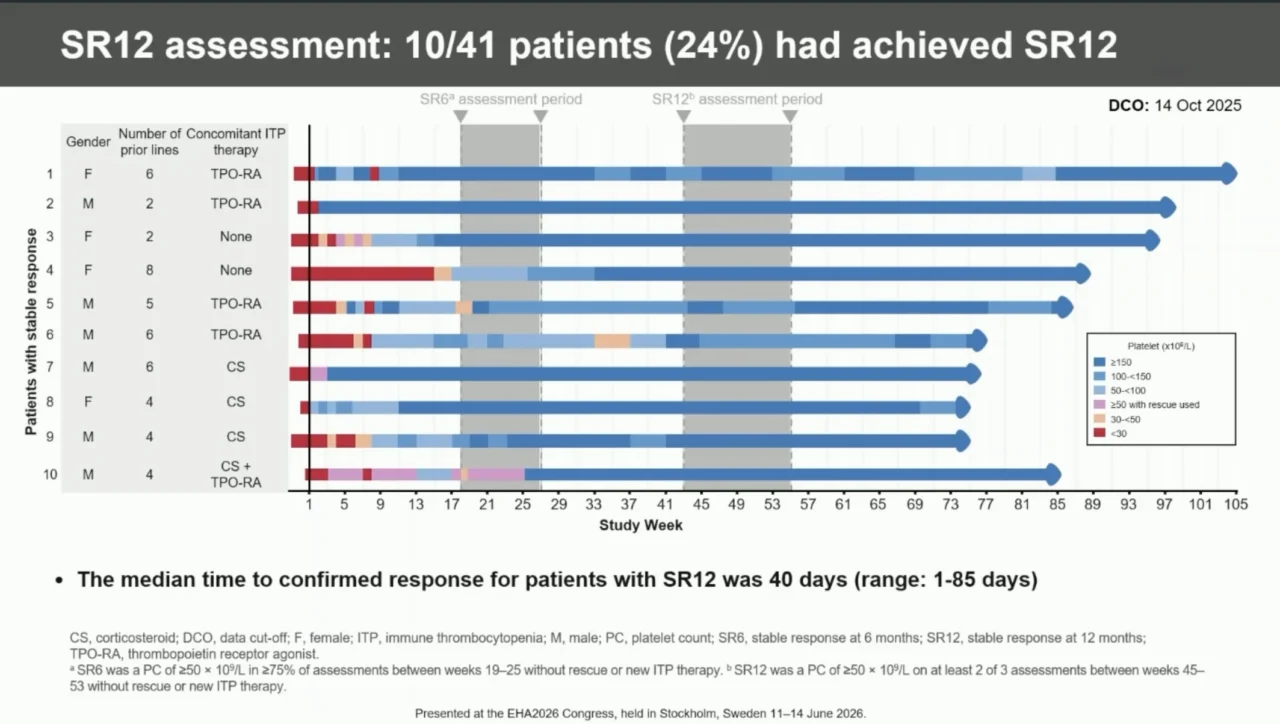
SR12 was achieved in 10 of 41 patients (24%). The median time to confirmed response among SR12 patients was 40 days (range 1–85 days).
Platelet Kinetics and Longitudinal Response
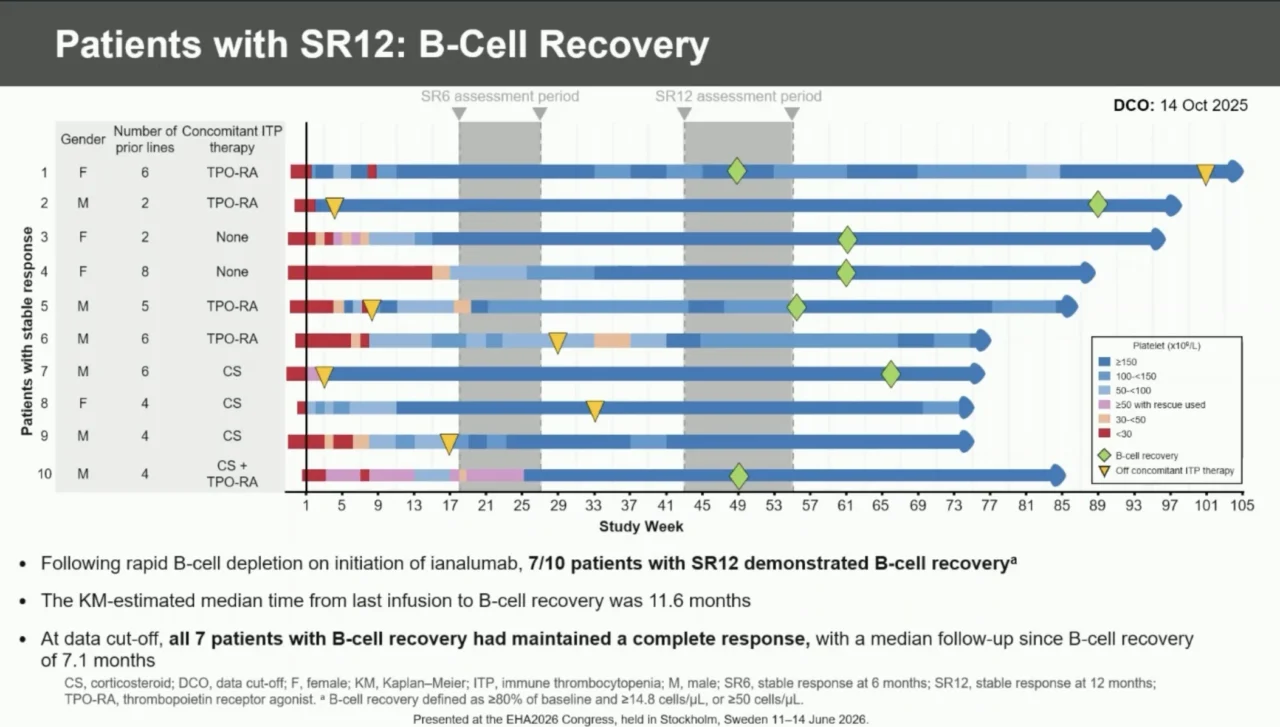
Platelet responses were assessed over time using longitudinal plots showing multiple response ranges, including ≥150 × 10⁹/L, 100–<150 × 10⁹/L, 50–<100 × 10⁹/L, and 30–<50 × 10⁹/L.
Some patients received rescue therapy while maintaining platelet responses. Overall, responses were sustained over extended follow-up, with observations extending up to approximately week 105.
SR12 Patient Cohort
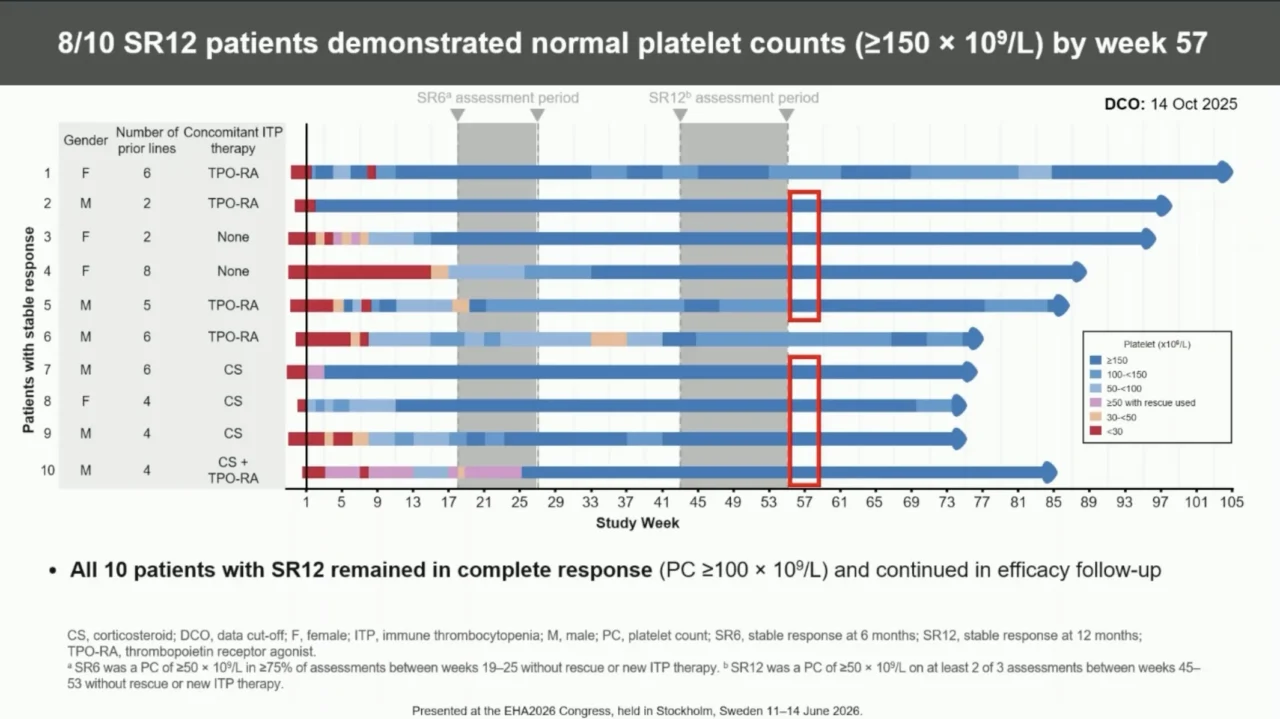
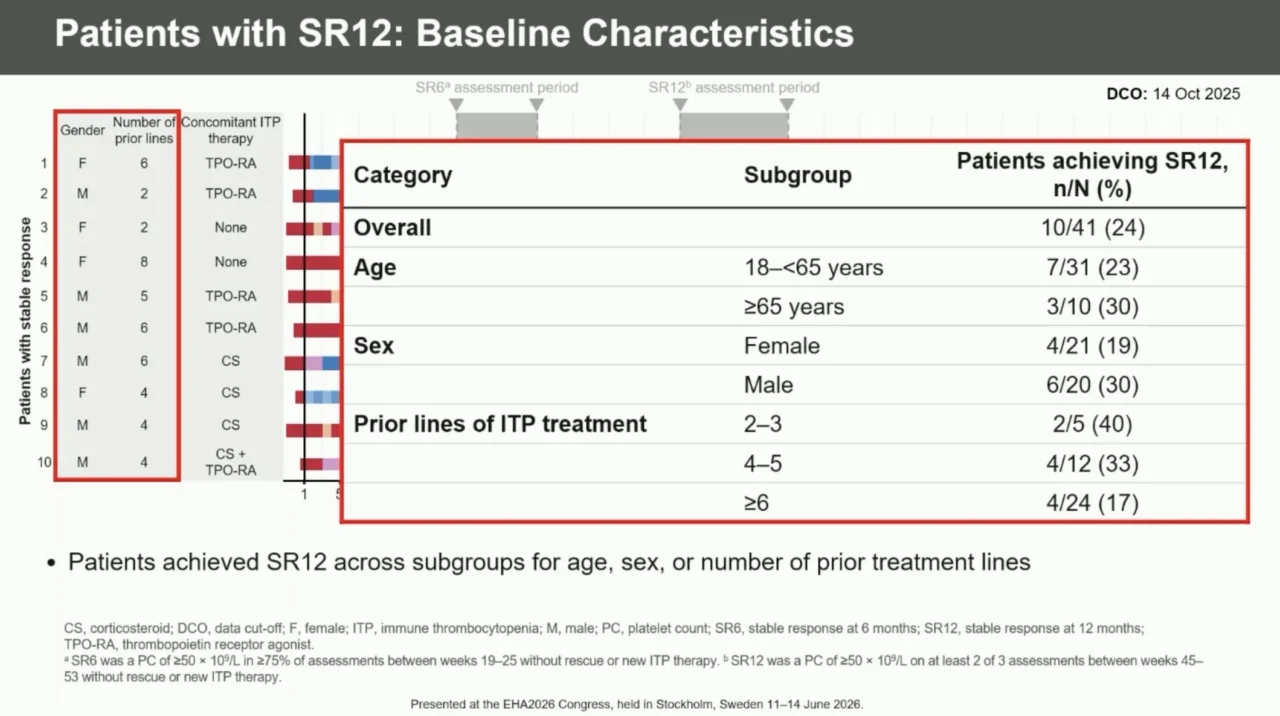
Among SR12 responders, 10 patients were analyzed in detail. Of these, 7 had already achieved SR6 during the earlier assessment period. The SR12 cohort included both male and female patients with a median of approximately six prior lines of therapy and varied background disease characteristics.
Baseline Characteristics
No clear differences were observed in age, sex, or prior treatment exposure between SR12 responders and non-responders.
Although numerical trends suggested possible variation with prior therapy burden, these findings were limited by small sample size and remained descriptive.
Treatment-Free Disease Control
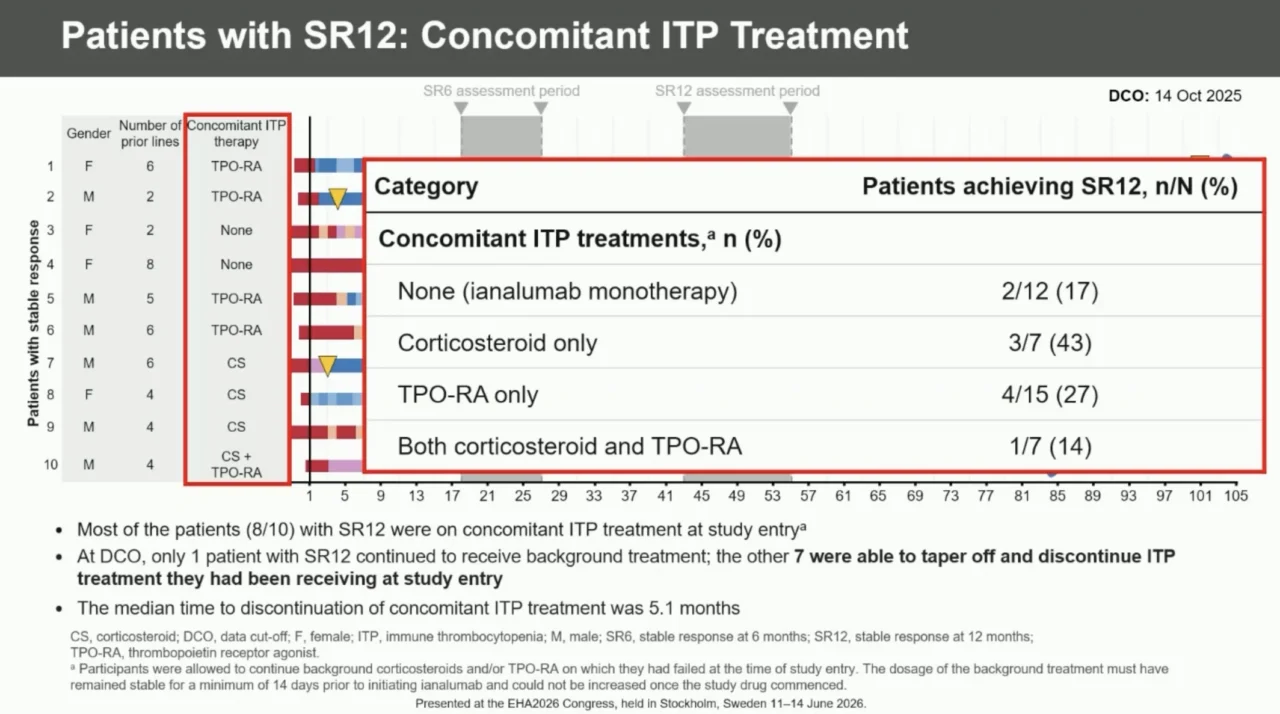
At baseline, patients were receiving corticosteroids, thrombopoietin receptor agonists (TPO-RAs), combination therapy or no concomitant treatment.
Response to ianalumab appeared consistent across all baseline treatment groups, with no clear evidence that background therapy influenced outcomes; however, interpretation is limited by small patient numbers.
Importantly, during follow-up, most patients receiving concomitant therapy were able to taper and discontinue these treatments while maintaining stable platelet counts.
Several patients discontinued corticosteroids and/or TPO-RAs without loss of response, demonstrating sustained disease control without ongoing supportive therapy.
B-Cell Depletion and Recovery
Ianalumab induced marked B-cell depletion consistent with its mechanism of action.
B-cell recovery was observed in 7 of 10 SR12 patients. Importantly, B-cell reconstitution did not correlate with loss of platelet response, suggesting dissociation between immunologic recovery and clinical remission.
Therapeutic Context
The evolving treatment landscape in ITP includes agents such as efgartigimod, requiring weekly administration and rilzabrutinib, which may require continuous therapy.
In contrast, ianalumab is administered as a short four-dose monthly regimen with the potential for durable remission, supporting a finite-duration treatment concept.
Personalized Therapy and Immune Mechanisms of Durable Response
Treatment selection in ITP is increasingly patient-centered. Some patients may prefer finite therapy with the possibility of long-term remission, while others may prefer continuous oral treatment.
Across all approaches, the key goals remain durable platelet responses, minimal toxicity, and improved quality of life.
The mechanism underlying sustained response despite B-cell recovery remains unclear.
One hypothesis is that profound depletion of pathogenic B-cell clones may reset immune dysregulation, allowing re-emergence of non-autoreactive B-cell populations. However, the biology of ITP and determinants of durable remission remain incompletely understood.
Clinical Implications
Data show that ianalumab’s short four-dose regimen may induce durable platelet responses in heavily pretreated ITP patients, with 24% achieving 12-month remission and most discontinuing concomitant therapy.
These results support further study of ianalumab as a finite-duration, disease-modifying treatment for immune thrombocytopenia.
Stay updated with Hemostasis Today.
-
Sep 25, 2026, 10:49Shefina S: From Presenting to Hosting at TRANSCON 2026
-
Sep 25, 2026, 10:37Michelle Leona Cecil: Hemophilia Advocacy and the Power of Community
-
Sep 25, 2026, 10:13Michael Baria: Platelet Concentration and PRP Outcomes in Partial Rotator Cuff Tears
-
Sep 25, 2026, 09:49Haley Coleman: Volunteering to Support Hemophilia Awareness
-
Sep 25, 2026, 08:55Hitarth Mehta: BHMS Students Gain Practical Exposure to Haemophilia Diagnosis
-
Sep 25, 2026, 07:25Varun Capoor: How Therapeutic Apheresis and Transfusion Medicine Can Complement Clinical Management in SCD
-
Sep 25, 2026, 07:14Manshi Kesharwani: SAK-GQDs Modulate Thrombus Burden and Endothelial Function in Deep Vein Thrombosis
-
Sep 25, 2026, 06:20Farjah Hassan Algahtani: How Can We Better Identify Patients at Risk of Blood Clots after Metabolic and Bariatric Surgery?
-
Sep 25, 2026, 05:59Carla Lewis: Kids Conquering Sickle Disease Joins Nemours Children’s Hospital for 2nd Annual Awareness Event