


Manuela Spadea: Celebrating Recognition for Pediatric HSCT Research at EHA 2026
Manuela Spadea, Assistant Professor of Pediatrics at University of Turi, shared a post on LinkedIn:
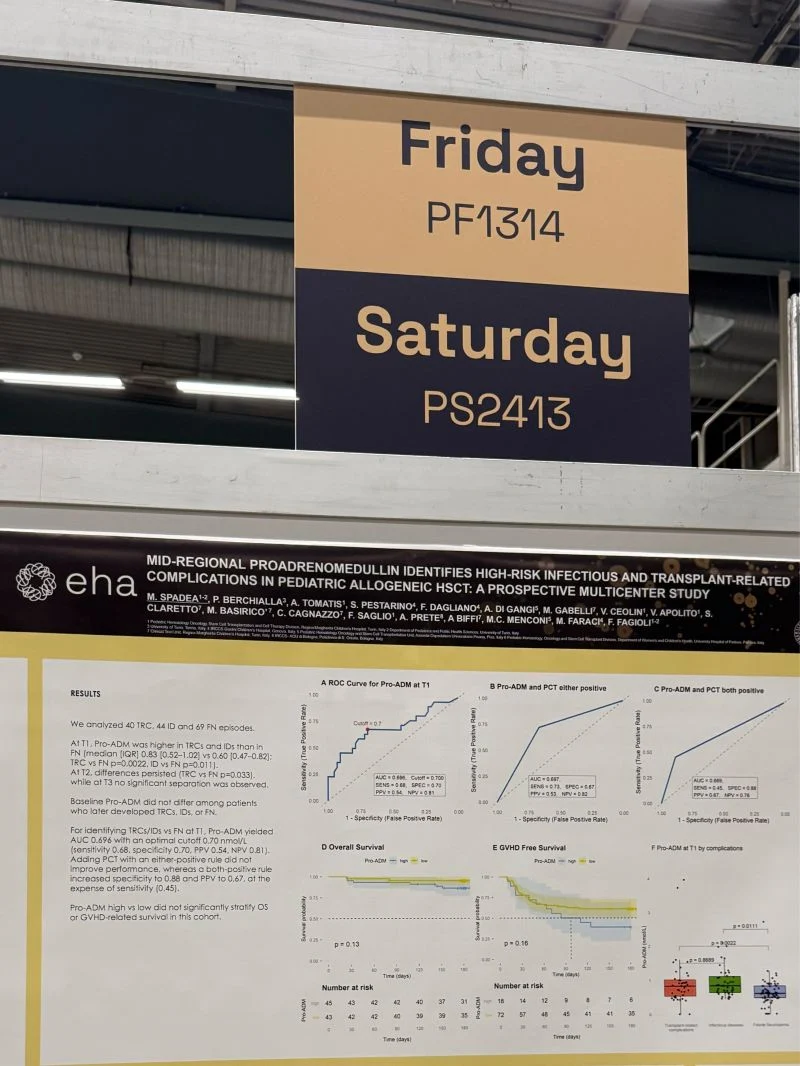
“Grateful that our European Hematology Association (EHA) 2026 poster was selected as one of the top-scoring abstracts and received a travel grant to attend the Congress in Stockholm.
Presenting and discussing our work on early risk stratification after pediatric allogeneic HSCT was a real pleasure.
This is a setting where fever and inflammation can indicate very different clinical paths, ranging from benign febrile neutropenia to infectious or endothelial-driven transplant-related complications.
Importantly, the research is still underway.
We are refining the analyses to enhance statistical power, improve clinical relevance, and better understand how Pro-ADM can aid in risk-based monitoring and decision-making in pediatric HSCT.
A heartfelt thank you to all the co-authors, participating centers, clinical teams, clinical trial office colleagues, patients, and families who made this collaborative effort possible.”
Stay updated with Hemostasis Today.
-
Sep 29, 2026, 19:00Caitlin Raymond: Can Artificial Blood Solve Blood Supply Shortages?
-
Sep 29, 2026, 18:51Chaza Alaji: Dyslipidemia, Thrombosis and the DIC Diagnostic Trap
-
Sep 29, 2026, 17:31Rajnikant Patel: Bridging Ayurvedic Concepts and Modern Toxin-Mediated Disease
-
Sep 29, 2026, 17:13Nicholas Lang։ A Meaningful Case of Immune Thrombocytopenia
-
Sep 29, 2026, 16:55Ayatullah Gamal Wahab: When the CBC Lies
-
Sep 29, 2026, 16:35Jonathan Douxfils: Navigating the VTE Risk Continuum in Reproductive Medicine
-
Sep 29, 2026, 16:35Chaima Rajeh: Types of Anemia and Their Laboratory Features
-
Sep 29, 2026, 16:27Scott Isaacs: How GLP-1 RAs Target Systemic Inflammation to Drive Cardio, Autoimmune, and Gut Health
-
Sep 29, 2026, 16:21Yitshak Kreiss: From Treating Patients to Defining the Standard of Knowledge