

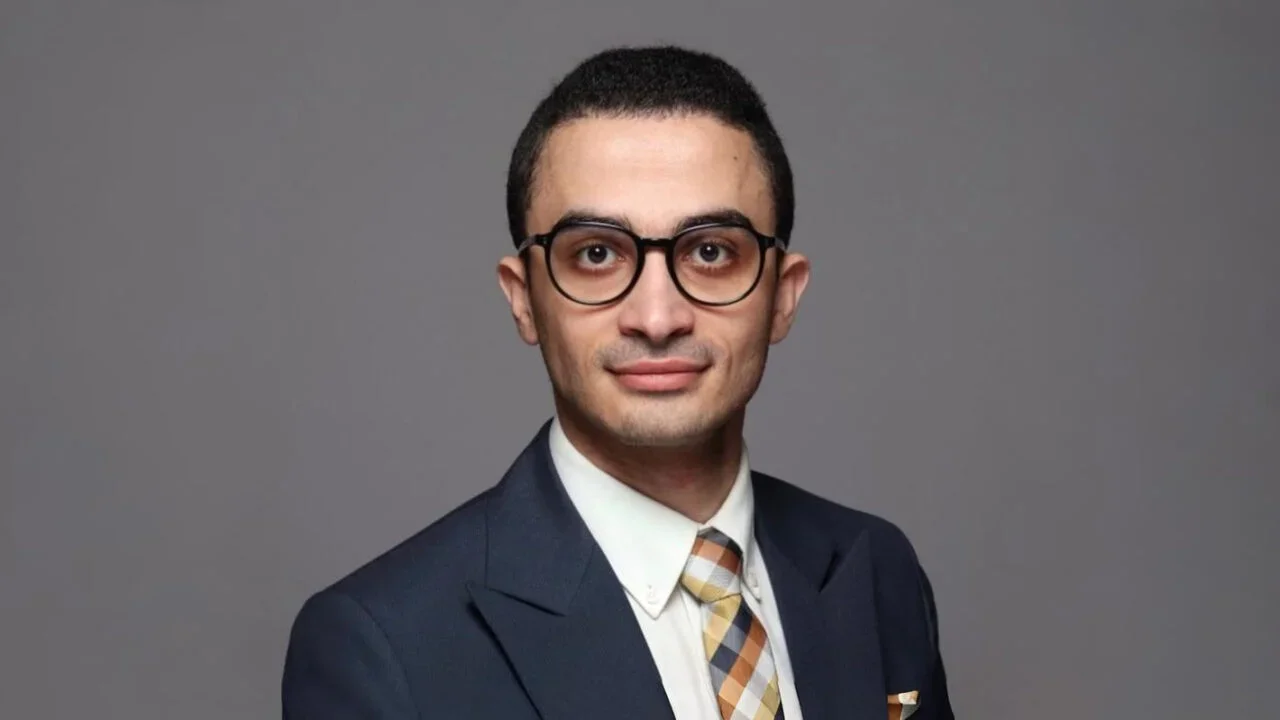
Hossam El Benawi: Who Can Safely Stop Anticoagulation after LVT Resolution?
Hossam El Benawi, Senior Clinical Research Fellow of Cardiovascular Medicine at Mayo Clinic, shared on LinkedIn about a recent article he and his colleagues co-authored, published in JACC: Advances, adding:
”Who Might Need Long-Term Anticoagulation After Left Ventricular Thrombus (LVT) Resolution
Much on the optimal anticoagulant for LVT resolution.
However, less is known about management after LVT resolution:
Clinical factors associated with LVT recurrence?
Echo findings predict recurrence?
Should predictors be assessed at the time of LVT diagnosis or resolution?
Most importantly?!!!!: Who can safely STOP AC after LVT resolution?
Our Mayo Clinic multi-site study (Part 2) showed that:
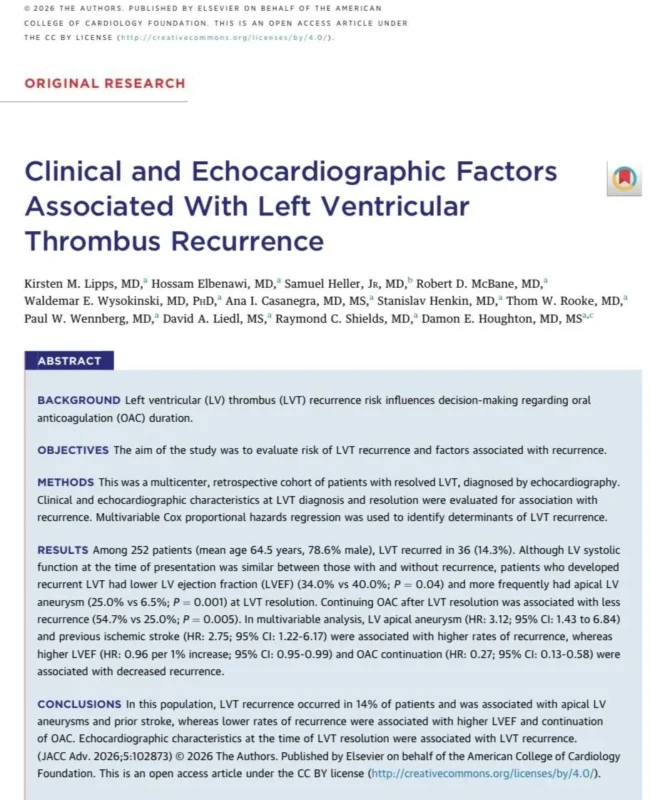
Among 252 patients with LVT resolution, recurrence occurred in (14.3%).
Patients with recurrent LVT were likely to have:
- Ischemic cardiomyopathy (83.3% vs 61.1%, p=0.01)
- Lower LVEF at time of LVT resolution (34.0% ± 12.4 vs 40.0% ± 15.3, p=0.04)
- LV apical aneurysm (25.0% vs 6.5%, p=0.005)
Echo at time of LVT resolution more predictive of recurrence than at diagnosis.
Adjusted Cox Analysis
Factors associated with higher risk of recurrence:
- LV apical aneurysm — HR 3.12 (1.43–6.84)
- Prior ischemic stroke — HR 2.75 (1.22–6.17)
Factors associated with lower risk of recurrence:
- Higher LVEF — HR 0.96 per 1% increase (0.95–0.99)
- Continuation of AC — HR 0.27 (0.13–0.58)
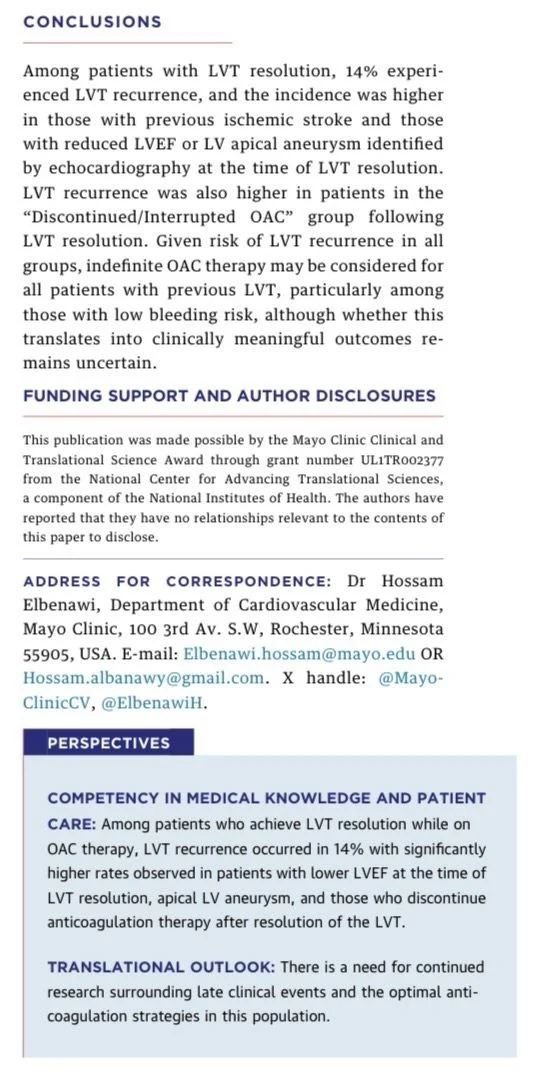
Patients with LV apical aneurysm, prior ischemic stroke, or persistently reduced LVEF benefit from prolonged AC.
The remaining question is:
Who can safely STOP AC after LVT resolution?
Stay tuned for Part 3 of Mayo Clinic multi-site LVT studies, exploring novel bed side score that help to define who can safely STOP AC post resolution?”
Title: Clinical and Echocardiographic Factors Associated With Left Ventricular Thrombus Recurrence
Authors: Kirsten M. Lipps, Hossam Elbenawi, Samuel Heller Jr., Robert D. McBane, Waldemar E. Wysokinski, Ana I. Casanegra, Stanislav Henkin, Thom W. Rooke, Paul W. Wennberg, David A. Liedl, Raymond C. Shields, Damon E. Houghton
Stay updated on all scientific advances with Hemostasis Today.
-
Sep 25, 2026, 13:32Gevorg Yaghjyan: Low Drug Levels, Higher Cardiovascular Risk in Lupus
-
Sep 25, 2026, 12:53Bastu Odoka: What Happened to Blood Donation?
-
Sep 25, 2026, 12:43Thomas Dayspring: Reshaping the Biology of Atherosclerotic Plaques with New Therapies
-
Sep 25, 2026, 12:14Garima Sharma: Community Clinical Linkages for Better Postpartum Cardiovascular Care
-
Sep 25, 2026, 10:49Shefina S: From Presenting to Hosting at TRANSCON 2026
-
Sep 25, 2026, 10:37Michelle Leona Cecil: Hemophilia Advocacy and the Power of Community
-
Sep 25, 2026, 10:13Michael Baria: Platelet Concentration and PRP Outcomes in Partial Rotator Cuff Tears
-
Sep 25, 2026, 08:55Hitarth Mehta: BHMS Students Gain Practical Exposure to Haemophilia Diagnosis
-
Sep 25, 2026, 07:25Varun Capoor: How Therapeutic Apheresis and Transfusion Medicine Can Complement Clinical Management in SCD