


Abdul Mannan: Pregnancy Changes Almost Every Coagulation Test
Abdul Mannan, Consultant Haematologist at Betsi Cadwaladr University Health Board, shared a post on LinkedIn:
“Pregnancy Changes Almost Every Coagulation Test
Pregnancy is nature’s largest coagulation experiment.
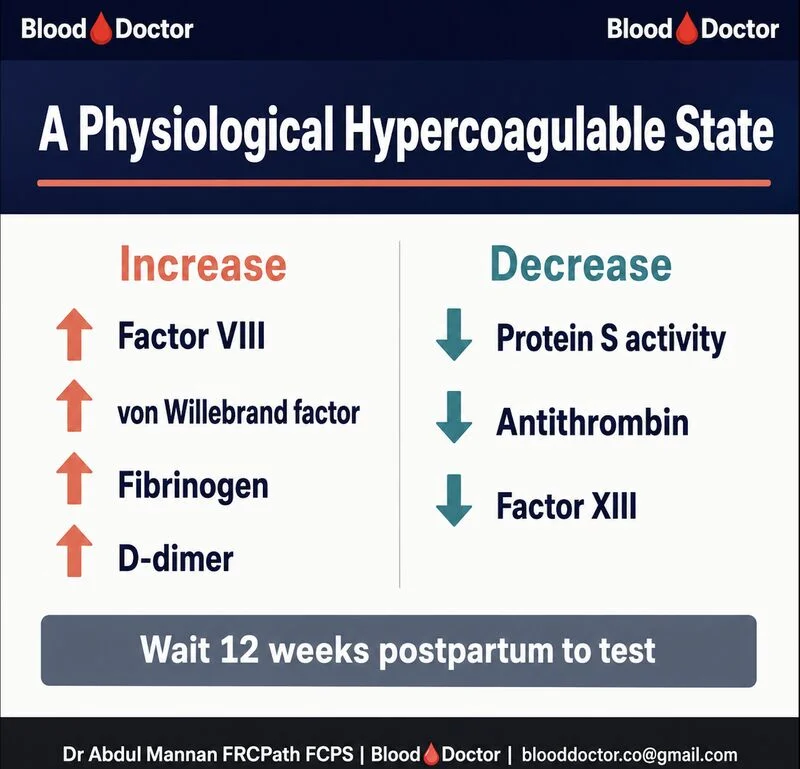
As gestation progresses:
- High Factor VIII
- High Von Willebrand factor
- High Fibrinogen
- High D-dimer
- Low Protein S activity
- Low Antithrombin
- Low Factor XIII
The result is a physiological hypercoagulable state.
Why it matters at the bench and the bedside:
D-dimer rises through pregnancy, so it becomes unreliable for excluding VTE Protein S falls, so testing for protein S deficiency in pregnancy is not reliable
Thrombosis risk climbs
Mild bleeding disorders can look temporarily corrected
There is a practical consequence here.
Most of these changes take 6 to 7 weeks postpartum to settle, and some variables can take up to 12 weeks.
That is why haematologists usually wait at least 12 weeks postpartum before using lab tests to exclude conditions like von Willebrand disease.
Normal pregnancy is not normal haemostasis.”
More posts featuring Abdul Mannan on Hemostasis Today.
-
Sep 29, 2026, 19:00Caitlin Raymond: Can Artificial Blood Solve Blood Supply Shortages?
-
Sep 29, 2026, 18:51Chaza Alaji: Dyslipidemia, Thrombosis and the DIC Diagnostic Trap
-
Sep 29, 2026, 17:31Rajnikant Patel: Bridging Ayurvedic Concepts and Modern Toxin-Mediated Disease
-
Sep 29, 2026, 17:13Nicholas Lang։ A Meaningful Case of Immune Thrombocytopenia
-
Sep 29, 2026, 16:55Ayatullah Gamal Wahab: When the CBC Lies
-
Sep 29, 2026, 16:35Jonathan Douxfils: Navigating the VTE Risk Continuum in Reproductive Medicine
-
Sep 29, 2026, 16:35Chaima Rajeh: Types of Anemia and Their Laboratory Features
-
Sep 29, 2026, 16:27Scott Isaacs: How GLP-1 RAs Target Systemic Inflammation to Drive Cardio, Autoimmune, and Gut Health
-
Sep 29, 2026, 16:21Yitshak Kreiss: From Treating Patients to Defining the Standard of Knowledge