


Lisa Jiang: Is the 0.088″ Aspiration Catheter the Future of Stroke Treatment?
Lisa Jiang, International Sales Specialist at HeMo Bioengineering, shared a post on LinkedIn:
“Recently, I noticed a very interesting shift in the market.
During some strategic discussions and business reviews with our international partners, a consistent trend emerged: hospitals and stroke centers are now actively seeking 0.088″ large-bore aspiration catheters.
This feedback really made me reflect on how clinical preferences evolve in our industry.
1. The Traditional Setup
Just last year, when I visited international neurointerventional experts, the reality was completely different.
Back then, almost every doctor preferred the traditional, established setup for mechanical thrombectomy.
Among these experts:
- About 50% of doctors liked using an 8F Long Sheath paired with a 6F aspiration catheter.
The long sheath provides very solid, steady proximal backup support. This ensures the 6F aspiration catheter tracks smoothly to the target, making it a highly reliable and mature choice.
- The other 50% of doctors preferred using a BGC (Balloon Guide Catheter) with a 6F aspiration catheter.
The Balloon Guide Catheter blocks forward blood flow upon inflation. This creates a temporary flow arrest, significantly lowering the risk of dangerous clot fragments migrating into healthy brain vessels.
So, when I introduced our 0.088″ system last year, most doctors approached it with a very cautious and analytical mindset.
At the time, standard access catheters were typically only parked at the C1 distal or C2 proximal segments of the Internal Carotid Artery (ICA). Doctors looked at a 0.088″ device and naturally wondered:
‘Is the clinical value of using an 0.088″ catheter alone as a primary direct aspiration tool clear enough to justify the cost?’
For a long time, the industry viewed the 0.088″ category primarily as an academic concept for direct aspiration, rather than a frontline clinical tool.
2. The Shift Toward Large-Bore Direct Aspiration
This year, the hesitation is fading. More physicians are exploring large-bore catheters for direct aspiration, specifically driven by tough clinical challenges:
- The Target: ICA Terminus Large Occlusions — highly dangerous cases with massive clot burdens.
- The Solution: A 0.088″ inside diameter provides significantly stronger and faster instantaneous suction flow.
The ‘Double Identity’ Advantage
Most standard access catheters have to stay low in the anatomy.
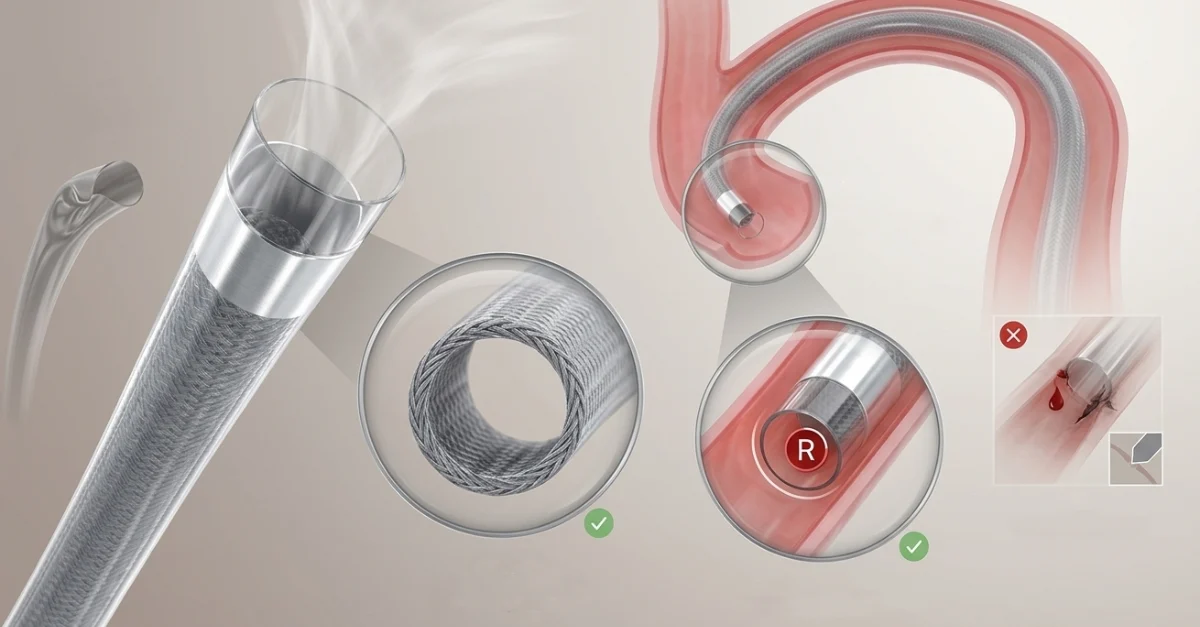
But HEMO’s AsprAX 88 is designed with a unique, graduated stiffness and a 15cm ultra-soft tip, allowing it to safely park right at the C4 position (cavernous segment).
This gives the catheter a highly practical double identityduring a procedure.
First, it acts as a rock-solid pathway that provides strong, high-level support.
At the same time, it serves as an immediate suction tool, letting you perform direct aspiration right from that C4 position.
If you ever need to track further into distal branches, you can simply pair it with a 6F catheter like our AsprAX 71.
By doing the work of two devices, it eliminates extra steps, saves critical time when every second counts (Time is Brain), and significantly optimizes total procedural costs.
3. Why a Bigger Lumen Changes Everything
When this larger lumen makes contact with the clot, it forms a much tighter negative pressure seal.
Once the suction starts—whether the doctor prefers a vacuum pump or a simple syringe—a basic rule of physics takes over.
Think of it this way: even a tiny increase in a tube’s inner diameter leads to a massive, exponential jump in actual suction flow, while drastically cutting down the risk of the tube clogging.
This powerful suction naturally stops the forward blood flow right at the tip. It holds the clot firmly and pulls it out in one clean piece, which is exactly how you achieve a higher First Pass Effect (FPE) rate.
4. Balancing Safety and Efficiency
We all know that a bigger inner channel means better flow.
But the real engineering challenge is navigating a larger tube through the sharp turns of the carotid siphon without it kinking or collapsing under heavy suction.
This is exactly where the design details of the AsprAX 88 (0.088″) make a real difference on the table:
- The 15cm Ultra-Soft Tip
The back part of the catheter is built stiff enough to give you a true 1:1 push and solid support from the groin.
But the magic is in the front: a 15cm ultra-soft transition tip.
Guided smoothly by a guidewire and a nested 5F diagnostic catheter, this long, flexible segment gently shapes itself to the tight curves of the siphon.
It minimizes friction against the vessel walls, making the journey to the C4 position much safer and gentler.
- The Half-Braid, Half-Coiled Hybrid Design
To maximize the inside suction channel, the catheter walls must be incredibly thin.
To prevent these thin walls from kinking or collapsing, AsprAX 88 features a half-braided, half-coiled hybrid structure.
This precise engineering keeps the channel wide open and perfectly round, ensuring stable and uninterrupted flow even under maximum negative pressure from a pump or a syringe.
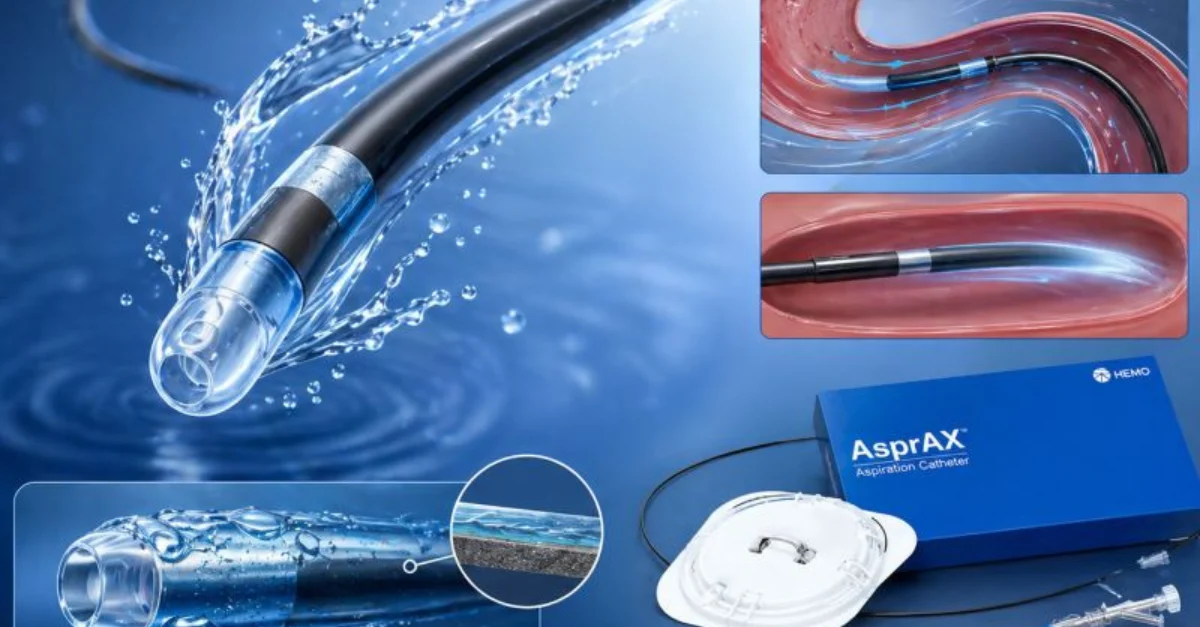
- The 20-Second Quick-Activate Coating
In stroke care, every second literally saves brain tissue (Time is Brain).
The premium hydrophilic coating on this catheter activates on the back table in just 20 to 30 seconds, cutting down valuable prep time for the nursing team.
Once inside the body, it becomes incredibly slippery, giving the doctor a smooth, low-friction, and highly controlled feel.
5. A Strategic Perspective for Partners
If we look back at the history of medical devices, a clear pattern emerges: whenever material science successfully solves the tracking and safety challenges of a larger lumen, the superior physics of that larger lumen eventually becomes the new industry standard.
For physicians, a tool like the HEMO AsprAX 88 simply makes sense.
It offers a cleaner, more streamlined approach to handling high-burden clots at the carotid terminus without adding unnecessary complexity to the procedure.
From a business standpoint, the shift carries even more weight.
The traditional 6F aspiration and stent retriever markets have become heavily commoditized, leaving distributors to face intense pricing pressure and eroding margins.
The 0.088″ category, however, represents a high-barrier, premium segment that leading stroke networks are actively exploring right now.
Partnering with a brand like HEMO—where the manufacturing refinement is already proven and trusted by exacting experts—gives you a true differentiation tool.
It allows you to lead your local market with a clinical solution, rather than just following the crowd.

Let’s Connect
The transition from cautious evaluation last year to practical, real-world adoption this year is happening right now.
As someone who closely follows the neurointerventional space, I would love to hear your perspective:
Are the stroke networks and hospitals in your region starting to adopt or discuss the 0.088″ system?
Let’s share insights in the comments below, or feel free to send me a direct message—I’d love to connect!”
Stay updated on all scientific advances with Hemostasis Today.
-
Sep 29, 2026, 19:00Caitlin Raymond: Can Artificial Blood Solve Blood Supply Shortages?
-
Sep 29, 2026, 18:51Chaza Alaji: Dyslipidemia, Thrombosis and the DIC Diagnostic Trap
-
Sep 29, 2026, 17:31Rajnikant Patel: Bridging Ayurvedic Concepts and Modern Toxin-Mediated Disease
-
Sep 29, 2026, 17:13Nicholas Lang։ A Meaningful Case of Immune Thrombocytopenia
-
Sep 29, 2026, 16:55Ayatullah Gamal Wahab: When the CBC Lies
-
Sep 29, 2026, 16:35Jonathan Douxfils: Navigating the VTE Risk Continuum in Reproductive Medicine
-
Sep 29, 2026, 16:35Chaima Rajeh: Types of Anemia and Their Laboratory Features
-
Sep 29, 2026, 16:27Scott Isaacs: How GLP-1 RAs Target Systemic Inflammation to Drive Cardio, Autoimmune, and Gut Health
-
Sep 29, 2026, 16:21Yitshak Kreiss: From Treating Patients to Defining the Standard of Knowledge