


Martin Haluzík: Semaglutide as a Strategy for Primary Prevention of Cerebrovascular Disease in RA
Martin Haluzík, Professor of Medicine at Institute for Clinical and Experimental Medicine, shared on LinkedIn about a recent article by Farheen Malik et al, published in European Heart Journal, adding:
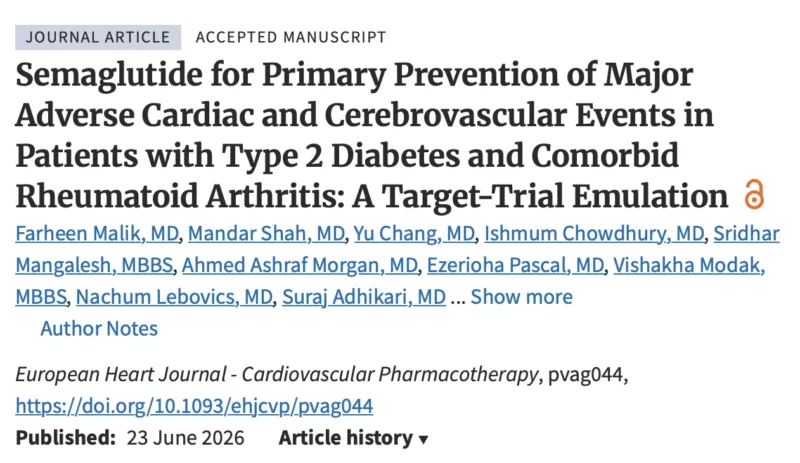
”Semaglutide for Primary Prevention of Major Adverse Cardiac and Cerebrovascular Events in Patients with Type 2 Diabetes and Comorbid Rheumatoid Arthritis: A Target-Trial Emulation
Very interesting papar just published in European Heart Journal – Cardiovascular Pharmacotherapy by Farheen Malik and colleagues.
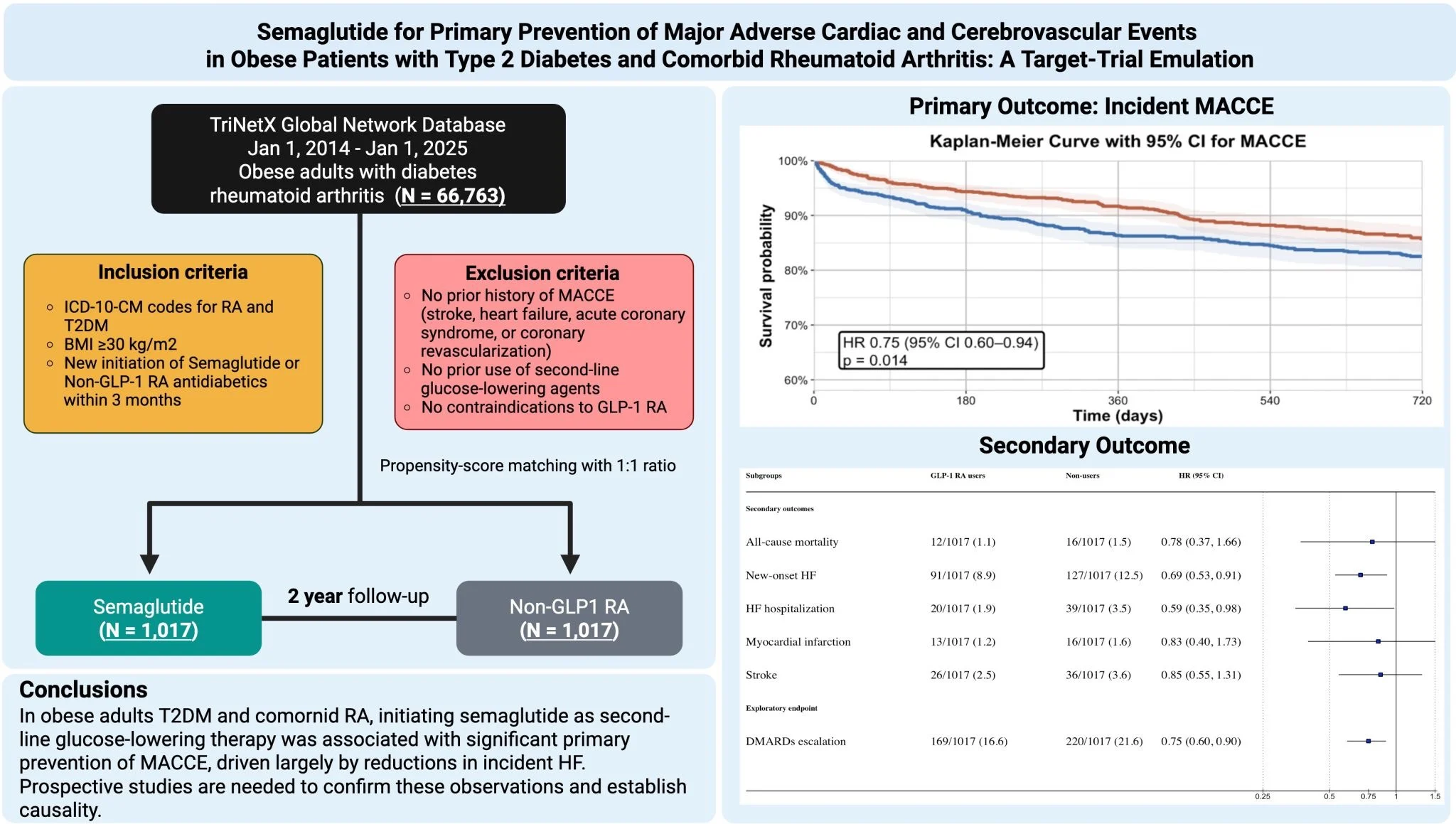
- The authors aimed to assess the effectiveness of semaglutide on the risk of incident major adverse cardiovascular and cerebrovascular events (MACCE) in obese adults with type 2 diabetes mellitus (T2DM) and RA in a primary-prevention setting.
- The authors emulated a target trial using data from the TriNetX US database, including obese adults (aged ≥18 years; BMI ≥30 kg/m2) with T2DM and comorbid RA and no prior history of stroke, heart failure (HF), acute coronary syndrome, or coronary revascularisation.
- They we compared patients initiating semaglutide with those initiating non–GLP-1 receptor agonist (GLP-1RA) second-line glucose-lowering therapies.
- The primary outcome was incident MACCE, defined as a composite of all-cause mortality, myocardial infarction (MI), HF, or stroke.
- After PS matching, 1,017 semaglutide users were compared with 1,017 non–GLP-1RA users (mean age mean age 59.5 vs 59.3 years; women 81.3% vs 81.0%; mean BMI 38.2 vs 38.0 kg/m2; HbA1c, 6.8 vs 7.0%).
- Semaglutide initiation was associated with a significantly lower risk of incident MACCE compared with non–GLP-1RA therapies (12.7% vs 16.5%; HR, 0.75; 95% CI, 0.60–0.94; P = 0.01).
- This benefit was driven primarily by a lower risk of incident HF (8.9% vs 12.5%; HR 0.69, 95% CI 0.53–0.91; p=0·007). Semaglutide use was also associated with significantly lower DMARDs escalation (16.6% vs 21.6%; HR, 0.75; 95% CI, 0.60–0.90; P = 0.003. No significant differences were observed in all-cause mortality, MI, or stroke.
Very interesting data.
Positive effect on reduction of incident MACCE but also lower DMARDs escalation suggesting probably antiinfammatory effect of semaglutide
As RA patients are often overweight and have T2DM – GLP-1 based therapies may be a perfect match influencing both metabolic disturbances and CV risk.”
Title: Semaglutide for Primary Prevention of Major Adverse Cardiac and Cerebrovascular Events in Patients with Type 2 Diabetes and Comorbid Rheumatoid Arthritis: A Target-Trial Emulation
Authors: Farheen Malik, Mandar Shah, Yu Chang, Ishmum Chowdhury, Sridhar Mangalesh, Ahmed Ashraf Morgan, Ezerioha Pascal, Vishakha Modak, Nachum Lebovics, Suraj Adhikari
Stay updated on all scientific advances with Hemostasis Today.
-
Sep 24, 2026, 18:43Hugh Nguyen: Honored to Accept the Friend of Singapore Red Cross Award
-
Sep 24, 2026, 18:42Titilope Fasipe: Proud to Support American Society of Hematology’s SCD Initiative
-
Sep 24, 2026, 18:34Ifeanyichukwu Ifechidere: Why Coagulation Samples Can Be “Too Valuable to Throw Away”?
-
Sep 24, 2026, 18:33Aswin K. Mohan: When a Superpower Hears the Call for Blood
-
Sep 24, 2026, 18:31Mercy Lung’aho: Anemia Is Not Only An Iron Problem
-
Sep 24, 2026, 18:29Nick Hanson: Before a Dementia Diagnosis Check Vitamin B12
-
Sep 24, 2026, 18:28Rachel McBryan: Nearly One in Five Older Canadians Has Low Vitamin B12
-
Sep 24, 2026, 18:27Kemal Karaagac: Early DOAC Initiation After Acute Ischaemic Stroke in Atrial Fibrillation
-
Sep 24, 2026, 18:26Mohammed A. AlOmar: What Characterizes Young Stroke in the UAE?