

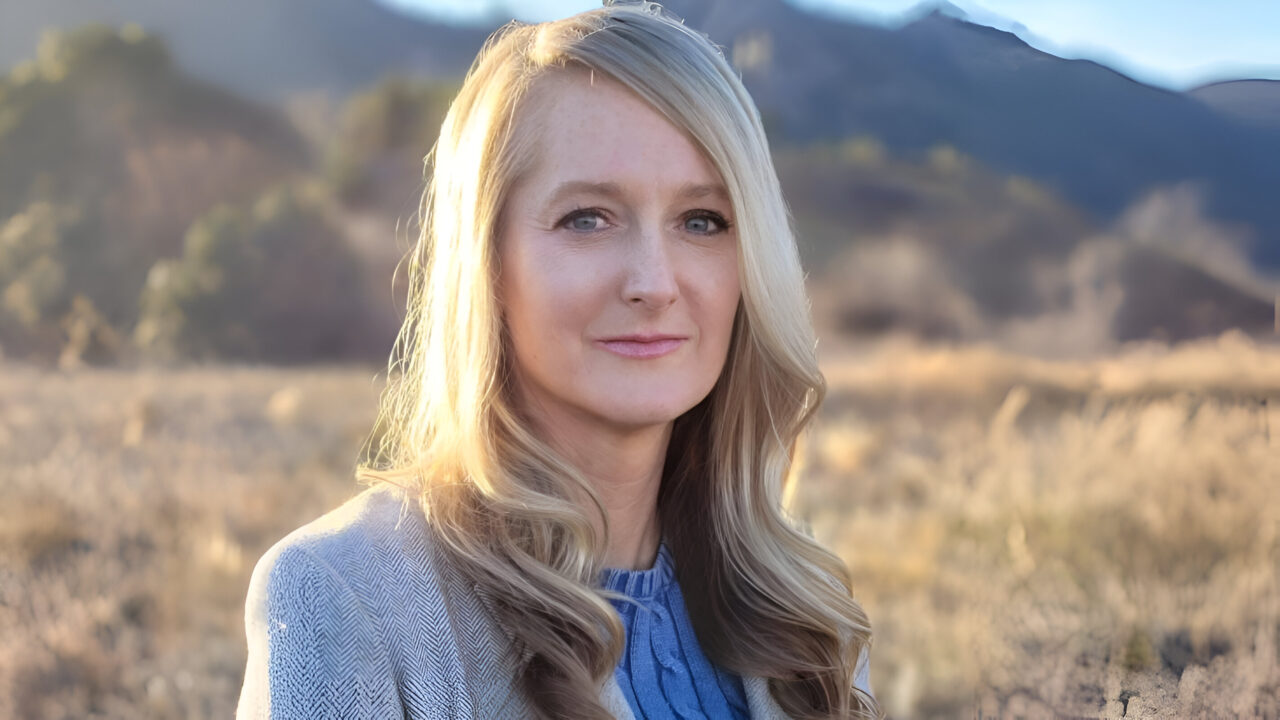
Bethany Brown: Over 400 Ground EMS Agencies Now Carry Lifesaving Blood
Bethany Brown, Senior Director of Transfusion Innovation and Product Development at American Red Cross, reposted from Prehospital Blood Transfusion Coalition on LinkedIn:
“‘Despite years of hard-won military and civilian evidence and rigorous trials showing the efficacy of prehospital blood transfusion, less than 3% of eligible agencies carry blood products.’
The Prehospital Blood Transfusion Coalition continues to bring together organizations and decision-makers to drive the expansion of blood product access in Emergency Medical Services.
The evidence is clear: studies have shown that earlier blood product administration can significantly improve survival for patients with life-threatening hemorrhage.
Removing logistical and policy barriers can help ensure that life-saving blood reaches patients when and where they need it, turning preventable deaths into survivable emergencies.”
Prehospital Blood Transfusion Coalition shared a post on LinkedIn:
“Hot off the press:
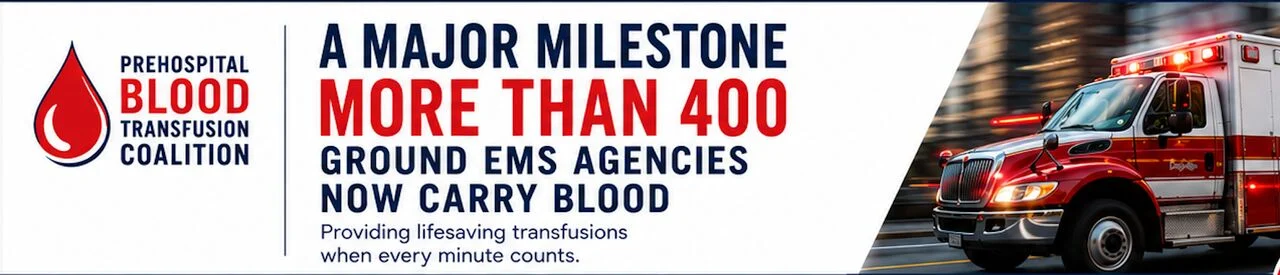
Over 400 ground EMS agencies have blood transfusion programs.
The Prehospital Blood Transfusion Coalition is celebrating a big milestone:
There are now over 400 9-1-1 ground emergency medical services (EMS) nationwide that carry blood products to the scene of life-threatening bleeding.
A simple solution to a serious problem:
- Bleeding to death
Over 10,000 Americans die every year from severe blood loss within minutes.
Blood loss – or hemorrhage – is the leading cause of preventable death among those suffering traumatic injuries.
Nearly half of these patients die before reaching the hospital.
Beyond those seriously injured patients, severe bleeding is also a concern for those experiencing post-partum hemorrhage, gastrointestinal bleeding, and more.
Despite years of hard-won military and civilian evidence and rigorous trials showing the efficacy of prehospital blood transfusion, less than 3% of eligible agencies carry blood products.
So why don’t all EMS agencies in the United States carry blood?
According to Jon Krohmer, (M.D., the Chair of the Coalition and an EMS physician), the answer mainly comes down to funding and logistics.
It’s expensive to implement and maintain a prehospital blood program, especially since the cost of blood products is not reimbursed by insurance.
There is also a blood shortage in the U.S. However, EMS agencies are committed to being good stewards of the blood supply by partnering with hospitals to rotate blood products before they expire.
Breaking down the barriers to prehospital blood
‘Our goal is to remove the barriers that are preventing a simple solution to a serious problem,’
Krohmer said.
‘We want to see blood transfusions offered by ground and air EMS systems across the country to ensure that every American can receive lifesaving care, regardless of where they live or how far they are from a hospital.’
The Coalition is helping to develop a proposal for EMS agencies to be reimbursed for blood transfusions by the Centers for Medicare and Medicaid Services, as well as working on prehospital blood policy recommendations for Congress and state decision-makers.
Coalition members are actively working to educate EMS personnel, blood suppliers, health care communities, hospitals, and policymakers about the problem of preventable hemorrhage deaths, and the available solution of prehospital transfusion.
This past April, the Coalition co-hosted the inaugural Economics of Prehospital Blood Conference in Washington, D.C. to bring together organizations and decision-makers to accelerate progress.
In 2016, approximately 5 ground EMS agencies carried blood products. Over the past few years, there has been an uptick in EMS programs successfully initiating blood programs as the need is recognized and best practices are shared.”
Stay updated with Hemostasis Today.
-
Sep 29, 2026, 19:00Caitlin Raymond: Can Artificial Blood Solve Blood Supply Shortages?
-
Sep 29, 2026, 18:51Chaza Alaji: Dyslipidemia, Thrombosis and the DIC Diagnostic Trap
-
Sep 29, 2026, 17:31Rajnikant Patel: Bridging Ayurvedic Concepts and Modern Toxin-Mediated Disease
-
Sep 29, 2026, 17:13Nicholas Lang։ A Meaningful Case of Immune Thrombocytopenia
-
Sep 29, 2026, 16:55Ayatullah Gamal Wahab: When the CBC Lies
-
Sep 29, 2026, 16:35Jonathan Douxfils: Navigating the VTE Risk Continuum in Reproductive Medicine
-
Sep 29, 2026, 16:35Chaima Rajeh: Types of Anemia and Their Laboratory Features
-
Sep 29, 2026, 16:27Scott Isaacs: How GLP-1 RAs Target Systemic Inflammation to Drive Cardio, Autoimmune, and Gut Health
-
Sep 29, 2026, 16:21Yitshak Kreiss: From Treating Patients to Defining the Standard of Knowledge