


Heghine Khachatryan: Menarche as the First ‘Bleeding Challenge’
Heghine Khachatryan, Editor-in-Chief of Hemostasis Today, Head of Hemophilia and Thrombosis Center at Yeolyan Hematology and Oncology Center, shared Abdul Mannan’s post on LinkedIn, adding:
“Menarche as the first ‘bleeding challenge’
Menarche is often the first major haemostatic challenge in a girl’s life. Severe menstrual bleeding at this stage should never be interpreted only as ‘heavy periods’ or pubertal immaturity.
Acute heavy menstrual bleeding at menarche may be the first clinical presentation of:
- Von Willebrand disease
- Platelet function disorders
- Thrombocytopenia
- Rare inherited coagulation factor deficiencies
- Connective tissue–associated bleeding phenotypes
The diagnostic difficulty is that acute bleeding, stress, inflammation, anaemia, hormonal therapy, and transfusion may transiently modify haemostatic parameters.
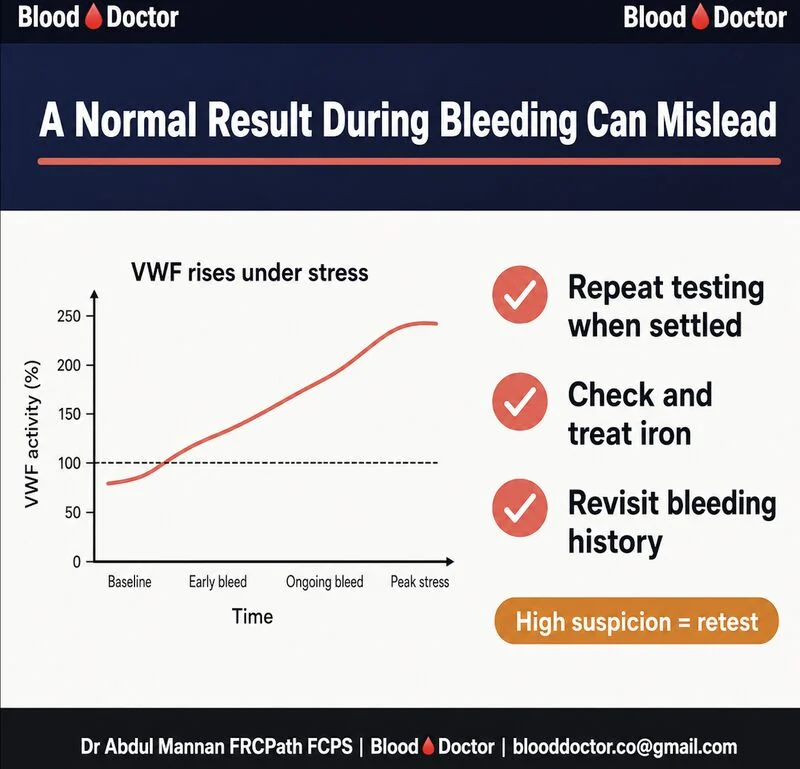
Von Willebrand factor and factor VIII can rise during physiological stress; therefore, a ‘normal’ VWF result during an acute bleeding episode does not always exclude von Willebrand disease.
Management should be structured:
- Stabilize the patient: assess haemodynamics, CBC, ferritin, coagulation profile, pregnancy test when appropriate.
- Control bleeding: tranexamic acid, hormonal therapy, iron replacement, and transfusion only when clinically indicated.
- Investigate haemostasis: VWF antigen/activity, FVIII, platelet count and morphology, platelet function testing, fibrinogen, PT/APTT, and selected factor assays.
- Repeat testing after recovery if clinical suspicion remains high.
- Take a detailed bleeding history: epistaxis, bruising, dental/surgical bleeding, postpartum bleeding in relatives, family history.
- Ensure multidisciplinary follow-up: adolescent gynaecology, haematology, primary care, and family education.
A normal laboratory result during a haemostatic storm is not the same as a normal haemostatic system.
Menarche can reveal a hidden bleeding disorder. Recognition at this stage prevents years of anaemia, repeated emergency visits, unnecessary suffering, and delayed diagnosis.
Based on current guidance and recent discussion in The Lancet Haematology.”
Abdul Mannan, Consultant Haematologist at Betsi Cadwaladr University Health Board, shared a post on LinkedIn:
“Menarche Can Be the First Bleeding Challenge
A teenager with severe menstrual bleeding should never be waved away as “just heavy periods.”
Acute bleeding at menarche is a recognised first presentation of:
- Von Willebrand disease
- Platelet function disorders
- Rare inherited bleeding disorders
- Sometimes it is severe enough to need hospital admission or transfusion.
Here is the trap.
Von Willebrand factor rises under physiological stress. A girl tested in the middle of a heavy bleed can have factor levels that look reassuringly normal.
So if your suspicion is high:
- Repeat testing outside the acute episode
- Check and treat iron status
- Go back over the bleeding history
A normal result taken during a haemostatic storm is not the same as a normal patient.
The diagnosis can hide in plain sight.
Samuelson Bannow B et al. Lancet Haematology 2026. DOI: 10.1016/S2352-3026(26)00110-9″
More posts featuring Heghine Khachatryan and Abdul Mannan on Hemostasis Today.
-
Sep 29, 2026, 19:00Caitlin Raymond: Can Artificial Blood Solve Blood Supply Shortages?
-
Sep 29, 2026, 18:51Chaza Alaji: Dyslipidemia, Thrombosis and the DIC Diagnostic Trap
-
Sep 29, 2026, 17:31Rajnikant Patel: Bridging Ayurvedic Concepts and Modern Toxin-Mediated Disease
-
Sep 29, 2026, 17:13Nicholas Lang։ A Meaningful Case of Immune Thrombocytopenia
-
Sep 29, 2026, 16:55Ayatullah Gamal Wahab: When the CBC Lies
-
Sep 29, 2026, 16:35Jonathan Douxfils: Navigating the VTE Risk Continuum in Reproductive Medicine
-
Sep 29, 2026, 16:35Chaima Rajeh: Types of Anemia and Their Laboratory Features
-
Sep 29, 2026, 16:27Scott Isaacs: How GLP-1 RAs Target Systemic Inflammation to Drive Cardio, Autoimmune, and Gut Health
-
Sep 29, 2026, 16:21Yitshak Kreiss: From Treating Patients to Defining the Standard of Knowledge