

Reza Shojaei: How America Won the Plasma Race
Reza Shojaei, Chief Operating Officer at Canadian Plasma Resources, shared on LinkedIn:
“4.2% of the World’s Population. 70% of Its Plasma. How Did That Happen?
The United States did not become the world’s plasma superpower by accident. It did so through a series of deliberate policy decisions, regulatory choices, and commercial investments spanning 80 years. Here is the full story, and what every other nation can learn from it.
In Issue #47, we established that 70% of the world’s plasma comes from one country, the United States, and that this concentration represents one of the most underappreciated supply chain risks in global health. Readers asked a fair and important question in response: how did it get this way?
The answer is not a simple one. It is an 80-year story of wartime necessity, postwar policy, regulatory architecture, commercial investment, and a single consequential decision in the 1970s that separated the U.S. from every other country in the world.
This edition tells that story. Not to celebrate American dominance, but because understanding how it was built is the essential first step toward understanding how other nations can build something similar. The blueprint exists.
The evidence is in. The question is whether the political will is there to follow it.
The Numbers That Tell the Story
Before we go back in time, let us anchor ourselves in the present-day reality, because the scale of U.S. plasma dominance is even more striking when you see the full picture side by side.
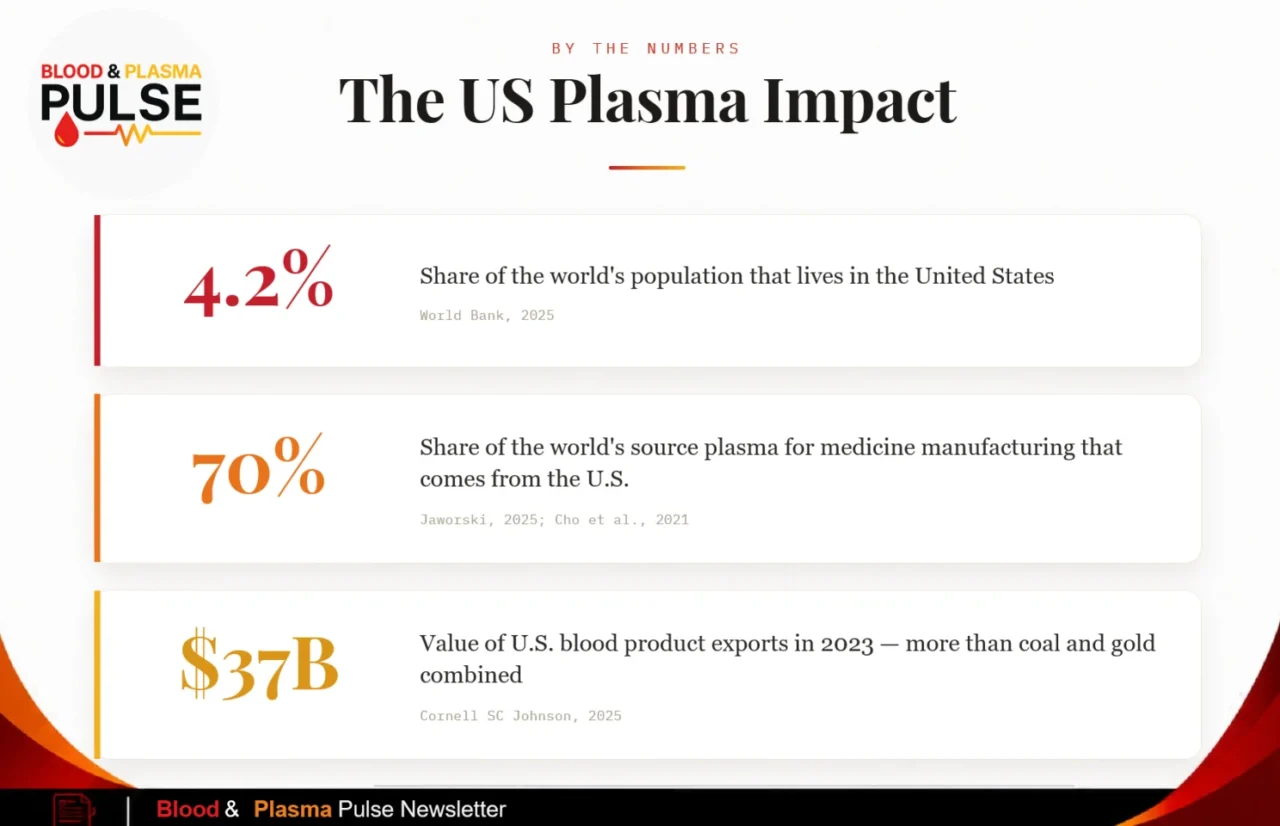
Figure 1. The scale of U.S. plasma dominance is striking: 4.2% of the world’s population supplies 70% of its most critical biological raw material. Sources: Cornell SC Johnson College of Business (2025); Jaworski (2025); Cho et al. (2021).
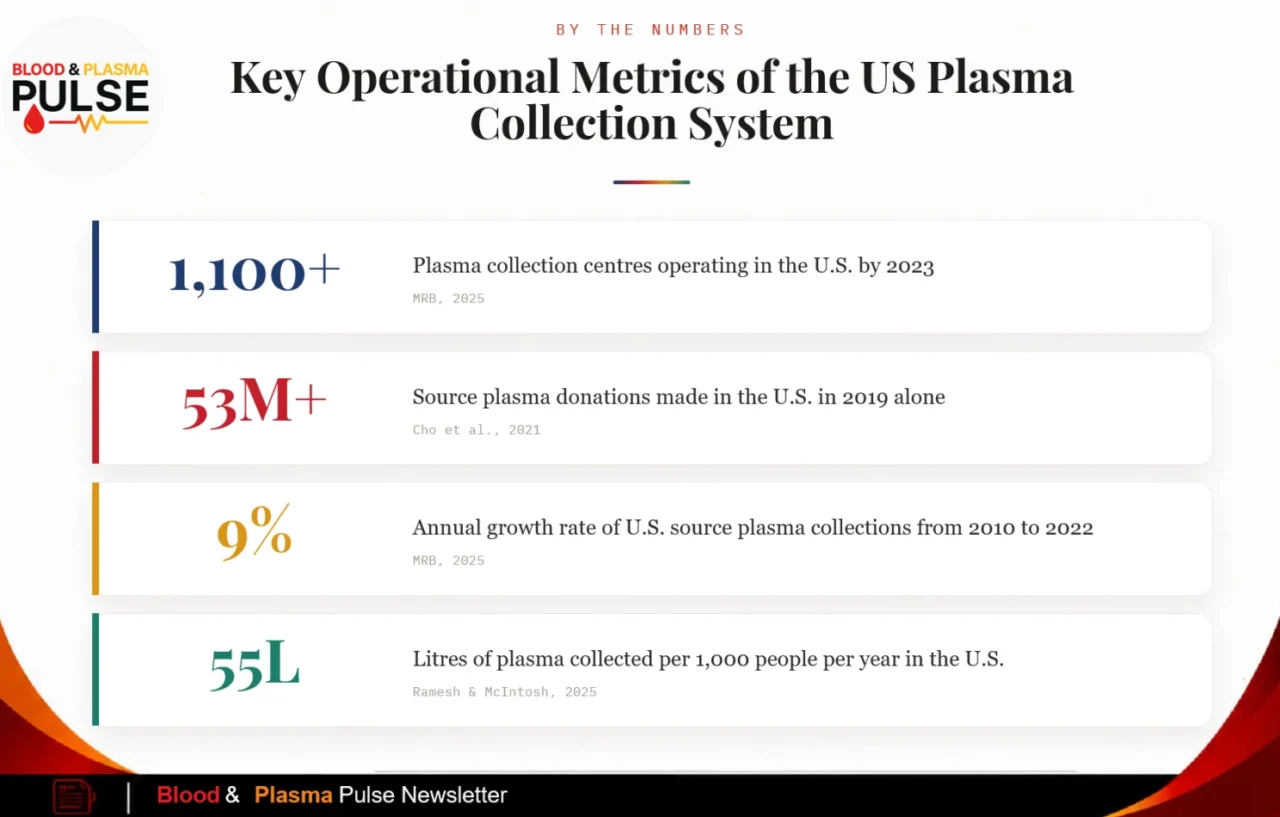
Figure 2. Key operational metrics of the U.S. plasma collection system. Sources: Marketing Research Bureau (2025); Cho et al. (2021); Ramesh and McIntosh (2025).
Compare that 55 litres per 1,000 people to France, 8 litres. Outside of Alberta, Canada, approximately 7 litres. In most of sub-Saharan Africa, approaching zero. The gap is not explained by population size, wealth, or healthcare infrastructure alone. It is explained by policy choices. And those choices have a history (Ramesh and McIntosh, 2025; WHO, 2026).
Chapter One: The War That Built the Foundation (1940s)
The American plasma story begins not in a boardroom but on a battlefield. When the United States entered World War II in 1941, the country faced an urgent medical challenge:
How to keep wounded soldiers alive long enough to reach a hospital when blood transfusion infrastructure did not exist at the front line?
The answer was plasma.
In 1941, at the military’s request, the American Red Cross initiated a national blood programme that collected 13.3 million pints of blood for the U.S. armed forces, establishing, almost overnight, the largest organized blood collection network in human history (National Library of Medicine, 2024). The plasma separated from the blood was dried, packaged, and shipped to battlefields across Europe and the Pacific.
This wartime mobilization did something far more consequential than save lives in the short term. It built three things that would define American plasma dominance for the next eight decades:
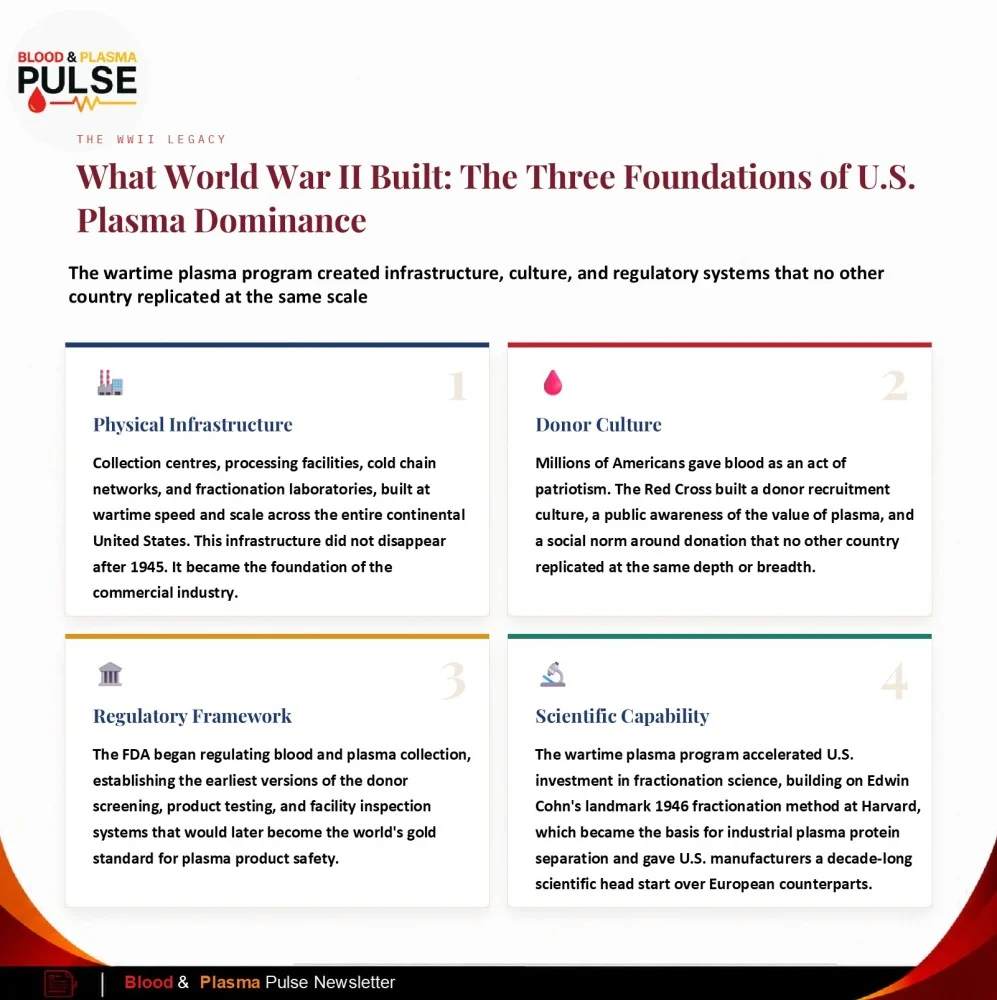
Figure 3. The four foundations built by WWII that no other country replicated at scale. Sources: National Library of Medicine (2024); Farrugia (2010); Cho et al. (2021).
Chapter Two: The Decision That Changed Everything (1970s)
By the late 1960s, the United States had a problem. Paid whole blood donors, people who sold their blood for cash, were transmitting hepatitis at alarming rates. Studies showed that commercial blood donors had significantly higher rates of hepatitis B compared to voluntary donors. The system had a safety crisis (Farrugia, 2010).
The political response was shaped by an unlikely source: a British sociologist.
Richard Titmuss‘s 1970 book, The Gift Relationship, argued passionately that the voluntary blood donor, motivated by altruism rather than money, produced safer blood and a healthier society. The Nixon administration reportedly consulted Titmuss directly, and in 1973, the American Blood Commission established a National Blood Policy calling for the phasing out of compensated whole blood donation (Farrugia, 2010).
The Most Important Sentence in U.S. Plasma Policy History
When the U.S. phased out paid whole blood donation in the 1970s, it made one critical distinction that would define the next 50 years of global plasma supply:
The ban applied to blood collected for transfusion, not to plasma collected for fractionation into medicines.
Source Plasma, collected by apheresis specifically for manufacturing purposes, remained compensated. That single regulatory carve-out is the foundation of America’s dominance in plasma (Cho et al., 2021; Farrugia, 2010).
This distinction was not accidental. It was grounded in genuine scientific and regulatory logic.
Blood transfusion and plasma apheresis are fundamentally different acts: different physiological impacts on the donor, different product uses, different safety risk profiles, and different manufacturing destinations.
The FDA recognized this and codified it in regulation, creating what has become known as the ‘dual system‘: unpaid donation for blood transfusion and compensated donation for source plasma (Cho et al., 2021).
Europe, by contrast, took a different path. Heavily influenced by the same Titmuss argument, many European countries applied the unpaid donation principle to both blood and plasma.
The result, played out over the following five decades, is visible in a single comparison: the U.S. today collects 55 litres of plasma per 1,000 people. France, among the world’s most committed unpaid systems, collects 8. That seven-fold difference is the Titmuss legacy in numbers (Ramesh and McIntosh, 2025; Jaworski, 2025).
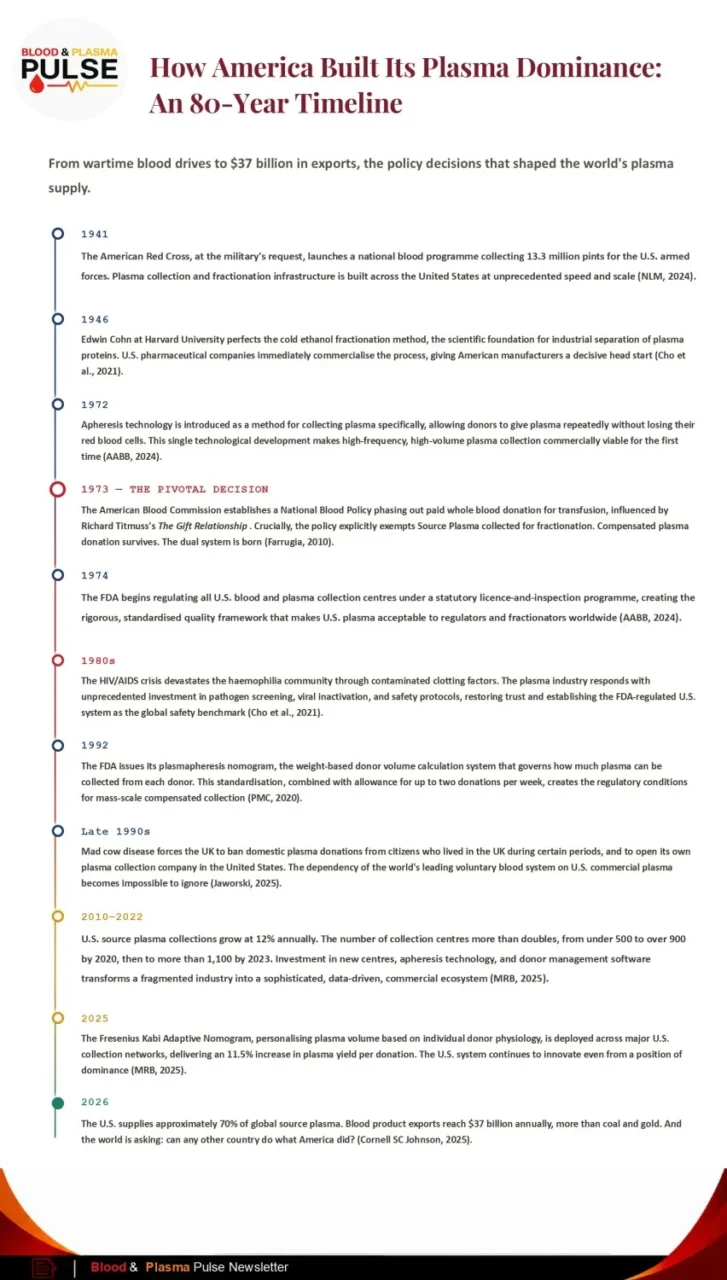
Figure 4. The 80-year timeline of U.S. plasma dominance. Sources: NLM (2024); Cho et al. (2021); Farrugia (2010); AABB (2024); MRB (2025); Cornell SC Johnson (2025); Jaworski (2025).
Chapter Three: The Five Pillars of the U.S. Model
The U.S. plasma system did not grow to dominance through any single factor. It was built on five structural pillars, each reinforcing the others, that together created a commercial, regulatory, and operational ecosystem no other country has yet to replicate in full.
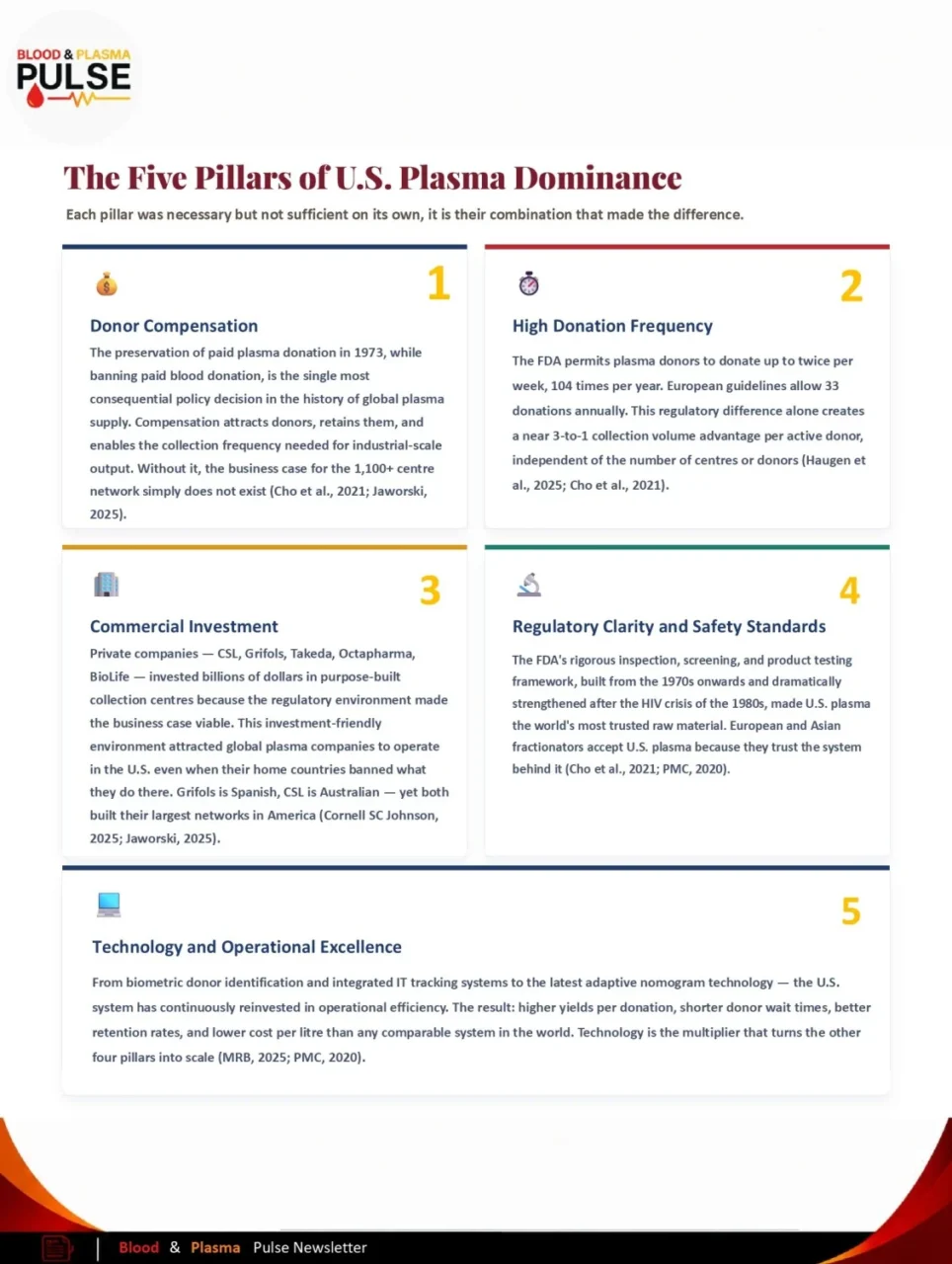
Figure 5. The five structural pillars of U.S. plasma dominance. Al five are required. Countries that adopt only one or two will not replicate the outcome. Sources: Cho et al. (2021); Jaworski (2025); MRB (2025); Cornell SC Johnson (2025).
Chapter Four: What the Rest of the World Chose, and What It Cost Them
The contrast between countries that followed the U.S. model and those that did not is perhaps the most powerful natural experiment available in health policy. The evidence has been accumulating for 50 years. And it consistently points in the same direction.
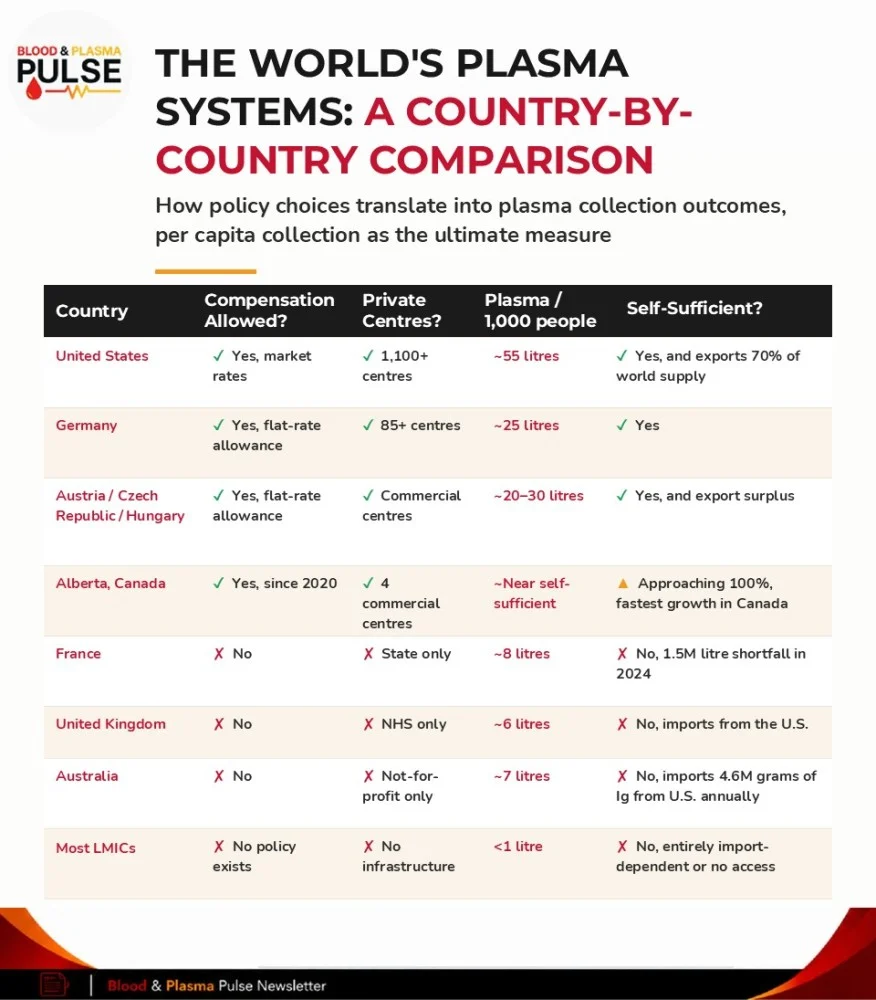
Figure 6. Plasma collection per capita by country and policy model. Sources: Ramesh and McIntosh (2025); Jaworski (2025); Niskanen Center (2023); NCBI (2023); WHO (2026); Jaworski (2024).
The pattern is unambiguous. Every country that allows private, compensated plasma collection has achieved or is approaching self-sufficiency. Not one country that relies exclusively on unpaid, state-operated collection has done so.
This is not a coincidence. It is cause and effect, demonstrated across multiple countries, multiple regulatory environments, and multiple decades of data (Jaworski, 2025; Ramesh and McIntosh, 2025).
Perhaps the most striking illustration is the Grifols paradox. CSL is Australian, Grifols is Spanish, and Kedrion is Italian, yet all three built their largest plasma collection networks in the United States because their home countries made the model they rely on commercially illegal there.
They then export plasma-derived medicines back to their home countries to treat patients who would otherwise have no access to them. The countries that banned compensation are importing its consequences while refusing to acknowledge its necessity (Jaworski, 2025; Cornell SC Johnson, 2025).
The plasma trade is becoming ever-more hypocritical. Countries that ban compensation import the finished therapies made from compensated plasma and tell their citizens, and themselves, that their hands are clean. The Economist (August 2024), summarised in Jaworski (2024)
What Every Other Nation Can Learn, and Do
The U.S. plasma system took 80 years to build. That does not mean other countries need 80 years to close the gap. Alberta’s three-year transformation shows how fast change can happen with the right policy framework in place. The lessons are clear, concrete, and transferable.
- Distinguish plasma from blood in your legislation. The most consequential thing the U.S. did in 1973 was not banning paid blood donation, but exempting plasma from that ban. Countries that apply a single “no compensation” policy to all blood products are conflating two fundamentally different acts. Plasma apheresis donors provide a renewable resource, return their red cells, and can donate more frequently than whole-blood donors. A plasma-specific policy is not a compromise of principles; it is a recognition of biology (Farrugia, 2010; Cho et al., 2021).
- Allow private commercial operators alongside public systems. The 1,100+ U.S. plasma centres were not built with government money. They were built by companies that saw a viable business in a well-regulated market. Public systems are essential for governance, oversight, and equitable access, but they cannot match the scale, speed, and donor-experience investment of commercial operators. Australia’s Grifols, Spain’s CSL, and Italy’s Kedrion all operate successfully in the U.S. under FDA oversight. Their home countries could attract the same level of investment if they changed their policies (Jaworski, 2025; Cornell SC Johnson, 2025).
- Measure self-sufficiency in litres per 1,000 people, and set a target. Canadian Blood Services set a target of 25% plasma sufficiency by 2027–28. Alberta, with compensated collection, is already approaching 100%. Setting a measurable national target and publishing progress against it annually creates accountability and urgency. Without a target, the status quo of import dependence faces no political pressure (Canadian Blood Services, 2023; Niskanen Center, 2023).
- Invest in the regulatory infrastructure before opening the centres. The safety of the U.S. system is not incidental; it is the product of decades of FDA investment in inspection, screening, and quality standards. Countries that want to build domestic plasma collection capacity need to invest in regulatory capability simultaneously. A compensated system without rigorous oversight is not the U.S. model. It is a different and genuinely dangerous thing (Cho et al., 2021; PMC, 2020).
- Reframe the ethics argument around patient access rather than donor purity. The debate about compensated plasma donation in many countries is trapped in a framework focused entirely on the donor, is it exploitative? Is it commodifying the body? These are legitimate questions. But they are only half the ethical equation. The other half is the patient: the child with primary immune deficiency who cannot access immunoglobulin because their country’s unpaid system does not produce enough. Bringing patient outcomes into the centre of the policy debate changes its character entirely, and it is the argument the evidence supports most powerfully (Ramesh and McIntosh, 2025; Jaworski, 2025).
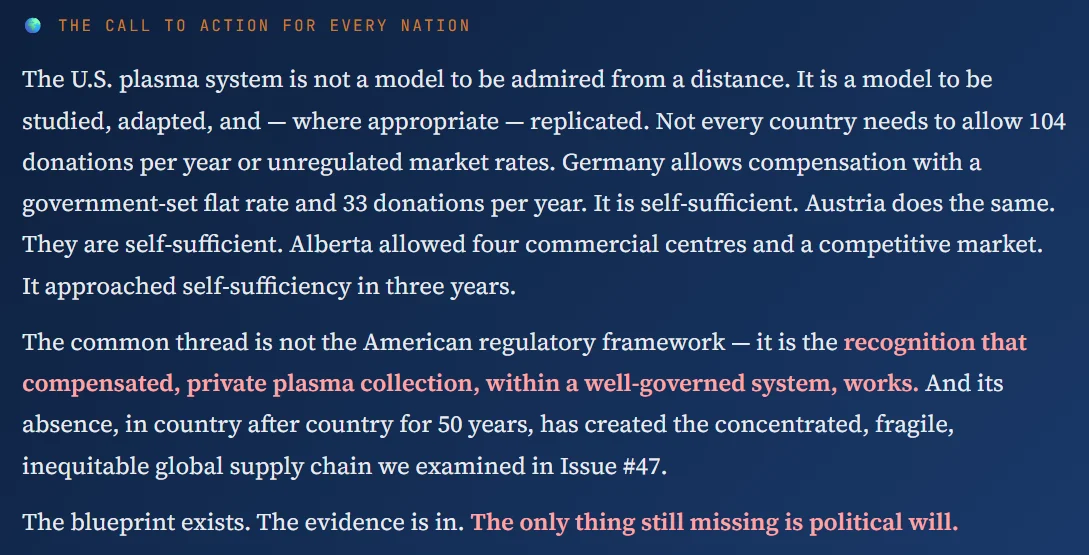
America Did Not Plan to Supply the World. Other Nations Can Plan to Change That.
The United States did not set out to supply 70% of the world’s plasma. It made a series of policy decisions, some deliberate, some pragmatic, some accidental, that collectively created the conditions for commercial plasma collection to flourish at an unmatched scale.
The wartime infrastructure. The 1973 exemption. The FDA dual system. The commercial investment environment. The technological reinvestment cycle. No single decision explains the dominance. All of them together do.
The rest of the world watched, debated, and largely chose a different path, one that felt more ethically comfortable and delivered less plasma dramatically. The patients who need immunoglobulin, clotting factors, and albumin in the 119 countries with no domestic fractionation capacity are the human cost of that choice.
Alberta has changed in three years. Germany and Austria never abandoned the model and have been self-sufficient for decades. The evidence is not ambiguous. What is needed now is not more research. It is leadership, at the government, health ministry, and boardroom levels, to look at 80 years of evidence and make the decision that the data has long since made for us.
Every country that allows compensated plasma collection is self-sufficient. Not one country that relies solely on unpaid collection has achieved it. After 50 years, that is not a correlation. It is a conclusion.
References
- AABB (Association for the Advancement of Blood & Biotherapies). (2024). Transfusion medicine history.
- Canadian Blood Services. (2023, June 8).Next steps for increasing Canada’s domestic supply chain for lifesaving immunoglobulins.
- Cho, G., Grimm, E., & Nambiar, A. (2021). Plasmavigilance: Source plasma joins the call to arms.Transfusion, 61(11), 3005–3009.
- Cornell SC Johnson College of Business. (2025, May). The global plasma economy: A multibillion-dollar industry.
- Farrugia, A. (2010). Payment, compensation and replacement, the ethics and motivation of blood and plasma donation.Vox Sanguinis, 99(3), 202–211.
- Haugen, M., Nissen-Meyer, L. S. H., Strand, T. A., & Magnussen, K. (2025). The effect of plasma donation frequency on total serum protein, immunoglobulin G and donor safety: A non-inferiority randomized controlled trial.Vox Sanguinis, 120(12), 1205–1215.
- Jaworski, I. (2024). America’s plasma contribution to the world.Peter Jaworski Substack.
- Jaworski, I. (2025). The blood feud: Compensated versus non-compensated source plasma donations.Annals of Blood, 10.
- Marketing Research Bureau (MRB). (2025). Collecting plasma in the US: Ecosystem analysis, cost benchmarking & forecast to 2032.
- National Library of Medicine (NLM). (2024). The blood donor evolution. Circulating Now, NLM Historical Collections.
- NCBI Bookshelf. (2023).International plasma collection practices: Project report.
- Niskanen Center. (2023, June 26).The case for commercial compensated plasma collections.
- Penrod, J. (2020). Plasma supply in the United States. Transfusion and Apheresis Science, 2020; 59.
- Ramesh, N., & McIntosh, D. (2025). How do we solve the shortage of plasma-derived medicines in low- and middle-income countries (LMIC)?Annals of Blood, 10.
- World Health Organization (WHO). (2026).Blood safety and availability[Fact sheet]. “
Find more posts featuring Reza Shojaei on Hemostasis Today.
-
Oct 6, 2026, 14:29Jorge Enrique: Navigating Anticoagulation in Pregnancy With a Prosthetic Heart Valve
-
Oct 6, 2026, 14:20Hassan Abdelhak: Understanding How LVADs Support the Failing Heart
-
Oct 6, 2026, 14:04Breast Imaging Insights From Madrid – Swiss Journal of Radiology and Nuclear Medicine
-
Oct 6, 2026, 13:10Vinicius Fornazari: New Perspectives In Interventional Radiology From SOBRICE
-
Oct 6, 2026, 12:39Sarah Garvey: Putting The Patient Experience At The Heart Of VTE Care
-
Oct 6, 2026, 12:33Platelets Without Donors: Can Freeze-Dried Artificial Platelets Transform Trauma Care?
-
Oct 6, 2026, 12:03Louise St. Germain Bannon: Supporting the World Thrombosis Day
-
Oct 6, 2026, 11:39Joining the Hemophilia and Bleeding Disorders Community at the EHC 2026 – WFH
-
Oct 6, 2026, 10:56Moustafa Abdou: LE Cells and the Early Diagnosis of Lupus