

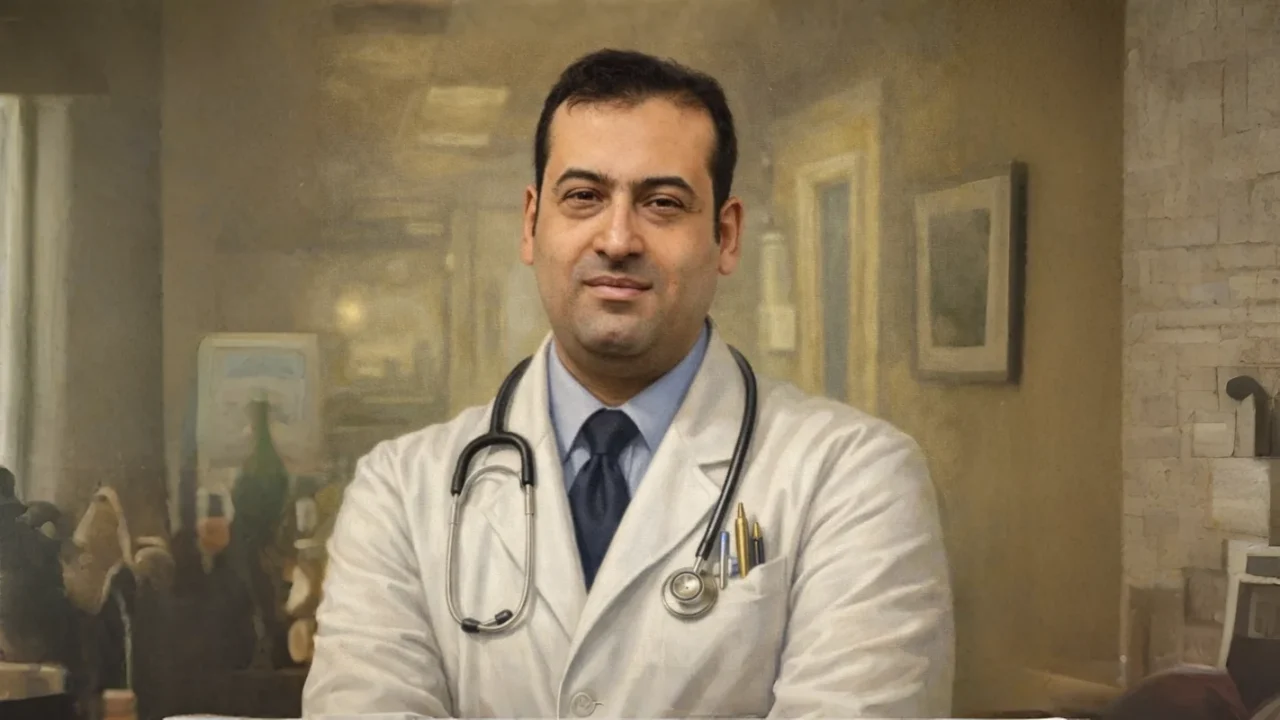
Pouya Tahsili-Fahadan: New Machine Learning Model Enhances Risk Prediction in Acute Ischemic Stroke
Pouya Tahsili-Fahadan, Medical Director of Stroke at Inova Fairfax Hospital, shared on LinkedIn about a recent article he and his colleagues co-authored, published in Translational Stroke Research, adding:
”I’m pleased to share our latest publication in Translational Stroke Research.
In this study, we developed and validated machine learning models that integrate automated quantitative cerebrovascular morphology, collateral assessment, and conventional clinical and imaging variables to improve prediction of major complications following endovascular thrombectomy in acute ischemic stroke.
This work represents a multidisciplinary collaboration between the Inova Fairfax Hospital (Inova Neuroscience and Spine Institute) and the University of California, Riverside.
Congratulations and sincere thanks to all of my co-authors and collaborators for their outstanding work.”
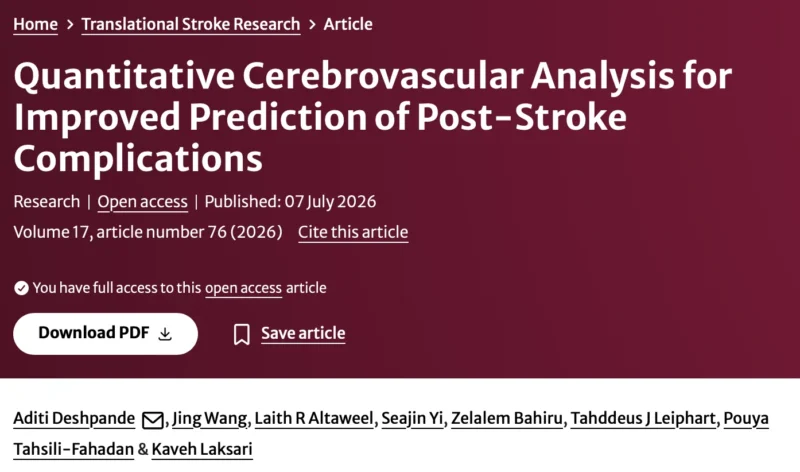
Title: Quantitative Cerebrovascular Analysis for Improved Prediction of Post-Stroke Complications
Authors: Aditi Deshpande, Jing Wang, Laith R. Altaweel, Seajin Yi, Zelalem Bahiru, Tahddeus J. Leiphart, Pouya Tahsili-Fahadan, Kaveh Laksari
Stay updated on all scientific advances with Hemostasis Today.
-
Oct 16, 2026, 13:59Aya Akmal Amin: Antiphospholipid Syndrome Management and Risk Stratification
-
Oct 16, 2026, 13:10Emanuel Sueldo: CAHT 2026 Celebrates Scientific Progress and Team Achievements
-
Oct 16, 2026, 13:05Maha Othman: Queen’s Health Sciences Advances CAT Risk Models and Pediatric ISTH-BAT Cut-Offs
-
Oct 16, 2026, 13:03Thrombosis Awareness Must Lead to Timely Action – Roche
-
Oct 16, 2026, 12:49Wolfgang Miesbach: 5-Year CBDR Data Confirms Emicizumab Safety and Efficacy in Hemophilia A
-
Oct 16, 2026, 12:40Edward Lee Carter: How Factor XI Inhibition Could Transform Anticoagulation Therapy
-
Oct 16, 2026, 12:40Marc Carrier: Looking Ahead to ISTH 2027 in Vancouver
-
Oct 16, 2026, 12:30Bob Lempke: How One Blood Donation Can Save Up to Three Lives
-
Oct 16, 2026, 12:30Why VWF Therapies Belong on the EU Critical Medicines List – EHC