


Er. Subodh Grewal/LinkedIn
Jul 19, 2026, 04:09
Er. Subodh Grewal: How Platelet Histograms Support Hematology Diagnosis
Er. Subodh Grewal, Technical Support Engineer at Promea Therapeutics, shared a post on LinkedIn:
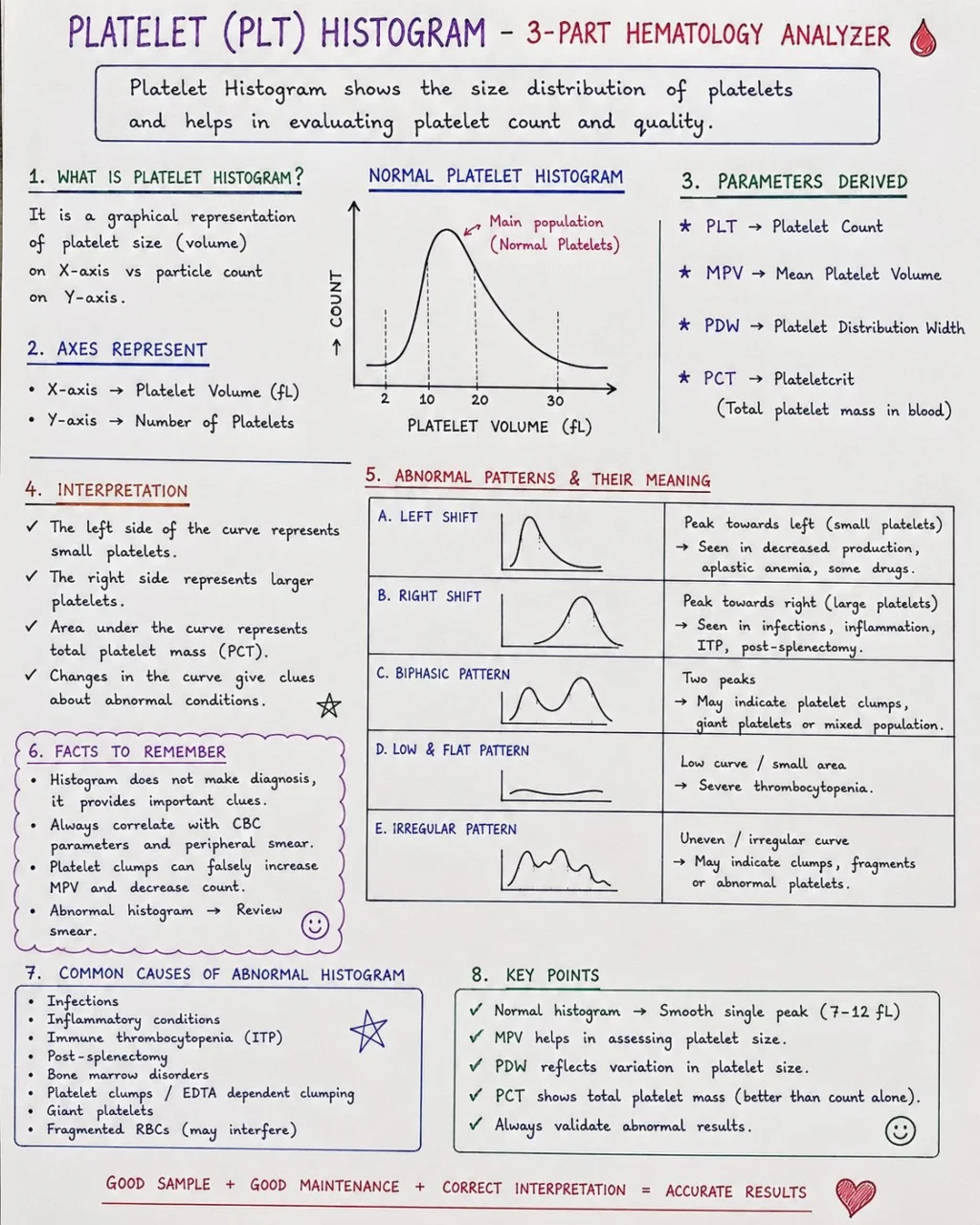
“Can a Platelet Histogram reveal more than just the platelet count?
Most people only look at the PLT value.
But experienced professionals also study the Platelet Histogram.
A Platelet Histogram helps evaluate:
- Platelet size distribution
- MPV (Mean Platelet Volume)
- PDW (Platelet Distribution Width)
- PCT (Plateletcrit)
A normal histogram shows a smooth curve.
Changes in the curve may indicate:
- Giant platelets
- Platelet clumps
- Fragmented RBCs
- Low platelet count
- Abnormal platelet distribution
Remember: A histogram doesn’t make the diagnosis—it provides valuable clues that should always be correlated with the CBC report and peripheral smear.
I’m sharing handwritten Hematology notes to simplify IVD concepts for students, laboratory professionals, and service engineers.
Which topic should I explain next?
- Coulter Principle (Impedance Method)
- Hemoglobin Measurement (SLS Method)
- RBC Histogram Interpretation”
Stay updated with Hemostasis Today.
-
Oct 20, 2026, 06:45Grant Garcia: Why Does a Blood Clot Diagnosis Immediately End an Athlete’s Season?
-
Oct 20, 2026, 06:35Parag Tamhankar: Landmark Study Reveals Genetic Spectrum and Targeted Therapies for ALPS in the Indian Population
-
Oct 20, 2026, 06:26Nina Houben: Neonatal Blood Transfusion Symposium and PhD Defense
-
Oct 20, 2026, 05:46Jan T. Kielstein: DNP Poisoning and Hemoadsorption The Limits of Rescue Therapy
-
Oct 20, 2026, 05:33Giulia Di Paolo: Connecting Plasma Donation to the Patients Who Depend on It
-
Oct 20, 2026, 05:20James Knowles: Exploring Plasma Manufacturing and Strengthening Industry Collaboration
-
Oct 20, 2026, 05:11Giuseppe Lippi։ Understanding Liver Test Abnormalities After AAV Gene Therapy
-
Oct 20, 2026, 05:02Sanam Loghavi: Test Your Hematology Knowledge at ASH 2026!
-
Oct 20, 2026, 04:13Ifeanyichukwu Ifechidere: DOACs Are Not the Answer to Every Anticoagulation Question