

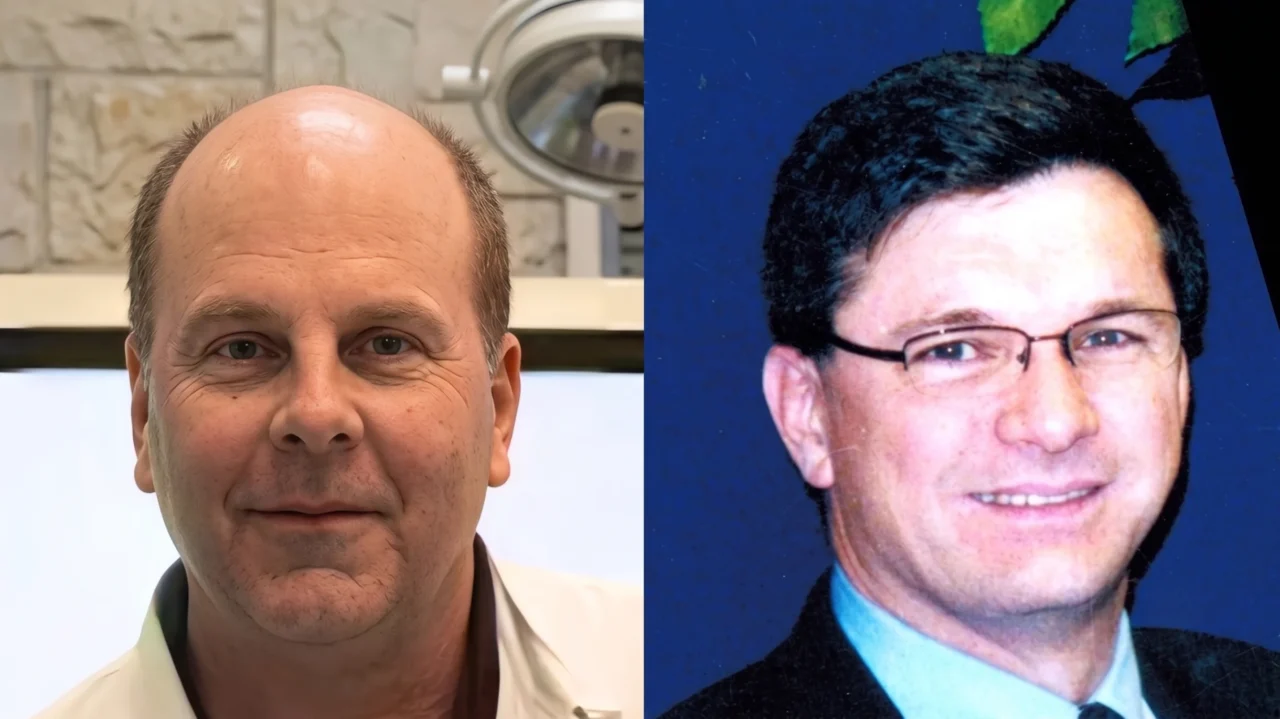
Jim Hoffman: Separating Evidence from Misinformation on Vaccine-Associated Thrombosis
Jim Hoffman, Former Technical Advisor at Cygnus Technologies, LLC, shared Jocelyn M.‘s post on LinkedIn, adding:
“Hetland et al demonstrated early in the pandemic that exacerbated NETosis was likely responsible for adverse, serious clotting and prothrombotic events (VITT) due to the AVV vaccine.
This potentially life-threatening AVV vaccine-related risk was likely much more pronounced than posed by the mRNA vaccines and not nearly as risky as being infected with an early viral variant, unvaccinated.
Can covalently immobilized heparin whole blood purification help patients deplete NETotic-NETs known to be elevated in the circulation of patients struggling to recover from sepsis?
‘Inhibition of NETosis prevents VITT-induced thrombosis in mice but not thrombocytopenia. In contrast, in vivo blockage of FcγRIIa abrogates both thrombosis and thrombocytopenia suggesting these are distinct processes.
Our findings indicate that anti-PF4 antibodies activate blood cells via FcγRIIa and are responsible for thrombosis and thrombocytopenia in VITT’. Chong et. al. 2022.
Covalently Immobilized Heparin has been shown to remove nucleosomes, histones, and PF4 from sepsis plasma.
Can it also reduce the risk of the serious consequences of HIT-mediated ischemic intravascular thrombosis using a rise in NETs/nucleosomes in the blood as a prognostic marker for timely heparin blood purification therapy?
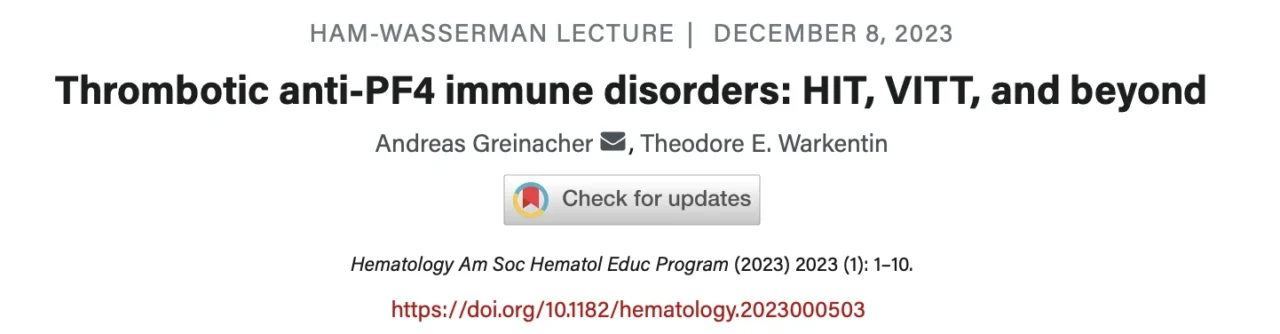
Thrombotic anti-PF4 immune disorders: HIT, VITT, and beyond Greinacher et al 2023″
Jocelyn M., National Medical Liaison for Familial Chylomicronemia and Hypertriglyceridemia at Celystra Pharma, shared a post on LinkedIn:
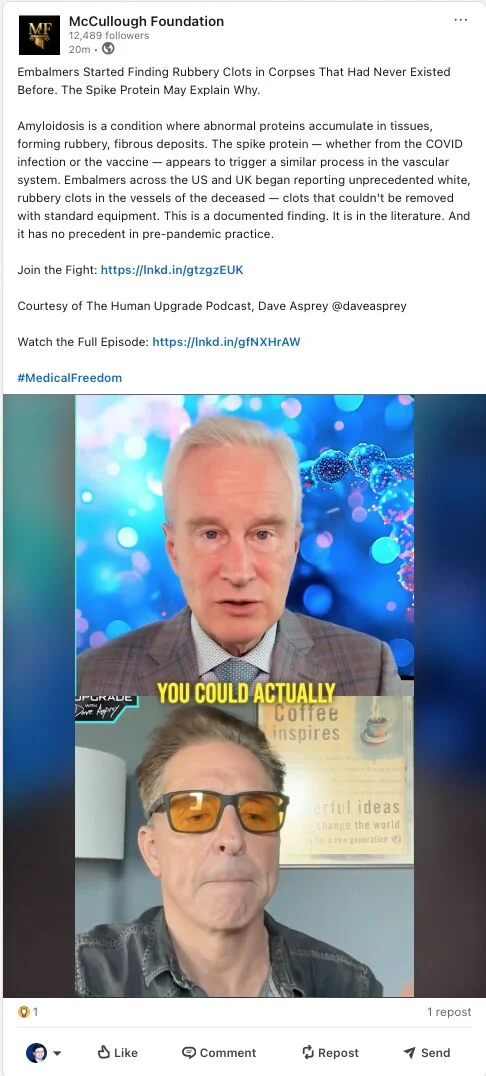
“Anothe bunch of lies from McCullough Foundation. And here is the data to prove such. And why the original post from McCullough Foundation should be removed from LinkedIn.
Here is the truth:
Postmortem blood clots associated with COVID-19 vaccines are primarily linked to a very rare condition called Vaccine-Induced Immune Thrombotic Thrombocytopenia (VITT), which occurred almost exclusively after receiving adenovirus-vector vaccines, such as AstraZeneca or Johnson and Johnson.
Medical research and autopsies have clarified that these true pathological clots differ significantly from normal postmortem blood changes and from the viral clotting caused by COVID-19 itself.
Anti-vaccine misinformation has frequently conflated normal postmortem findings with vaccine injuries. The clinical realities, proven biological mechanisms, and actual autopsy findings surrounding postmortem clots reveal the distinct differences.
The Biological Mechanism: VITT
When vaccine-related clots do occur and are evaluated postmortem, they are caused by a specific, well-documented immune reaction:
- Autoantibody Trigger: In rare cases, the immune system mistakes a normal human protein called Platelet Factor 4 (PF4) for a viral protein.
- Platelet Activation: The body produces unusually ‘sticky’ anti-PF4 antibodies that bind to platelets, causing them to clump together.
- Severe Clotting: This clumping triggers massive, dangerous blood clots (thrombosis), while simultaneously causing low platelet counts (thrombocytopenia) elsewhere in the body.
- Targeted Vaccines: This phenomenon is strictly tied to adenovirus-vector vaccines. The widely used mRNA vaccines (Pfizer and Moderna) do not elevate the risk of VITT.
Actual Postmortem Findings vs. Misinformation
Autopsy data from verified vaccine-related fatalities shows distinct medical markers that contrast heavily with claims spread online:
True VITT Clots: Legitimate autopsies of rare VITT fatalities find recurrent microthrombi (tiny clots) spread across multiple organs, extensive cerebral venous sinus thrombosis (blood clots in the brain), and severe internal hemorrhaging.
The ‘Rubbery Fibrous Clots’ Myth: Viral internet videos featuring embalmers pulling long, rubbery, stringy ‘clots’ from corpses are not evidence of vaccine injury.
Pathologists confirm these are postmortem clots—a completely natural phenomenon where blood separates and coagulates in the blood vessels after death. They look distinct from the dark, jelly-like clots formed while a person is alive (antemortem clots).
Comparing Clot Risks: Vaccine vs. COVID-19 Infection
To put the risk into perspective, the SARS-CoV-2 virus itself causes severe blood clotting at a vastly higher rate than any vaccine.”
Title: Thrombotic anti-PF4 immune disorders: HIT, VITT, and beyond
Authors: Andreas Greinacher, Theodore E. Warkentin
Stay updated on all scientific advances with Hemostasis Today.
-
Oct 20, 2026, 06:45Grant Garcia: Why Does a Blood Clot Diagnosis Immediately End an Athlete’s Season?
-
Oct 20, 2026, 06:35Parag Tamhankar: Landmark Study Reveals Genetic Spectrum and Targeted Therapies for ALPS in the Indian Population
-
Oct 20, 2026, 06:26Nina Houben: Neonatal Blood Transfusion Symposium and PhD Defense
-
Oct 20, 2026, 05:46Jan T. Kielstein: DNP Poisoning and Hemoadsorption The Limits of Rescue Therapy
-
Oct 20, 2026, 05:33Giulia Di Paolo: Connecting Plasma Donation to the Patients Who Depend on It
-
Oct 20, 2026, 05:20James Knowles: Exploring Plasma Manufacturing and Strengthening Industry Collaboration
-
Oct 20, 2026, 05:11Giuseppe Lippi։ Understanding Liver Test Abnormalities After AAV Gene Therapy
-
Oct 20, 2026, 05:02Sanam Loghavi: Test Your Hematology Knowledge at ASH 2026!
-
Oct 20, 2026, 04:13Ifeanyichukwu Ifechidere: DOACs Are Not the Answer to Every Anticoagulation Question