


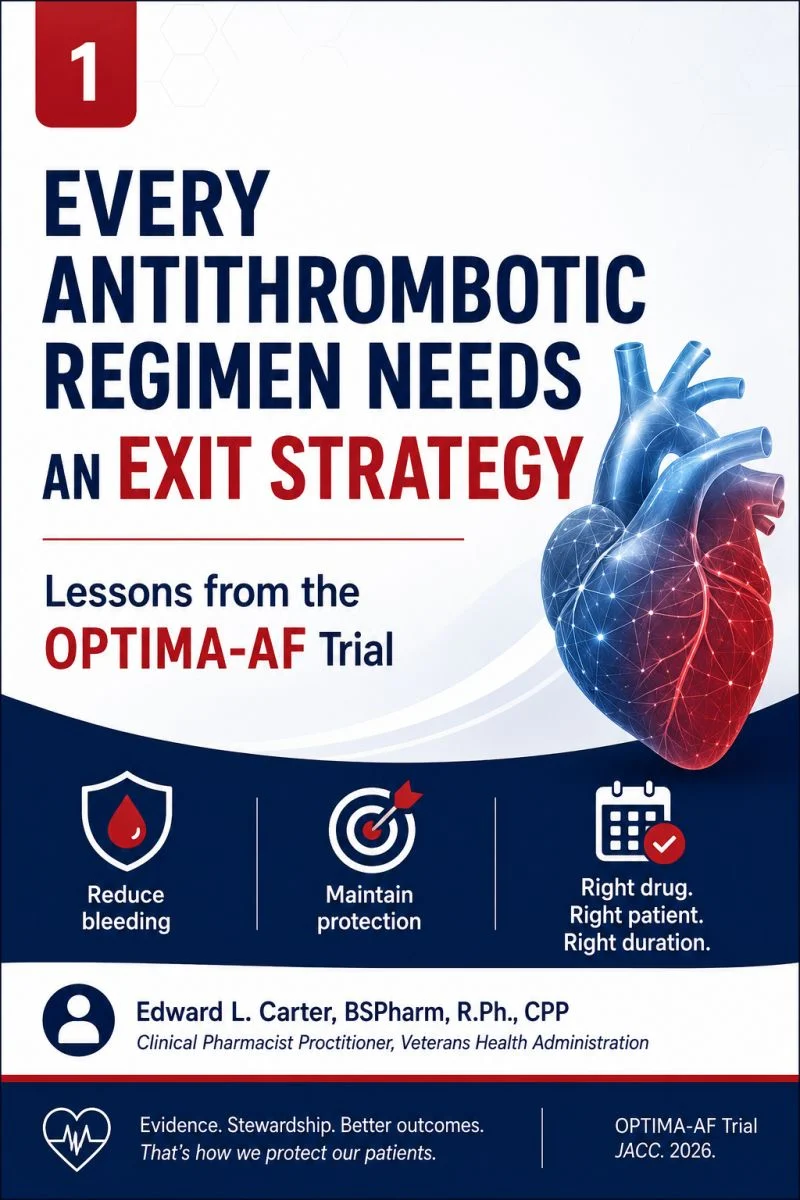
Edward Lee Carter: Every Antithrombotic Regimen Needs an Exit Strategy – Lessons from the OPTIMA-AF Trial
Edward Lee Carter, Clinical Pharmacist Practitioner at U.S. Department of Veterans Affairs, shared a post on LinkedIn:
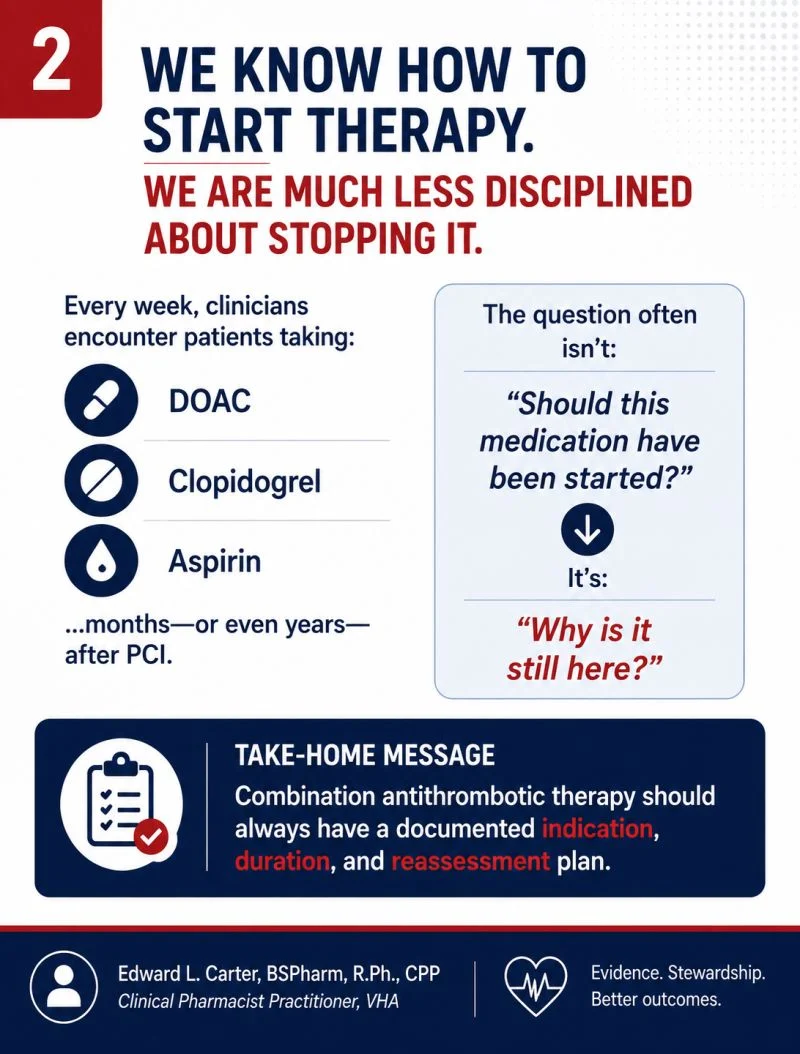
“Most antithrombotic regimens have a start date.
Far fewer have a documented stop date.
That may be one of the biggest opportunities we have to improve medication safety.
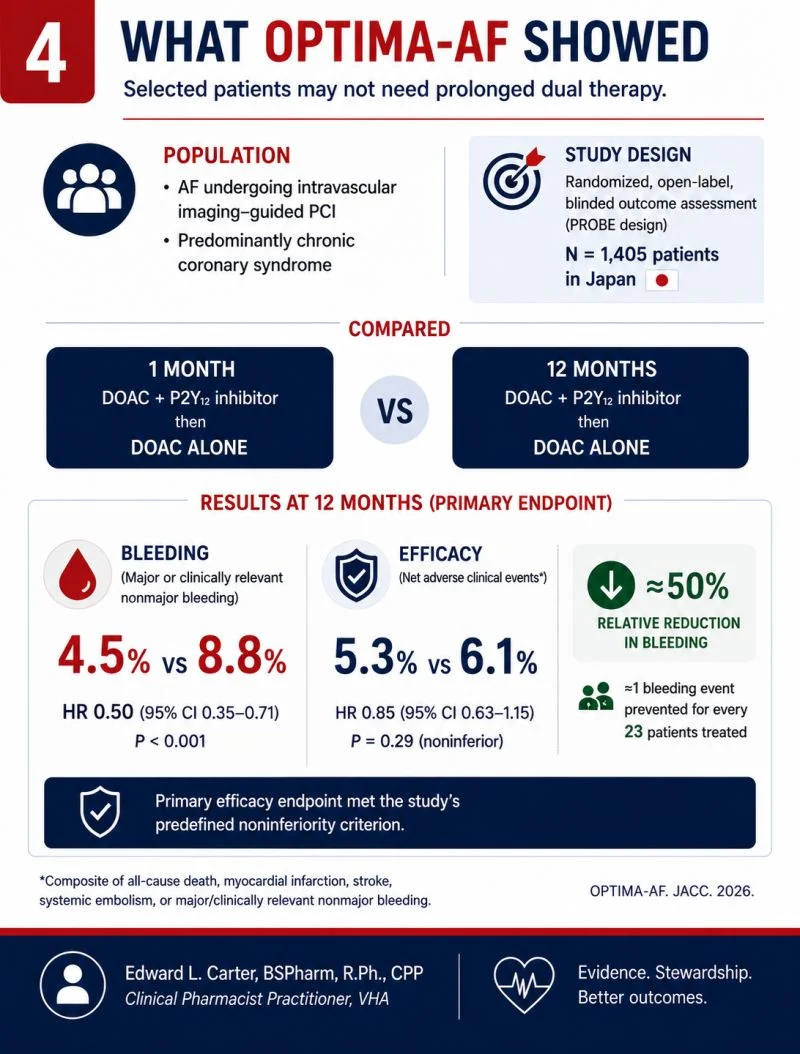
The OPTIMA-AF trial asked an important question:
After PCI in patients with atrial fibrillation, how long does dual therapy really need to continue?
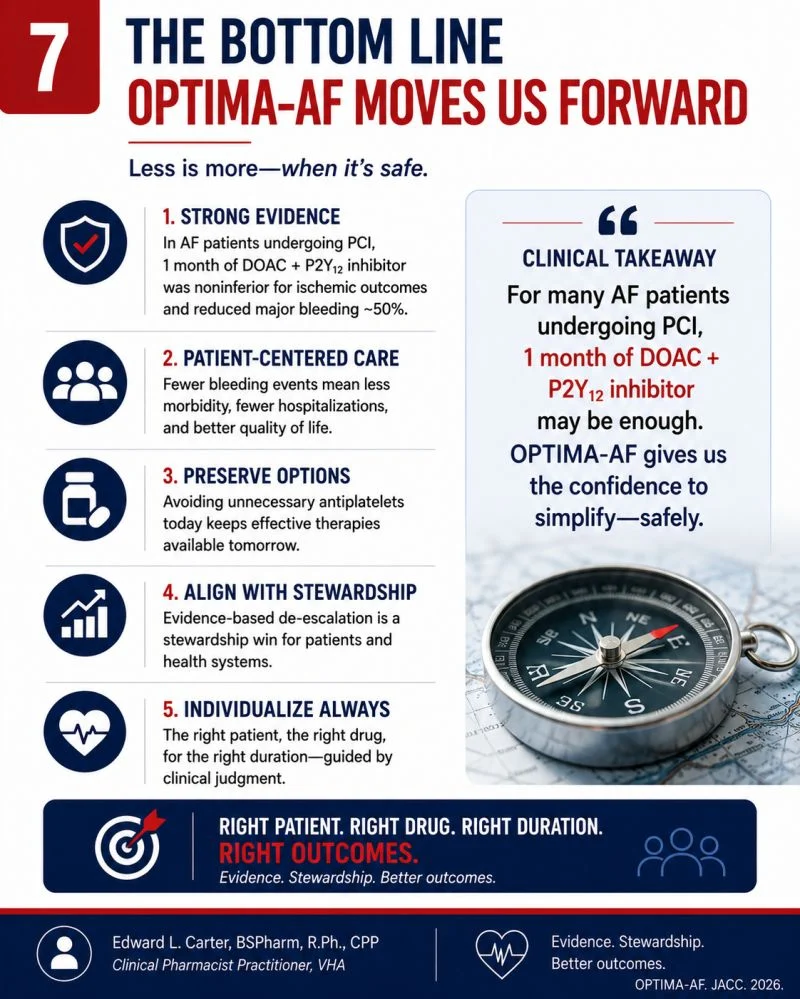
In a carefully selected population undergoing imaging-guided PCI, 1 month of a DOAC plus a P2Y₁₂ inhibitor, followed by DOAC alone, significantly reduced clinically relevant bleeding while meeting the study’s predefined noninferiority criterion for ischemic outcomes.
But here’s what I found even more interesting…
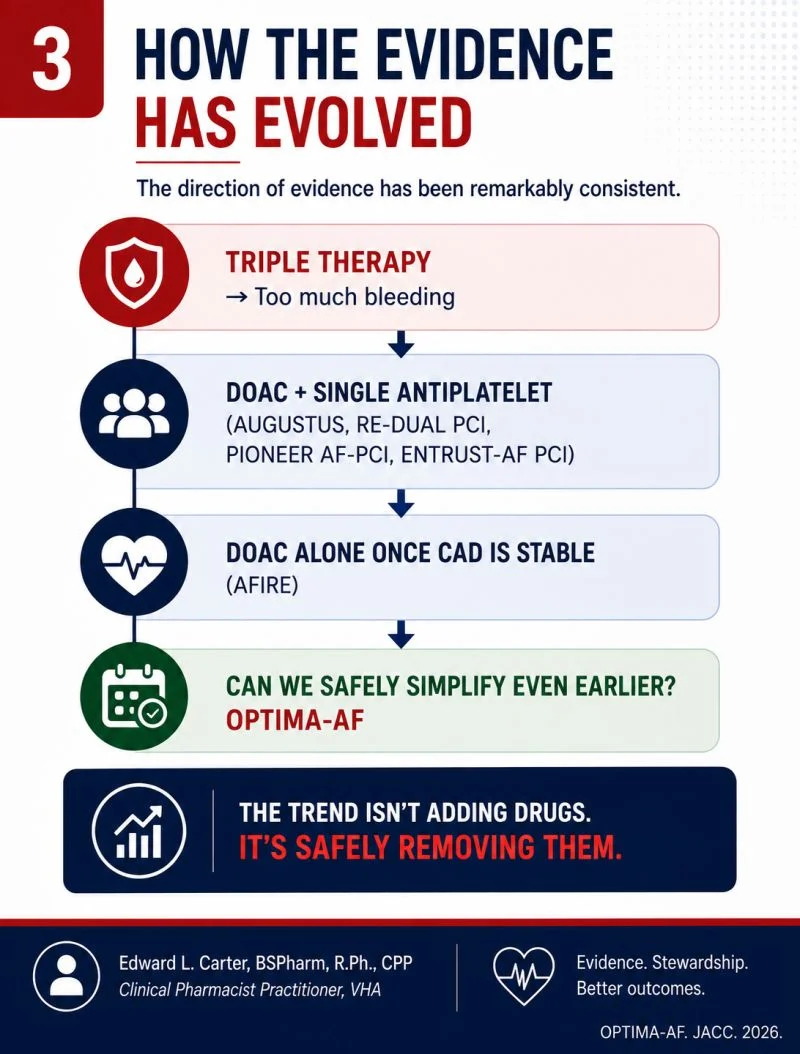
OPTIMA-AF isn’t simply another PCI trial.
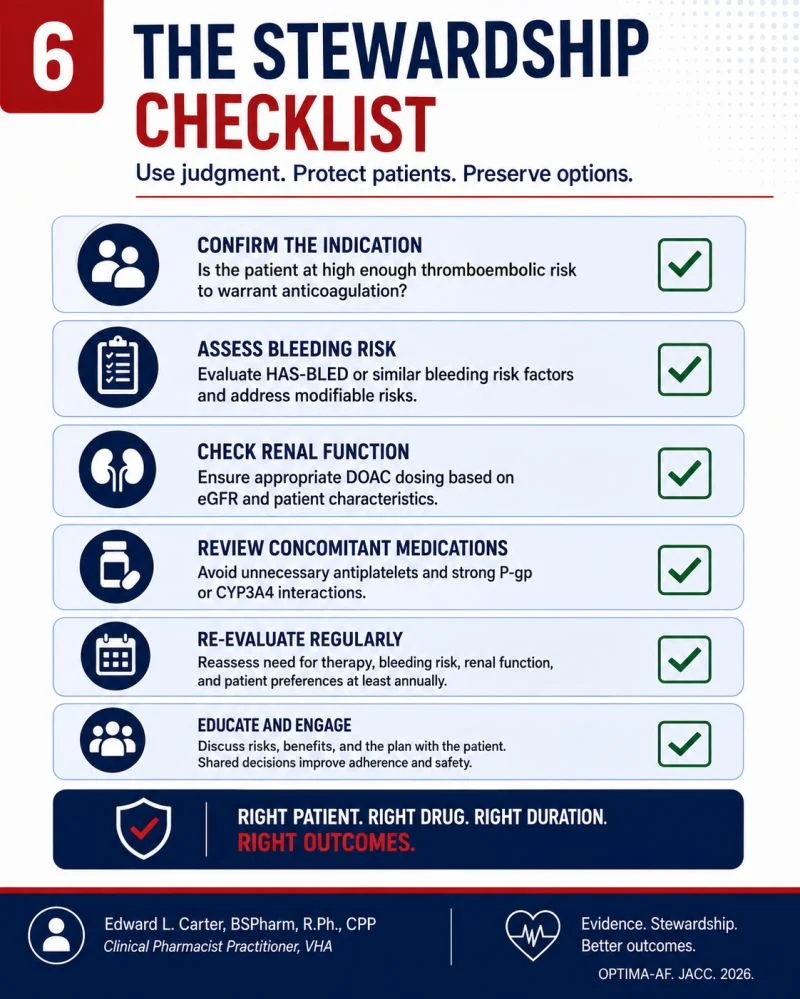
It’s another reminder that antithrombotic stewardship doesn’t end when therapy begins.
As clinicians, we routinely ask:
- Which anticoagulant?
- Which P2Y₁₂ inhibitor?
- Which dose?
Maybe we should spend just as much time asking:
- Does every antithrombotic still have a clear indication?
- Has the patient’s bleeding risk changed?
- Has the ischemic benefit diminished?
- Who owns the stop date?
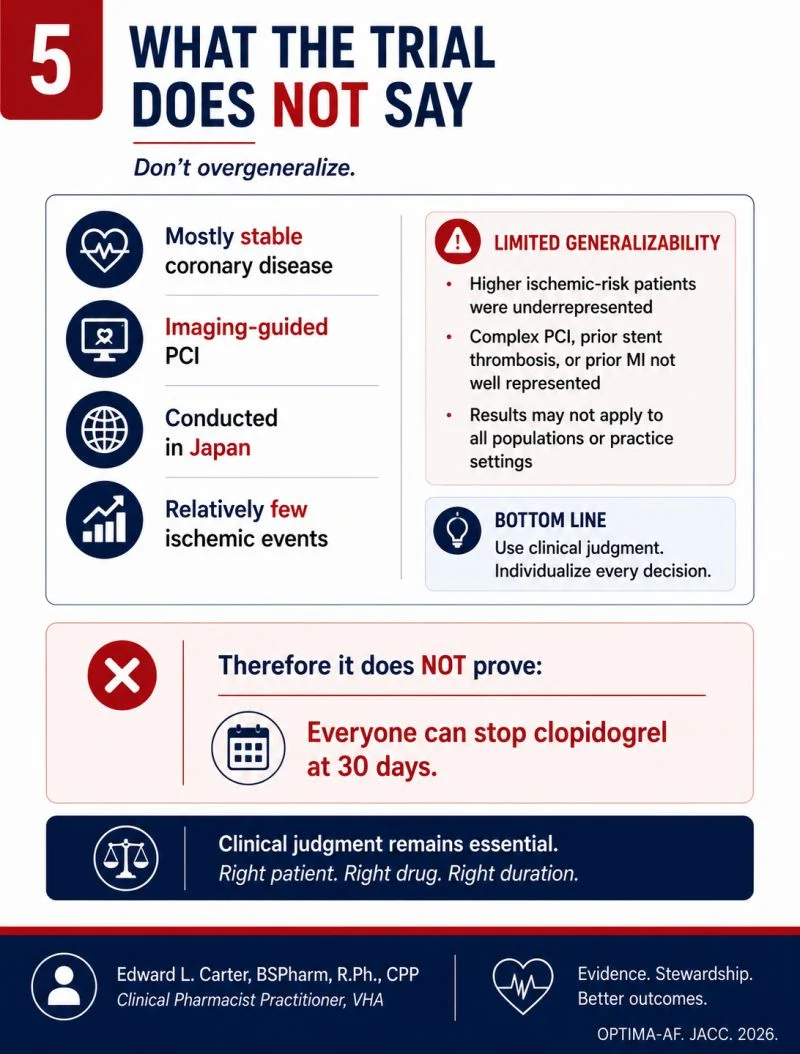
The trial also deserves appropriate caution.
Its patients were predominantly those with stable coronary disease, all underwent intravascular imaging-guided PCI, and the study was conducted entirely in Japan. These results should inform practice—but they should not be interpreted as meaning every patient can safely discontinue a P2Y₁₂ inhibitor after 30 days.
Clinical judgment remains essential.
For me, the broader lesson is this:
Every additional day of combination antithrombotic therapy should be an intentional decision—not simply the default.
That may be the next frontier of antithrombotic stewardship.
- Swipe through the carousel for a summary of the trial, its limitations, and a practical stewardship framework.
How does your institution approach planned de-escalation of antithrombotic therapy after PCI? Is the anticipated stop date documented when the patient leaves the hospital?”
Other posts featuring Edward Lee Carter on Hemostasis Today.
-
Sep 20, 2026, 09:51Ceasovschih Alexandr: A Closer Look at Lipid Disorders in CKM Syndrome
-
Sep 20, 2026, 09:05World Stroke Academy: Can Adjunct IAT Improve Tissue Reperfusion?
-
Sep 20, 2026, 06:46Neeraj Songara: From Donated Blood to Engineered Therapeutics
-
Sep 20, 2026, 06:24Louise St. Germain Bannon: Improving Awareness and Care for Women Across the Lifespan
-
Sep 20, 2026, 05:17Maxime Dely: When ABO Compatibility Isn’t Enough for Safe Transfusion
-
Sep 20, 2026, 04:54William Aird: What Does a Complete History and Physical Really Mean?
-
Sep 20, 2026, 04:34Hons Saurabh Kaushik: Why Uncontrolled LDL Can Be Harmful
-
Sep 20, 2026, 03:58Salih Ehsan: The Complexities of HbF and HbA2
-
Sep 20, 2026, 03:22The Voices of People Living With Bleeding Disorders – EHC