


Mirjavad Mammadov: Understanding the Thrombotic Paradox of Heparin Therapy
Mirjavad Mammadov, Cardiac Device Specialist at Besan MMC, shared a post on LinkedIn about a recent article by Theodore E. Warkentin et al. published in NEJM, adding:
“Heparin-Induced Thrombocytopenia (HIT): When an Anticoagulant Triggers a Prothrombotic Immune Response
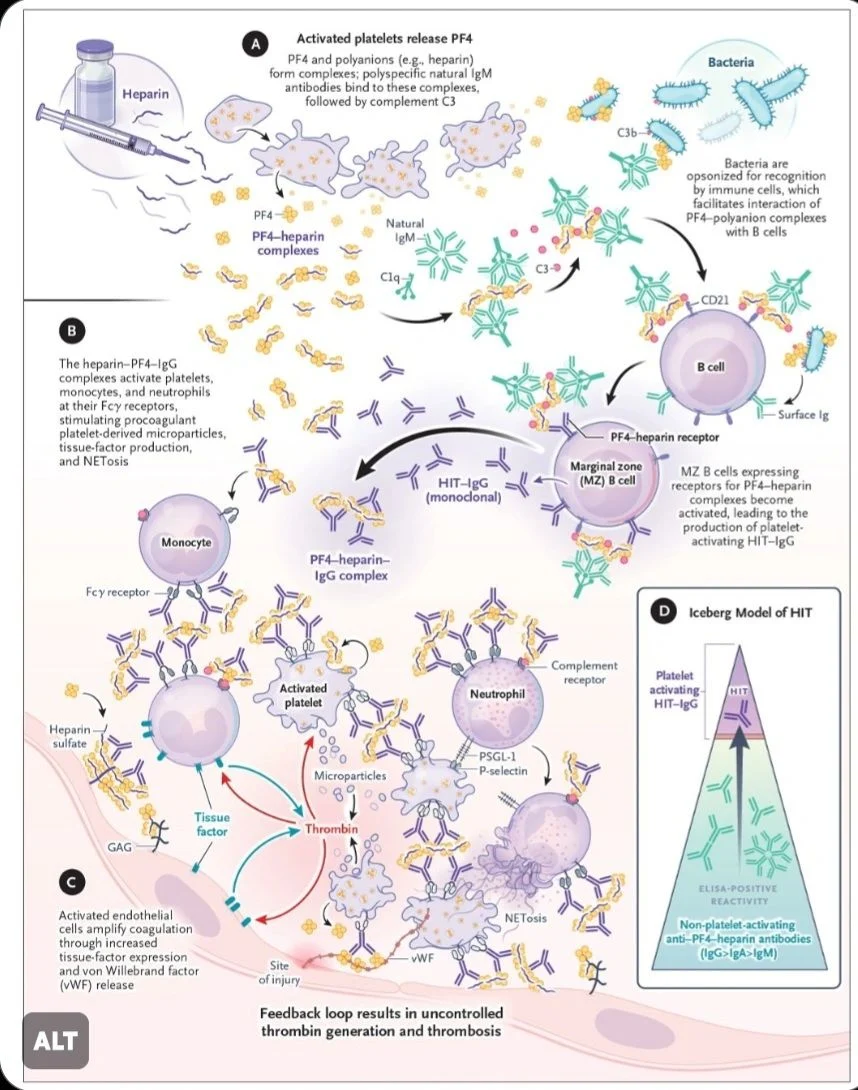
Despite being one of the most widely used anticoagulants, heparin can, in rare cases, trigger a serious immune-mediated complication known as Heparin-Induced Thrombocytopenia (HIT).
The underlying mechanism begins when platelet factor 4 (PF4) binds to heparin, forming complexes that may be recognized as foreign by the immune system.
This can stimulate the production of anti-PF4/heparin IgG antibodies, which bind to platelets through FcγIIa receptors, causing intense platelet activation.
Paradoxically, although platelet counts fall, the major clinical concern is thrombosis rather than bleeding. Activated platelets release additional PF4, amplify thrombin generation, and create a self-perpetuating cycle of platelet activation and clot formation.
Early recognition is critical. In patients with suspected HIT:
- Heparin should be discontinued immediately.
- Alternative non-heparin anticoagulation should be considered.
- Diagnosis combines clinical probability (such as the 4Ts score) with laboratory confirmation.
Understanding the immunopathogenesis of HIT remains essential for clinicians managing anticoagulated patients in both cardiovascular medicine and critical care.
Source:
Warkentin TE, Greinacher A. Platelet-Activating Anti-Platelet Factor 4 Disorders. New England Journal of Medicine (NEJM).
Disclaimer:
This post is intended for educational purposes only and should not be interpreted as medical advice or clinical guidance for individual patients.”
Title: Platelet-Activating Anti–Platelet Factor 4 Disorders
Authors: Theodore E. Warkentin, M.D., Andreas Greinacher, M.D.
Stay updated on all scientific advances with Hemostasis Today.
-
Nov 4, 2026, 18:57Connecting Haemophilia Centres, Certifying Treaters, and Improving National Data in Romania – EHC
-
Nov 4, 2026, 18:45Smitirupa Mishra: A Practical Guide to Coagulation Pathway Assessment and Laboratory Interpretation
-
Nov 4, 2026, 15:59Alessandra Bosch: A Successful Patient Day for the Bleeding Disorders Community in Zürich
-
Nov 4, 2026, 15:47Wolfgang Miesbach: Targeting Hepatic Endothelial Cells for Lentiviral Gene Therapy in Haemophilia A
-
Nov 4, 2026, 15:20Augustina Isioma Ikusemoro: Before You Transfuse, Think PBM
-
Nov 4, 2026, 14:23Advancing Hemophilia Care Through Global Research – WFH
-
Nov 4, 2026, 14:12Jean-Jacques Kiladjian: From JAK Inhibitor-Associated Skin Cancers to Laboratory Discovery
-
Nov 4, 2026, 13:59Rita Li: ASH 2026 Abstract Achievement Award for Gut Microbiome Research
-
Nov 4, 2026, 13:38Omid Seidizadeh: Improving Access to von Willebrand Disease Diagnosis and Treatment Across Europe