

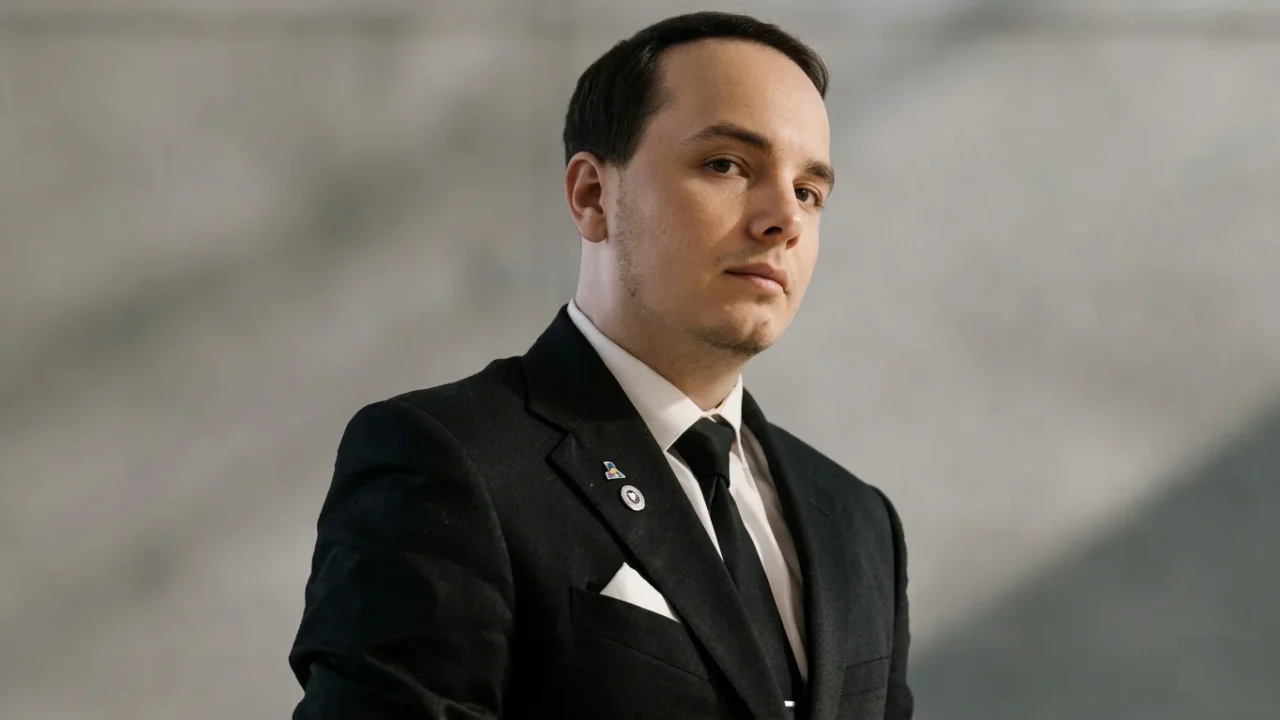
Francisco Chacón-Lozsán: From Protocols to Physiology in Septic Shock
Francisco Chacón-Lozsán, Fellow at World Extreme Medicine, Member of European Society of Intensive Care Medicine (ESICM) and American College of Cardiology, shared a post on LinkedIn about a recent article by Glenn Hernandez, published in Critical Care, adding:
“Septic shock resuscitation is entering a new era. Physiology is replacing protocols.
For more than two decades, septic shock research has challenged one assumption after another. We targeted central venous oxygen saturation.
We targeted lactate. We targeted mean arterial pressure. We restricted fluids.
Yet despite these advances, improvements in patient-centered outcomes remained inconsistent.
This remarkable perspective from many of the world’s leading experts argues that the problem was never the individual variables.
The problem was expecting a single physiological target to represent an extraordinarily heterogeneous disease.
The evolution of septic shock management tells an important story.
Early Goal Directed Therapy demonstrated that protocolized resuscitation could improve outcomes, but subsequent multicenter trials showed that fixed algorithms cannot account for the diversity of septic shock phenotypes.
Lactate proved invaluable for risk stratification but increasingly unreliable as an isolated treatment target beyond the initial hours of resuscitation.
Mean arterial pressure also evolved from a universal threshold to an individualized physiological variable whose optimal value depends on the patient’s underlying cardiovascular state.
The most important conceptual shift has been moving from treating numbers to treating perfusion.
Capillary refill time emerged as a rapidly responsive bedside marker that reflects the adequacy of tissue reperfusion.
The ANDROMEDA-SHOCK program demonstrated that combining capillary refill time with systematic assessment of fluid responsiveness, focused critical care echocardiography, and sequential hemodynamic phenotyping allows clinicians to individualize therapy while reducing unnecessary interventions.
Another major lesson is that fluids are no longer considered inherently beneficial. Every fluid bolus should answer a physiological question.
Is the patient fluid responsive? Will the patient tolerate additional volume?
Is venous congestion already limiting organ perfusion?
Fluid administration has evolved from a routine intervention into a reversible physiological test.
Perhaps the strongest message of this review is that hemodynamic resuscitation is no longer protocol driven but physiology guided.
Septic shock should be understood as a dynamic process requiring repeated cycles of observation, bedside testing, intervention, and reassessment.
The future of resuscitation will not be defined by new numbers, but by a deeper understanding of physiology.”
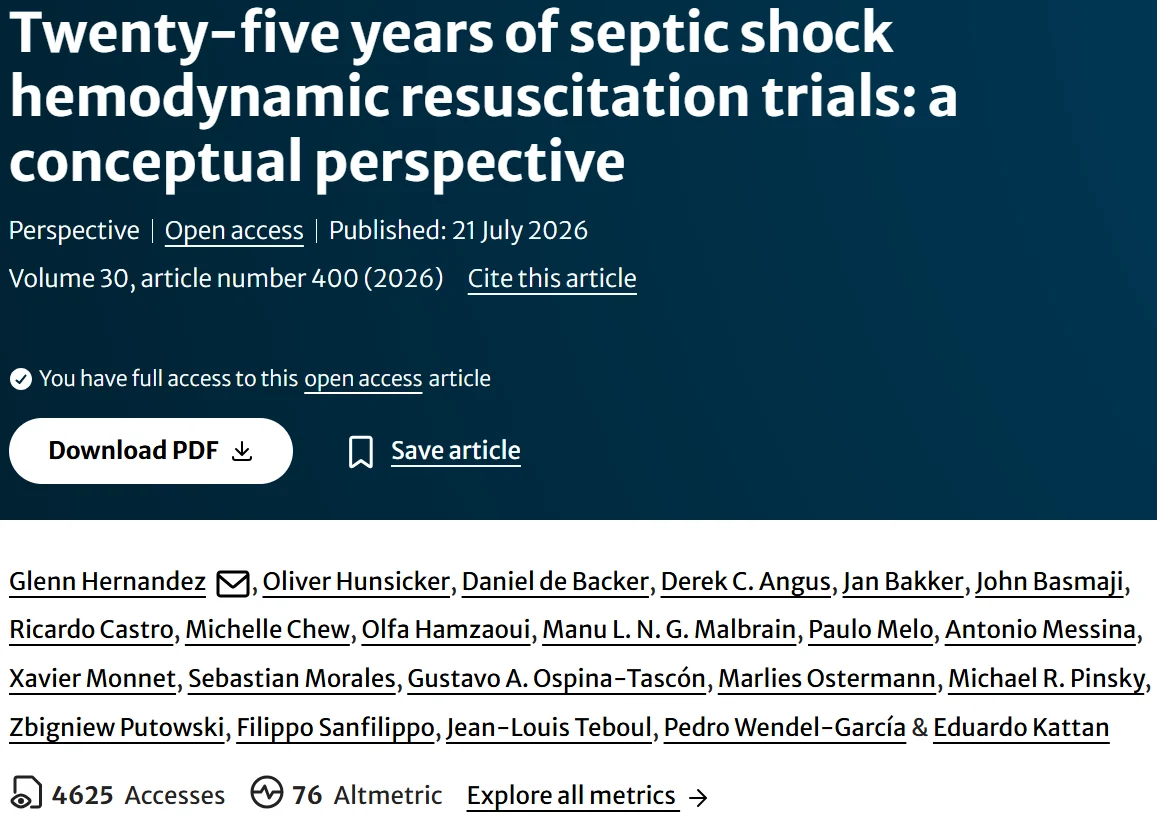
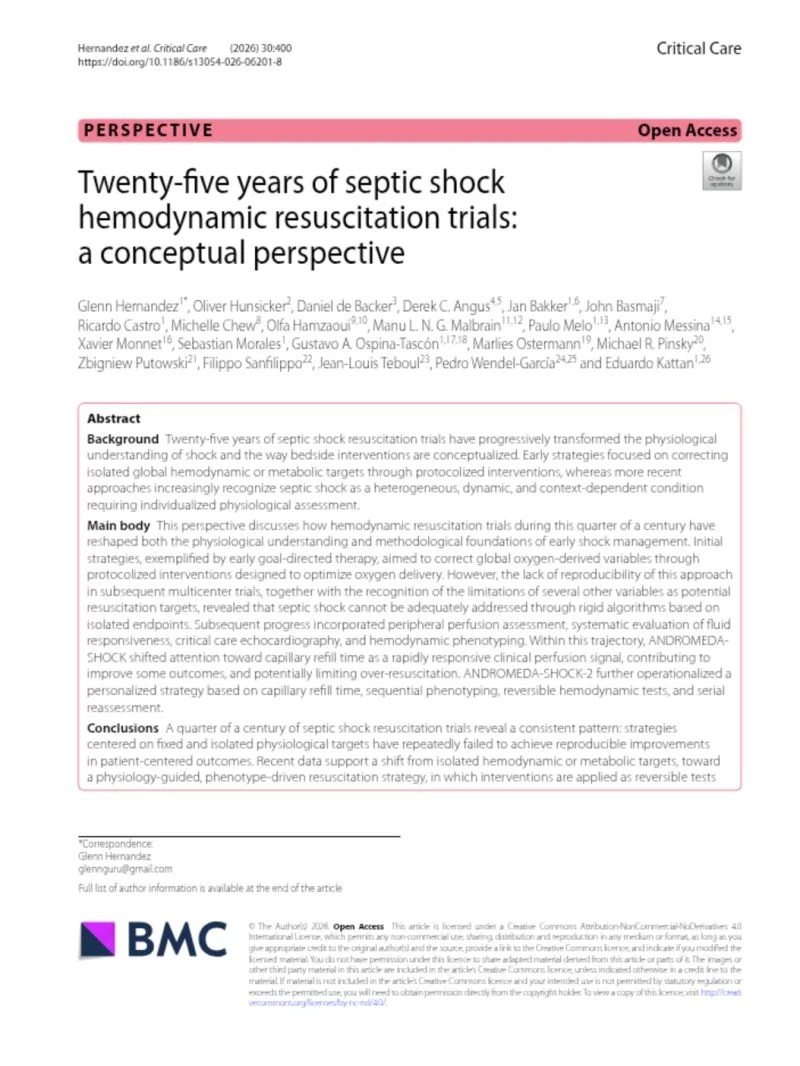
Title: Twenty-five years of septic shock hemodynamic resuscitation trials: a conceptual perspective
Authors: Glenn Hernandez, Oliver Hunsicker, Daniel de Backer, Derek C. Angus, Jan Bakker, John Basmaji, Ricardo Castro, Michelle Chew, Olfa Hamzaoui, Manu L. N. G. Malbrain, Paulo Melo, Antonio Messina, Xavier Monnet, Sebastian Morales, Gustavo A. Ospina-Tascón, Marlies Ostermann, Michael R. Pinsky, Zbigniew Putowski, Filippo Sanfilippo, Jean-Louis Teboul, Pedro Wendel-García, Eduardo Kattan
Other posts featuring Francisco Chacón-Lozsán on Hemostasis Today.
-
Sep 29, 2026, 03:53Nahrwan Masaoodi: Iron Deficiency Can Exist Without Anemia
-
Sep 29, 2026, 03:38Muhammad Yousaf: Iron Deficiency Beyond Diet
-
Sep 29, 2026, 03:21Parvez Ahmed Chowdhury: Synthesizing Aspirin in the Organic Chemistry Lab
-
Sep 29, 2026, 03:12Ahmed Hamandi: Building the Future of Hematopoietic Transplantation in Iraq
-
Sep 29, 2026, 03:09M V Chandrakanth: Aspirin in CRC – Old Drug, New Precision Oncology?
-
Sep 29, 2026, 03:07Caroline Pothet: Advancing Treatment Development in Sickle Cell Disease and Thalassaemia
-
Sep 29, 2026, 02:53Astha Jain: Thalassemia Care Through a Public Health Lens
-
Sep 29, 2026, 02:50Emma Groarke: Starting a New Career Path in Homeland
-
Sep 28, 2026, 19:14Aditya Sharma: An Outstanding Start to the Final Day of VSS 2026!